
Key Takeaways
- NeodraDynamics describes its humanoid platform as a four-metre-tall, hydraulic-electric robot.
- The company highlights dual-arm operation and applications in hazardous industrial environments.
- Exact claims about a 1,100-pound lifting capacity and the specific Neo1 model remain unverified through the official information reviewed.
What Happened
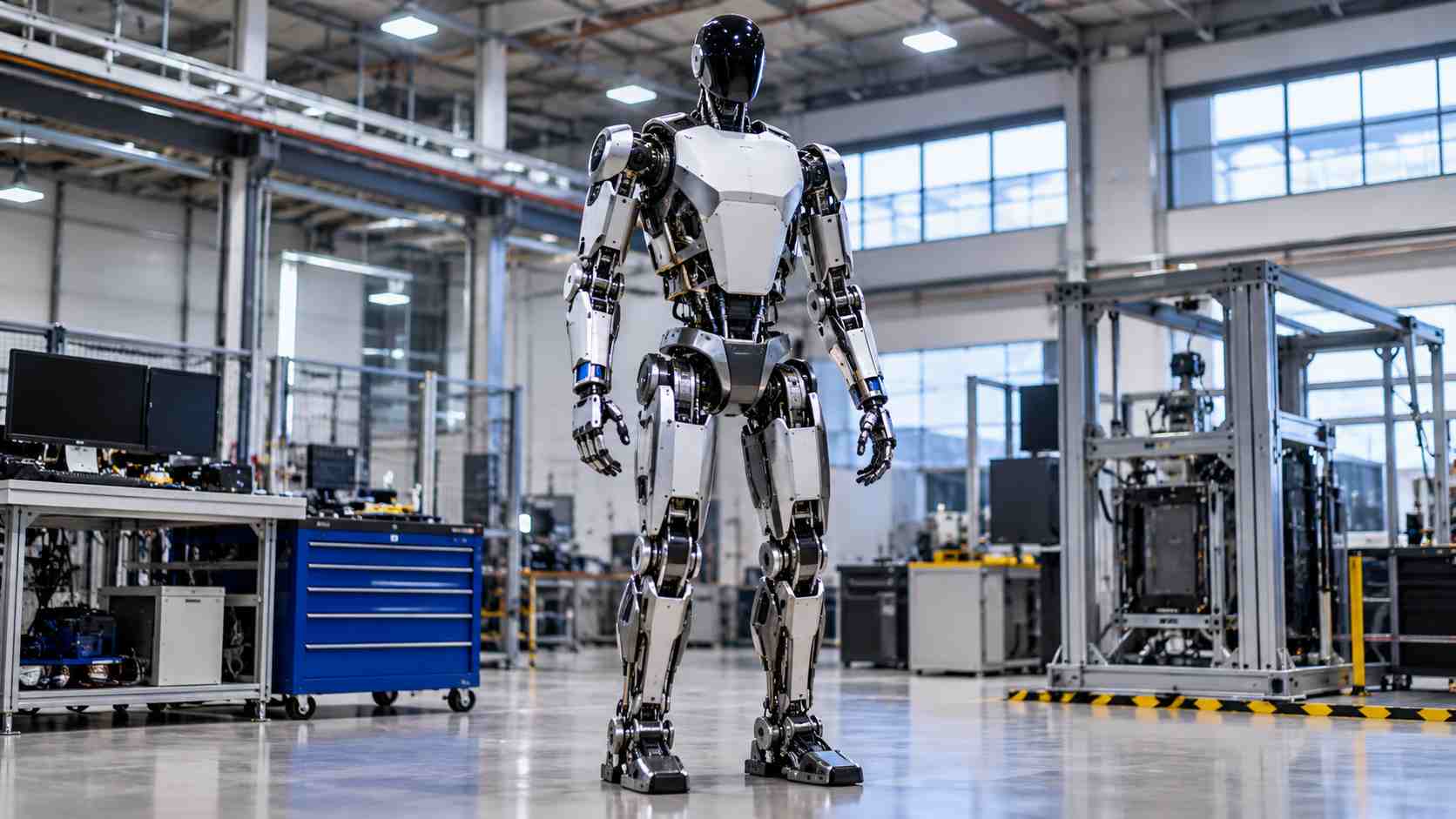
NeodraDynamics is developing a four-metre-tall humanoid robot platform designed for demanding industrial environments. The company describes its technology as a combination of hydraulic power and electronic control, intended to support operations where physical strength and precision are essential.
How the Robot Platform Works
According to the company's official website, the platform features a hydraulic-electric integrated drive system, a high-power dexterous hand and a heavy-duty robotic arm with seven degrees of freedom.
NeodraDynamics also lists a 1.7-metre working radius for its heavy-duty arm. Its dexterous hand is described as having 15 degrees of freedom and a stated grip force of 500 kilogram-force. These are component specifications, not a verified lifting capacity for the complete robot.
Potential Industrial Applications
NeodraDynamics identifies dangerous, dirty, dull and difficult workplaces as potential environments for its robotics technology. Suggested applications include nuclear facilities, industrial production, marine operations, construction and disaster response.
In these settings, heavy-duty robots could potentially assist with material handling, equipment maintenance and other physically demanding tasks. However, the company's stated applications should not be treated as proof that the robot is already performing all these jobs commercially.
TwikUp's Perspective
The real test for heavy-duty humanoid robots is not simply their size or strength. Their value will depend on whether they can operate safely, reliably and economically in real working conditions. Businesses will also need evidence of practical performance, maintenance requirements, control systems and deployment costs.
Online posts have circulated claims about a robot called Neo1, including a height of 13 feet and a lifting capacity exceeding 1,100 pounds. These exact specifications were not independently confirmed in the official company information reviewed for this article.
NeodraDynamics' published platform details highlight an ambitious direction for industrial robotics. Its long-term impact will depend on verified demonstrations, dependable performance and measurable benefits for workers and businesses.