
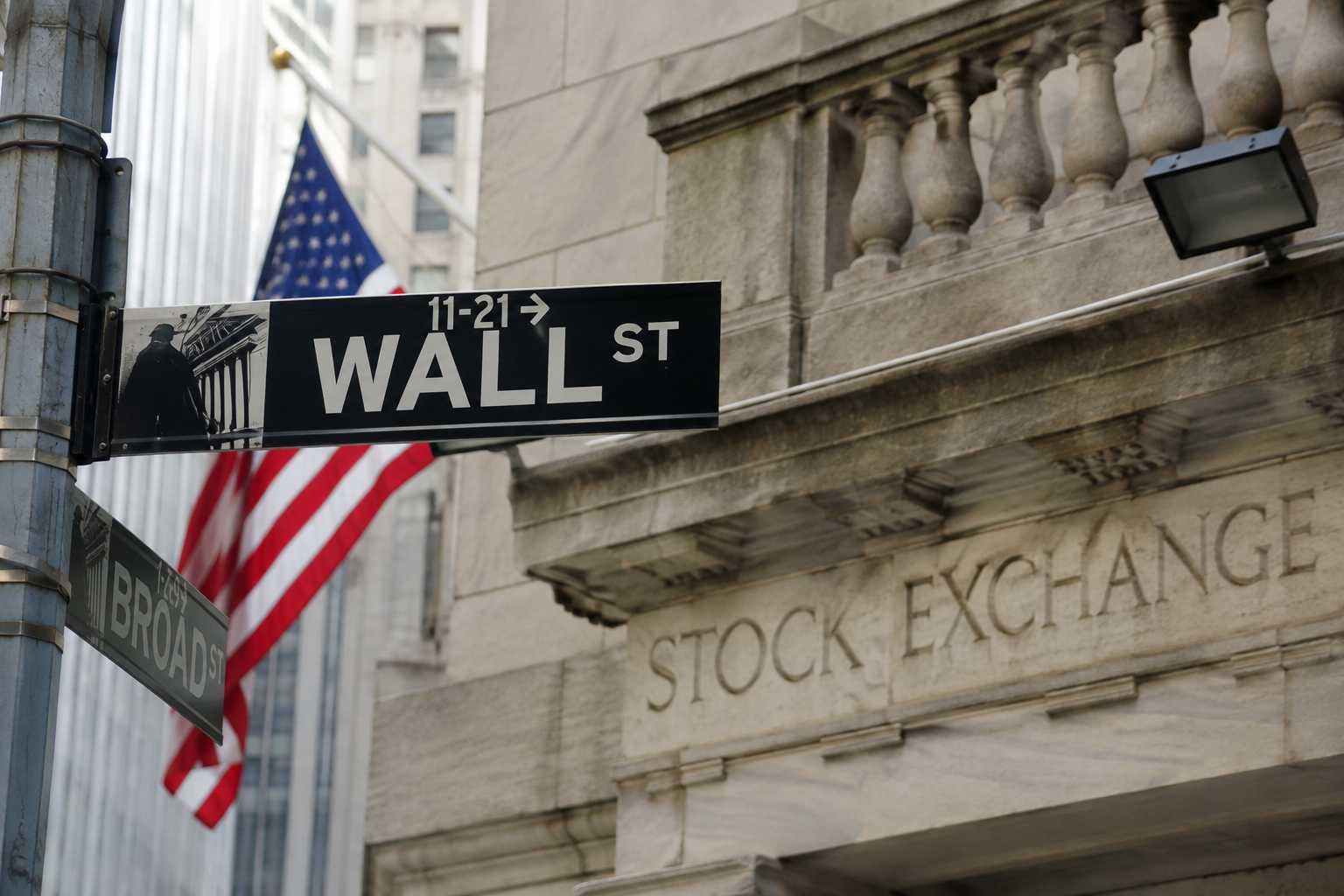
Wall Street opened Monday with an unusual split.
The S&P 500 was hovering close to the flat line, the Nasdaq was showing relative strength, and the Dow was under more pressure during early trading on Aug. 17.
But the small moves in the major indexes hide a much more interesting story underneath.
Investors are effectively weighing two different markets at once.
On one side, enthusiasm around artificial intelligence, semiconductors and technology spending continues to support some of the market's biggest growth stocks.
On the other, oil prices remain elevated, Treasury yields are still high and geopolitical uncertainty around the Middle East continues to create another layer of risk.
That tug-of-war is helping explain why Wall Street has struggled to establish a clear direction after the opening bell.
Quick Answer
The stock market is mixed Monday morning because investors are balancing strength in AI and semiconductor stocks against elevated oil prices, Treasury yields and geopolitical uncertainty.
Technology is helping keep the Nasdaq relatively resilient, while other parts of the market are showing more caution.
The bigger question for investors is whether technology strength can continue carrying the broader market if energy and borrowing costs remain elevated.
The indexes are telling different stories
A market can look calm at the index level while individual sectors move sharply underneath.
That appears to be happening Monday.
The S&P 500 was trading around the flat line in the first hour, after recently reaching record territory. The Nasdaq was benefiting from strength in technology and semiconductor names, while the Dow was showing comparatively weaker performance.
That divergence matters.
When the three major U.S. indexes move differently, it can signal that investors are not making a broad bet on the economy or the entire stock market. Instead, money may be rotating toward particular industries.
Right now, technology remains one of those areas.
AI is still one of the market's strongest engines
The artificial-intelligence investment cycle continues to influence Wall Street far beyond the companies building chatbots.
AI requires enormous amounts of computing power, memory, storage, networking equipment and data-centre infrastructure.
That means investor attention increasingly extends across the semiconductor supply chain.
Memory and storage-related stocks were among the stronger performers Monday morning, reinforcing the idea that investors are still looking for companies that could benefit from expanding AI infrastructure spending.
This creates an important dynamic for the broader market.
Technology companies represent a large portion of major U.S. indexes. Strong gains among large semiconductor and technology stocks can therefore offset weakness elsewhere and make an index appear relatively stable.
That is one reason the Nasdaq can remain resilient even while the overall market mood looks more cautious.
Oil is pulling in the other direction
While AI provides one source of optimism, energy markets are creating another calculation for investors.
WTI crude was trading above $82 a barrel Monday morning, while Brent crude was close to $89 a barrel.
Oil at those levels matters for more than energy companies.
Higher crude prices can eventually influence gasoline, transportation, manufacturing and logistics costs. If elevated energy prices persist, they can also complicate the inflation outlook.
That creates a strange relationship for the stock market.
Energy producers can benefit from higher crude prices while companies that consume large amounts of fuel or transportation services may face higher costs.
So rising oil does not automatically mean the market should fall.
Instead, it can create winners and losers — exactly the kind of market divergence investors are seeing Monday.
Treasury yields remain a hurdle
The bond market is another important piece of the puzzle.
The 10-year U.S. Treasury yield was around 4.68% Monday morning, remaining elevated even after edging lower.
For stock investors, that number matters.
Higher Treasury yields increase borrowing costs throughout the economy and give investors an alternative to stocks. They can also put particular pressure on highly valued growth companies because more of their expected profits may arrive years into the future.
That makes the current technology resilience particularly interesting.
AI-related stocks are showing strength even while the benchmark Treasury yield remains close to 4.7%.
If yields begin falling more decisively, technology could receive another potential tailwind.
If yields climb again, investors may become more selective about how much they are willing to pay for future growth.
The S&P 500 is also starting from a very high level
There is another reason relatively small market movements deserve attention.
The S&P 500 entered Monday trading near record territory after a strong run.
That changes the psychology of the market.
When stocks have already climbed significantly, investors do not necessarily need bad news to take profits. Sometimes uncertainty alone is enough.
Strong earnings and enthusiasm around AI can keep buyers interested, but elevated valuations also raise the bar for the next move higher.
The question is gradually shifting from:
Can AI generate enormous investment?
to:
Can that enormous investment generate enough future profit to justify today's stock prices?
That distinction could become increasingly important as the AI cycle matures.
Canada's TSX has its own inflation problem
Canadian investors are dealing with another major variable Monday.
The S&P/TSX Composite opened about 0.2% lower after Canada's latest inflation figures came in hotter than markets expected.
That matters because inflation can influence expectations for what the Bank of Canada does with interest rates.
If price pressures remain persistent, investors may have to reconsider how quickly borrowing costs can decline.
But Canada's market also has something Wall Street does not have to the same degree: substantial exposure to energy and natural-resource companies.
Higher oil prices can therefore provide support to parts of the TSX even while inflation concerns pressure other sectors.
The result is another tug-of-war — but for different reasons than the one unfolding in New York.
What investors should watch next
The first 45 minutes of trading provide clues, not a final verdict on the session.
Three signals could determine where Monday's market goes from here.
Technology breadth: If gains spread beyond a handful of semiconductor and AI-related companies, the Nasdaq and S&P 500 could find stronger support.
Oil: WTI holding above $82 is worth watching. A sharp move higher could revive inflation concerns, while falling crude could remove some pressure from the broader market.
Treasury yields: The 10-year yield near 4.7% remains an important threshold for growth stocks. A meaningful move in either direction could quickly influence technology valuations.
Canada has an additional signal to watch: how investors digest the latest inflation numbers and what they imply for future Bank of Canada policy.
TwikUp Insight
Monday's market isn't really about whether the S&P 500 moves 0.1% higher or lower.
The more important story is what is keeping it there.
AI enthusiasm remains powerful enough to support some of the market's largest growth companies. At the same time, oil above $82, elevated Treasury yields and geopolitical uncertainty are preventing investors from treating the environment as completely risk-free.
That creates a market with two competing engines.
One is powered by expectations of enormous technological growth.
The other is being restrained by the cost of energy, money and geopolitical uncertainty.
Whichever force becomes stronger could determine whether the S&P 500's next meaningful move is another push into record territory — or a period of consolidation after its recent rally.
For now, neither side has clearly won.
Market levels and prices in this article reflect early trading on Aug. 17, 2026 and can change materially during the session.
This article is for informational purposes only and does not constitute investment advice.
Sources
- S&P Dow Jones Indices — S&P 500 index information and methodology
- U.S. Treasury market data — Treasury yield reference
- Current crude-oil futures market data
- Current U.S. equity-market data
- Current S&P/TSX Composite market data
- Statistics Canada — Canadian inflation data