
Key Takeaways
- A crowded trade develops when many investors build similar exposures, making their portfolios vulnerable to the same unexpected event.
- Strong returns and widespread ownership can hide fragile market positioning, particularly when leverage and liquidity constraints are involved.
- Institutional filings, ownership data and futures positioning offer clues, but none provides a complete real-time picture of market crowding.
When Everyone Loves the Same Stock, the Exit Gets Crowded
Picture a theatre where everyone rushes for the same door. That's a crowded trade.
When many investors own the same stock for the same reason, the trade is described as crowded. The stock may be popular because of strong earnings, a powerful trend or a compelling narrative.
Crowding itself does not make a stock good or bad. It changes the risk profile because the behaviour of other investors becomes part of the investment outcome.
What Are Crowded Trades in Stocks?
A crowded trade occurs when a large number of market participants hold a similar position at the same time.
This can happen with:
- an individual stock
- a sector
- a factor strategy
- a market theme such as artificial intelligence or clean energy
Crowding often builds gradually. Early investors buy a promising idea, performance improves, media coverage increases and more investors follow. By the time a trade is widely recognised as popular, many portfolios may already contain the same exposure.
Crowded trades can be long or short. A heavily shorted stock can also be crowded, as many traders bet against it at the same time.
In both cases, the key feature is concentration of opinion and positioning.
Why Crowded Trades in Stocks Can Be Risky
The main risk is not popularity itself. It is the exit.
When many investors want to sell at once, there may not be enough buyers at the current price. This can lead to sharp price declines, even if the company's fundamentals have not changed dramatically.
Other risks include:
- Selling pressure is concentrated, so a small change in sentiment can trigger a large move.
- Liquidity can disappear quickly when everyone heads for the exit at the same time.
- Losses can occur even when the original investment thesis remains partly valid.
- Leverage or margin can amplify the impact of a crowded unwind.
- Market narratives can reverse faster than fundamentals, especially after a period of strong performance.
Crowding does not mean a stock will fall. It means that if it does fall, the decline may be faster and more disorderly than expected.
How to Spot Crowded Trades in Stocks
There is no single perfect measure of crowding, but several signals can help investors identify it. Here are the five warning signs:
- Ownership concentration: Many similar funds or large investors hold the same stock.
- Analyst sentiment: Coverage is overwhelmingly positive, with little disagreement.
- Short interest: A very high level of short selling can indicate a crowded short trade.
- Options activity: Unusual demand for calls or puts may show concentrated positioning.
- Media and social attention: A stock becomes a frequent topic of discussion and recommendation.
These signals should be used together. A stock can be widely owned without being dangerously crowded, and a less visible trade can still be concentrated among institutional investors.
How Crowded Trades Affect Investment Risk
Crowded trades affect risk in several ways.
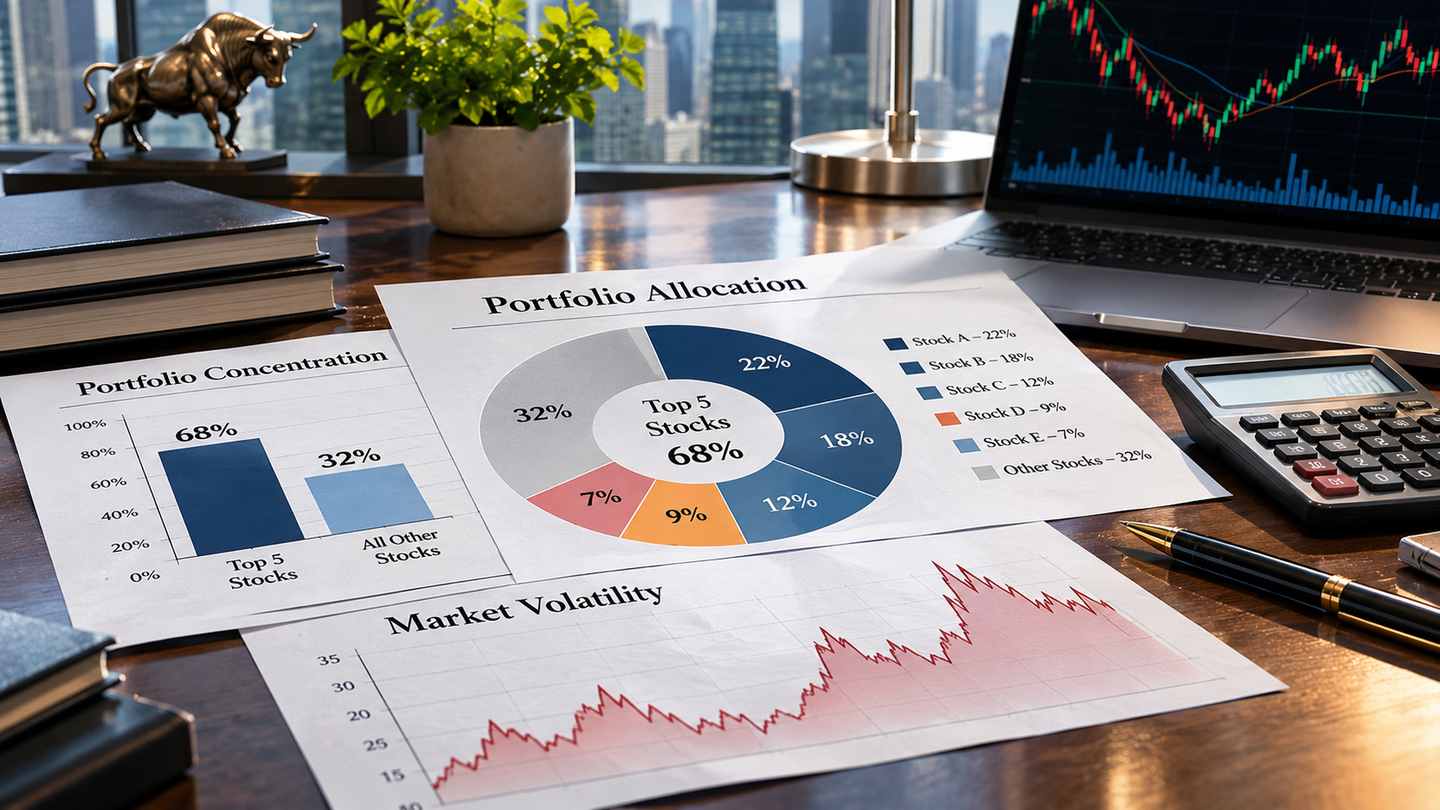
First, they increase correlation. When many portfolios hold the same names, a shock to one popular stock can affect many investors at once. Diversification may be weaker than it appears if different funds share the same largest holdings.
Second, they increase volatility during stress. In calm markets, crowded trades often perform well because buying pressure supports prices. In stressed markets, the same dynamic works in reverse as selling pressure builds.
Third, they can create feedback loops. Falling prices may trigger stop-loss orders, margin calls or risk-management selling, which pushes prices lower and forces further selling. This is sometimes called a crowded unwind.
Finally, crowded trades can distort valuation signals. A rising price may reflect momentum and positioning rather than improving fundamentals. Investors who rely only on price trends may mistake popularity for quality.
Why Crowding Is a Risk-Management Issue, Not Just a Stock-Picking Issue
Managing crowded trades is less about predicting the next popular stock and more about controlling exposure. Investors can reduce risk by:
- Diversify across sectors, styles and asset classes rather than relying on a few popular names.
- Position size carefully, keeping crowded holdings at a level that can be reduced without major disruption.
- Monitor liquidity, especially for smaller stocks or strategies that may be harder to exit.
- Separate conviction from consensus by asking whether the investment case still holds without the crowd.
- Avoid adding to a position simply because it is performing well or widely recommended.
Crowded positioning is difficult to measure perfectly because public disclosures are incomplete and delayed. The question is whether a position can be exited without becoming the market's problem. That's the risk many investors overlook while a trade is working.
The Twikup Take
Popularity is not a safety signal. If everyone owns the same stock, the real question is not whether the idea is good, but whether you can get out without tripping over the crowd. Check the exit before you follow the herd.
This article is for educational and informational purposes only and should not be considered financial or investment advice. Crowding and positioning are not guarantees of future returns. Investors should conduct independent research and consult a qualified financial professional when necessary.
Image: AI-generated illustration.