
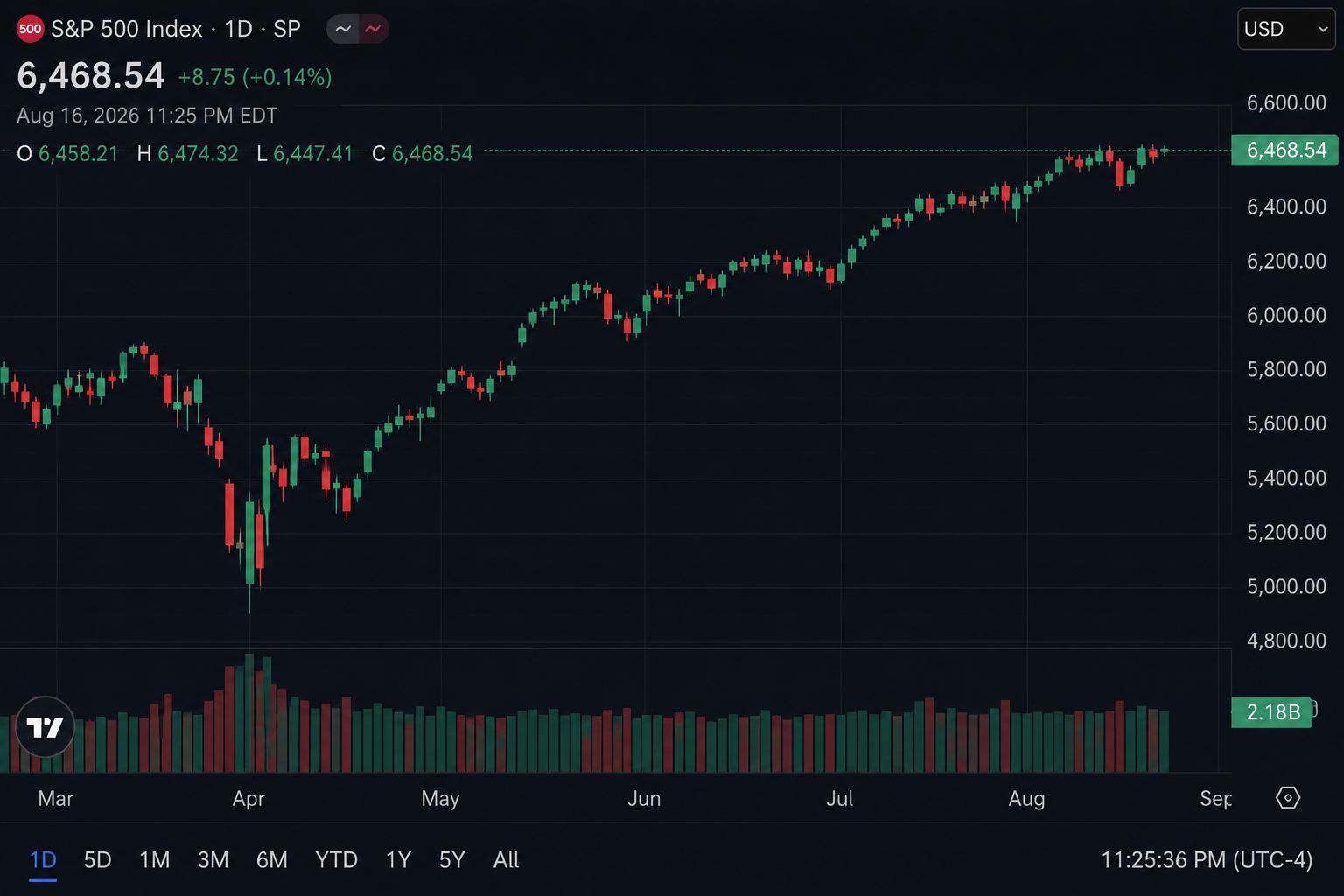
U.S. stock futures pointed mostly higher early Monday as investors started a new week with fewer concerns about an imminent Federal Reserve interest-rate increase, while Canadian investors prepared for a potentially important inflation report.
S&P 500 futures were up about 0.2% in early trading, while Nasdaq futures gained roughly 0.5%. Dow futures were slightly lower.
An unexpected decline in July U.S. retail sales, weaker consumer sentiment and recent softer inflation readings have reduced market expectations for a September Federal Reserve rate increase. Market-implied odds of a September increase were around 30%, compared with roughly 50% a week earlier.
For Canadian markets, however, Monday has a major domestic catalyst: Statistics Canada is scheduled to release Canada's July Consumer Price Index at 8:30 a.m. ET.
Quick Answer
Markets are starting Monday with a modest risk-on tone. Technology-heavy Nasdaq futures are leading U.S. index futures higher as investors reduce bets on another near-term Federal Reserve rate increase. European equities are little changed to slightly higher, while China and Hong Kong have been among the stronger Asian markets.
For the TSX, Canada's July CPI report at 8:30 a.m. ET could become the day's biggest domestic market catalyst, particularly for interest-rate-sensitive sectors, Canadian bond yields and the Canadian dollar.
Five things investors should watch before the opening bell
1. Nasdaq futures lead as Fed fears ease
Technology stocks are showing the strongest early momentum among the major U.S. indexes.
Nasdaq futures were recently about 0.5% higher, compared with a roughly 0.2% advance for S&P 500 futures. Dow futures were slightly lower.
The backdrop has shifted after an unexpected decline in July U.S. retail sales, weaker consumer sentiment and recent softer inflation readings reduced expectations that the Federal Reserve will need to raise interest rates again soon.
That makes Treasury yields especially important Monday. The U.S. 10-year Treasury yield was around 4.69%, while the U.S. dollar weakened.
Lower bond yields can provide support to growth and technology shares because they reduce the discount rate applied to future earnings.
2. Canada's July CPI could set the tone for the TSX
The most important scheduled Canadian economic release Monday comes at 8:30 a.m. ET, when Statistics Canada publishes July CPI.
Canada's headline CPI was up 2.8% year over year in June.
Monday's new reading could influence expectations for the Bank of Canada's next moves and affect the Canadian dollar, government bond yields and interest-rate-sensitive areas of the TSX.
Canada's international securities transactions data for June is also scheduled for 8:30 a.m. ET.
Investors should therefore avoid treating the TSX's pre-open direction as settled. The inflation report arrives an hour before North American equity markets open and could materially change the setup.
3. Oil remains an important variable for Canadian stocks
Crude oil remains one of the biggest external variables for the resource-heavy TSX.
WTI crude traded around $82 a barrel as investors weighed stalled U.S.-Iran diplomacy, reduced shipping through the Strait of Hormuz and the risk of further disruptions to Middle Eastern energy supplies.
That matters particularly for Canadian energy producers. A meaningful move in crude before the Toronto opening bell could strengthen or offset the broader direction coming from U.S. equities.
Gold, meanwhile, moved higher as the U.S. dollar weakened and expectations for a September Federal Reserve rate increase declined.
4. Asia and Europe provide a mostly positive global handoff
Asian equities were broadly positive Monday, although performance varied by market.
Chinese and Hong Kong shares were among the stronger performers as technology stocks helped lift sentiment. Japanese equities faced pressure, while South Korea's market was closed for a holiday.
European equities were little changed to slightly higher in early trading.
The pan-European STOXX 600 hovered around the flat line, with basic-resources stocks receiving support from higher gold prices and easing concerns about another near-term Federal Reserve rate increase.
That leaves North American investors with a generally positive, but hardly aggressive, global market handoff.
5. A quieter U.S. calendar puts the Fed back in focus
Monday's U.S. economic calendar is lighter than some recent inflation-heavy sessions, but investors still have several releases to watch.
The Empire State Manufacturing Index for August is due at 8:30 a.m. ET, followed by the NAHB Housing Market Index at 10:00 a.m. ET.
The larger event for the week comes Wednesday, when the Federal Reserve is scheduled to release minutes from its July 28–29 meeting at 2:00 p.m. ET. Investors will examine the minutes for clues about how policymakers are balancing inflation risks against signs of softer economic activity.
Corporate earnings will also move back into focus as the week progresses, with major retailers among the companies investors will be watching for information about the health of the U.S. consumer.
Market snapshot before the opening bell
| Market | Early Monday direction |
|---|---|
| S&P 500 futures | ~+0.2% |
| Nasdaq futures | ~+0.5% |
| Dow futures | Slightly lower |
| U.S. 10-year Treasury yield | ~4.69% |
| WTI crude | ~$82/barrel |
| Gold | Higher |
| STOXX Europe 600 | Little changed / slightly higher |
Market data reflect early trading levels on August 17 and may change rapidly before the North American opening bell.
What could change the market before 9:30 a.m.?
The biggest risk to the calm premarket setup is fresh economic data.
At 8:30 a.m. ET, investors will receive both Canada's July CPI report and the U.S. Empire State Manufacturing Index. That creates a potentially important one-hour window before the NYSE, Nasdaq and TSX begin regular trading.
A Canadian inflation surprise could quickly move Canadian bond yields and the loonie, while an unexpectedly strong or weak Empire State reading could influence Treasury yields and Federal Reserve expectations.
For the TSX specifically, the combination of Canadian inflation, oil prices and the direction of U.S. equities should provide the clearest signals heading into the opening bell.
TwikUp Insight
Monday's setup is less about one dramatic overnight headline and more about a change in the interest-rate equation.
An unexpected decline in U.S. retail sales, weaker consumer sentiment and recent softer inflation readings have reduced immediate fears of another Federal Reserve rate increase, helping technology stocks while Treasury yields remain an important market signal.
But Canada's CPI release means Canadian investors have a fresh inflation test before markets even open.
That creates two different stories inside the same morning: Wall Street is reacting to reduced Fed concerns, while Bay Street is waiting for new evidence about Canadian inflation.
If Canada's CPI materially surprises expectations, the TSX story at 9:30 a.m. could look very different from the one investors see before the opening bell.
This article is for informational purposes only and does not constitute investment, financial or trading advice. Market prices and futures can change rapidly before and after the opening bell.