
Quick Answer
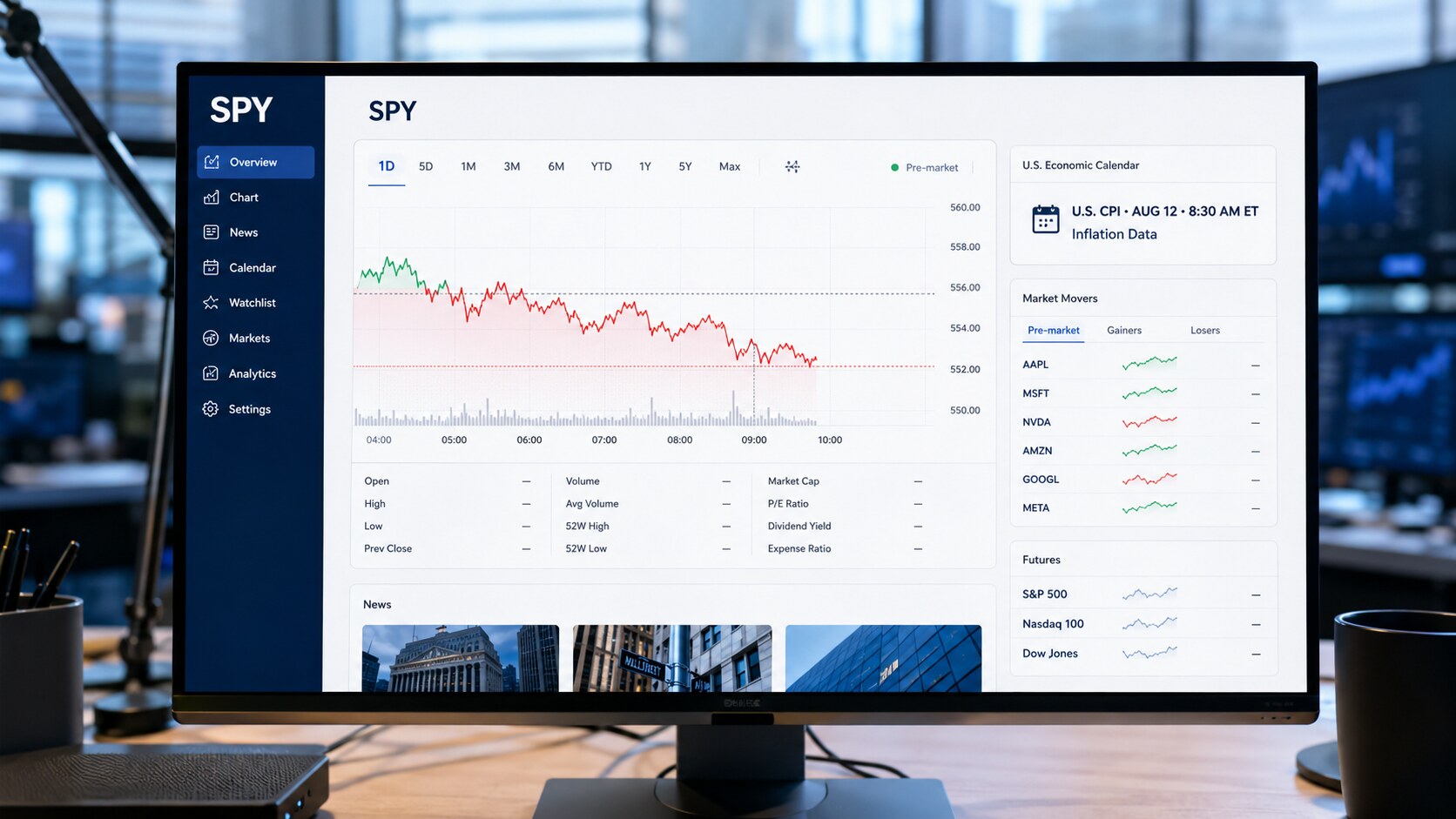
The United States will publish its July 2026 Consumer Price Index report on Wednesday, August 12, at 8:30 a.m. Eastern Time, one hour before the U.S. stock market opens.
For S&P 500 investors and holders of the SPDR S&P 500 ETF Trust (SPY), the report represents a significant pre-market risk event. A reading above or below market expectations could quickly change Treasury yields, interest-rate expectations and equity valuations.
The release is a scheduled catalyst, not an explanation for a market move that has already occurred. The decisive figures will arrive when the U.S. Bureau of Labor Statistics publishes the report.
Key Takeaways
- The July CPI report arrives August 12 at 8:30 a.m. ET.
- June headline CPI declined 0.4% month over month but remained 3.5% higher annually.
- Core CPI was unchanged in June and increased 2.6% from a year earlier.
- Energy prices remained 15.7% above their June 2025 level despite falling sharply during the month.
- SPY’s reaction may depend on how the results compare with market expectations, not simply whether inflation increased or decreased.
June sets a mixed comparison point
The Consumer Price Index measures changes over time in the prices consumers pay for goods and services.
June produced sharply different signals depending on the period being measured. The all-items CPI declined 0.4% from May on a seasonally adjusted basis—the largest monthly decrease since April 2020—but remained 3.5% higher than a year earlier before seasonal adjustment.
Core CPI, which excludes food and energy, was unchanged during the month and increased 2.6% over the 12 months ending in June.
Energy was the largest contributor to the monthly decline. The category fell 5.7% from May, led by a 9.7% drop in gasoline prices. However, energy prices remained considerably higher than one year earlier.
Annual changes included:
- Energy: up 15.7%
- Energy commodities: up 27.1%
- Gasoline: up 26.7%
- Fuel oil: up 42.9%
- Food: up 3.0%
- Shelter: up 3.3%
- Services excluding energy services: up 3.2%
- Airline fares: up 26.5%
- Motor-vehicle maintenance and repair: up 7.0%
- Used cars and trucks: down 1.8%
- Motor-vehicle insurance: down 4.1%
The June report illustrates why monthly and annual readings must be considered separately. Prices fell overall during June, but the index remained substantially above its level from June 2025.
Why the July CPI report matters for SPY
Wednesday’s report will show whether consumer-price pressures strengthened or weakened in July. Investors will focus on four primary figures:
- Headline CPI, month over month
- Headline CPI, year over year
- Core CPI, month over month
- Core CPI, year over year
The immediate market reaction may depend less on the direction of inflation and more on how the numbers compare with expectations. Even a positive monthly reading could support stocks if it is below forecasts, while a seemingly moderate result could pressure markets if it is hotter than anticipated.
Inflation data can influence expectations for Federal Reserve policy and Treasury yields. Those changes affect the rate investors use to value future corporate earnings, making the report relevant across the S&P 500.
Technology and other growth-oriented shares can be particularly sensitive to rising longer-term yields because more of their expected value depends on profits projected further into the future. Financial companies may respond differently because interest rates can affect lending margins, credit demand, funding costs and borrower health.
The result could therefore influence SPY even though CPI is an economy-wide release rather than company-specific news.
What investors should watch after 8:30 a.m.
The headline number may generate the first market reaction, but the details will help determine whether that move lasts.
Investors should watch whether energy prices continue to distort the difference between headline and core inflation. Shelter is also important because it carries a large weight in the index and rose 3.3% annually in June.
Treasury yields and interest-rate expectations may provide an early indication of how markets interpret the report. Rising yields following a hotter-than-expected reading could pressure rate-sensitive shares, while cooling inflation could ease some valuation pressure.
However, CPI does not determine Federal Reserve policy by itself. Officials also consider employment, economic activity and other inflation measures before making rate decisions.
TwikUp Insight
The most important question Wednesday is not simply whether inflation rose or fell. It is whether July’s figures alter the market’s expectations for interest rates.
June’s 0.4% monthly decline appeared encouraging at first glance, but much of that movement came from a sharp drop in energy prices. The annual headline rate remained 3.5%, while core inflation was lower at 2.6%.
That contrast makes the composition of July’s report as important as its headline figure. A broad acceleration across shelter and services could carry greater implications for the rate outlook than a temporary move driven mainly by energy.
What happens next
The Bureau of Labor Statistics will publish the July CPI report on Wednesday, August 12, 2026, at 8:30 a.m. Eastern Time. The release will arrive one hour before regular trading begins on the New York Stock Exchange and Nasdaq.
Until the figures are published, CPI should be described as an upcoming market risk rather than a confirmed cause of Tuesday’s trading.
This article is for informational purposes only and does not constitute investment advice or a recommendation to buy or sell any security.