
Key Takeaways
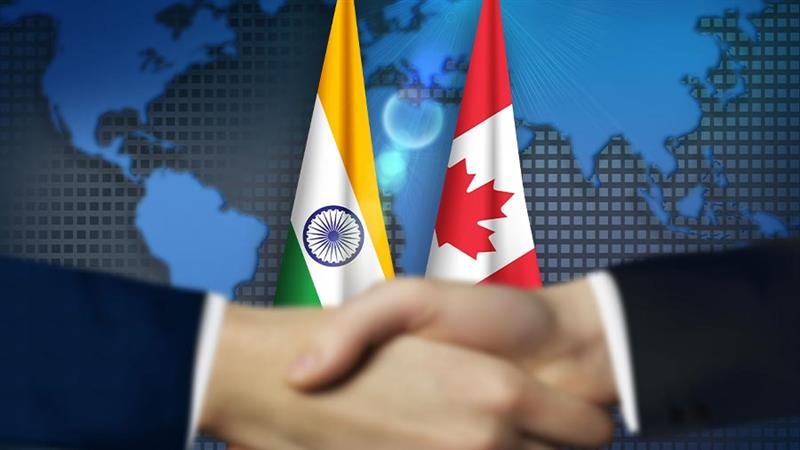
- Canada and India held their first Finance Ministers’ Economic and Financial Dialogue.
- Both countries reaffirmed their goal of concluding Canada-India Comprehensive Economic Partnership Agreement talks by the end of 2026.
- The two sides are targeting CAD 70 billion in bilateral trade by 2030 and discussed investment, payments, FinTech and critical minerals.
Canada and India Target Stronger Trade Relations
The dialogue builds on a commitment made by Prime Minister Mark Carney and Prime Minister Narendra Modi during their meeting in New Delhi in March 2026.
Both governments have committed to strengthening bilateral economic and financial cooperation.
They also reaffirmed their shared commitment to conclude negotiations on a Canada-India Comprehensive Economic Partnership Agreement by the end of 2026.
The governments said the talks form part of efforts to deepen economic ties through enhanced trade and investment and to expand commercial opportunities in both countries.
$70 Billion Bilateral Trade Goal
Canada and India also discussed an ambitious long-term trade target.
The two countries share an aspiration to expand bilateral trade to CAD 70 billion, equivalent to INR 4.65 lakh crore, by 2030.
The finance ministers discussed how stronger financial and commercial links could help support economic growth and create additional opportunities for businesses in both countries.
India Signals Interest in Investment Treaty
India expressed its readiness to begin negotiations on a Bilateral Investment Treaty at the earliest opportunity.
The proposed treaty would provide another framework for discussions on investment relations between Canadian and Indian businesses and institutional investors.
The ministers also recognised the growing investment relationship between the two countries and the importance of long-term institutional capital.
Canadian Pension Funds and Institutional Investment
Canadian pension funds and other institutional investors already have a significant presence in India.
During the dialogue, the ministers discussed the potential for these investors to contribute to economic growth and development.
They also discussed the importance of tax rules that provide stability and certainty for investors.
The two sides explored ways to encourage greater engagement between Canadian and Indian financial institutions and institutional investors.
FinTech and Financial Cooperation
Financial technology was another important area discussed during the meeting.
The ministers explored opportunities for cooperation involving payments modernisation, financial stability, FinTech innovation and capital markets development.
They also discussed efforts to address financial crime and strengthen cooperation across the financial sector.
These areas could provide opportunities for financial institutions and technology companies in both countries.
UPI Expansion in Canada
The ministers also discussed opportunities to broaden the use of India's Unified Payments Interface (UPI) in Canada through partnerships with payment service providers.
The governments said greater use of UPI could contribute to faster, more efficient and cost-effective payments.
The potential expansion could also support bilateral trade, tourism, education and the growth of small and medium-sized businesses.
Critical Minerals and Supply Chains
Canada and India also discussed the importance of resilient and diversified supply chains.
The two countries agreed to pursue opportunities to collaborate in strategic sectors, including critical minerals.
Critical minerals are increasingly important to technology, manufacturing, energy and other strategic industries.
Greater cooperation in this area could support economic security and long-term growth in both countries.
Broader Business Cooperation
Following the finance ministers’ dialogue, Champagne and Sitharaman participated in joint engagements with representatives from several Canadian and Indian sectors.
These included financial services, FinTech, technology, artificial intelligence, infrastructure, energy and natural resources.
The discussions focused on shared priorities and opportunities for businesses, financial institutions and other stakeholders to expand cooperation.
What Happens Next?
Canada and India have agreed to continue their economic and financial dialogue.
The ministers welcomed plans for the next Economic and Financial Dialogue in 2027.
The governments reaffirmed their commitment to regular dialogue and to advancing concrete cooperation in areas of mutual interest.
The Bigger Picture
The first Canada-India Finance Ministers’ Economic and Financial Dialogue signals a renewed focus on strengthening economic relations between the two countries.
The shared aspiration of increasing bilateral trade to CAD 70 billion by 2030, alongside work on a potential economic partnership agreement and investment treaty, could create new opportunities for businesses and investors.
Financial technology, critical minerals, payments and institutional investment are also emerging as important areas of cooperation.
TwikUp Insight
Canada and India have completed their first Finance Ministers’ Economic and Financial Dialogue, with both countries committing to deeper economic and financial cooperation.
The two sides aim to conclude Comprehensive Economic Partnership Agreement negotiations by the end of 2026 and share an aspiration to increase bilateral trade to CAD 70 billion by 2030.