
Key Takeaways
- Modular construction moves significant building work into factories, potentially shortening on-site construction schedules.
- CMHC has expanded financing support for prefabricated homes and modular multi-unit rental developments.
- Lower development costs are not guaranteed because transportation, foundations, installation, land and regulatory requirements still affect project economics.
Can Modular Construction Investment in Canada Reduce Housing Development Costs?
Building a home does not always have to begin and end at the construction site. With modular construction, major sections of a property are manufactured inside a factory, transported to the development site and assembled into a completed building.
This approach is attracting attention in Canada as developers look for ways to increase housing supply, manage labour shortages and shorten construction schedules. For investors, the opportunity extends beyond buying property. It may also include residential development, rental housing and businesses supplying factory-built building components.
How Does Modular Construction Work?
Unlike conventional construction, where most building activities take place directly on-site, modular construction shifts a significant portion of the work into a manufacturing facility.
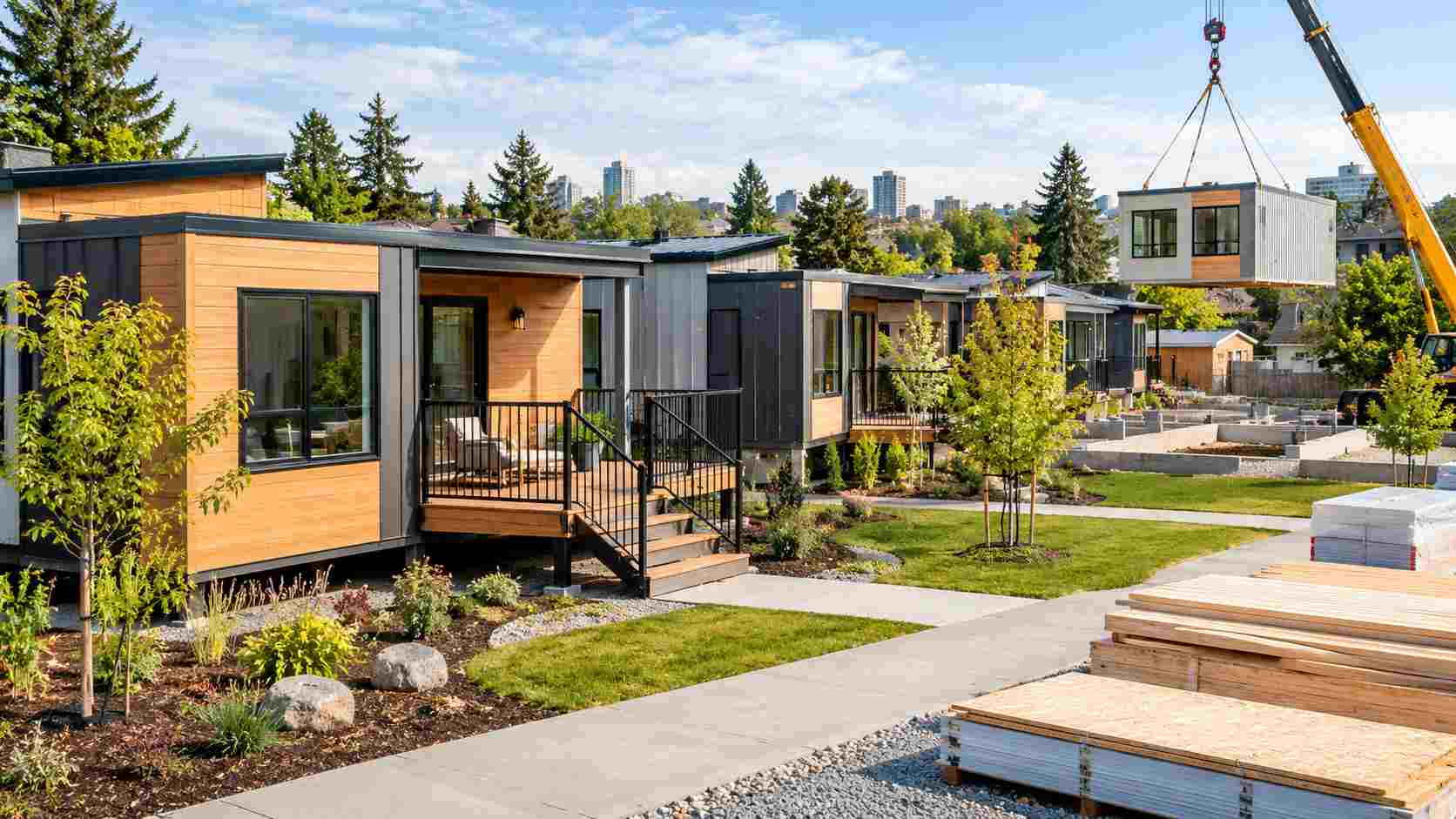
Factories produce sections containing elements such as walls, floors, ceilings and sometimes completed kitchens or bathrooms. These modules are then transported to prepared foundations, connected and finished at the property.
Because manufacturing and site preparation can sometimes happen simultaneously, developers may reduce the time between starting a project and welcoming tenants. However, transportation, foundation work, utility connections and final inspections still need careful coordination.
Can Factory-Built Housing Actually Reduce Development Costs?
The biggest potential advantage is not necessarily cheaper materials. It is improved scheduling, reduced weather disruption, better production control and more predictable use of labour.
CMHC reported that its modular construction pilot helped finance more than 800 rental homes across five provinces. One example, Calgary's 84-unit 605 Studio West project, was built and occupied in under one year, compared with nearly two years for a comparable conventional development in the same community.
However, investors should be careful with claims that modular homes are automatically 20% or 30% cheaper. A June 2026 technical article in Construction Canada noted that credible evidence does not support such blanket savings claims. Foundations, finishes, mechanical systems and building-envelope requirements can remain similar under either construction method.
Where Could Canadian Modular Construction Opportunities Exist?
Ontario: The province has an established construction and manufacturing base, making it worth examining for modular suppliers, developers and rental projects.
Alberta: Calgary provides a real example of modular construction being used for affordable multi-unit housing. Investors can examine projects connected to rental demand, institutional housing and residential development.
British Columbia: Modular construction can be useful in locations where access to skilled labour, weather conditions or remote-site logistics make conventional construction more difficult. Transportation distance remains an important cost consideration.
Atlantic Canada: Statistics Canada's 2025 experimental housing report includes modular home data for New Brunswick, Nova Scotia and Prince Edward Island. It provides a starting point for comparing reported home sizes and price ranges.
These regions represent research opportunities, not a ranking of the most profitable modular markets.
What Financing and Government Support Is Available?
CMHC expanded its mortgage loan insurance options in May 2026 to support prefabricated homes and modular multi-unit developments. Its Prefab Plus product allows eligible homebuyers to receive financing in stages as construction milestones are completed.
For multi-unit projects, CMHC also expanded modular construction eligibility across its mortgage loan insurance products, including MLI Select.
The federal Apartment Construction Loan Program also includes funding for projects using innovative construction techniques such as modular and prefabricated housing. However, financing support is conditional and does not mean every modular project qualifies.
What Risks Should Investors Consider Before Investing?
Factory construction requires substantial upfront investment in facilities, equipment, skilled workers and production systems. Manufacturers need a consistent pipeline of orders to keep those facilities operating efficiently.
Developers face a different set of challenges. Oversized modules can increase transportation expenses, while site preparation, crane installation, foundations and utility connections can add costs that are not included in a factory quotation.
Investors should also verify building-code compliance, insurance availability, warranties, manufacturer experience and the contractor's responsibility for connecting modules. A cheaper factory price means little if installation delays or quality problems increase the final development budget.
Is Modular Construction Investment Worth Considering in 2027?
Modular construction could become a more important part of Canada's housing supply, particularly where projects can use repeatable designs, reliable manufacturers and predictable demand.
For investors, the strongest opportunities may come from developments that have suitable sites, confirmed financing and a clear construction pipeline. Before committing capital, compare the complete installed project cost with a conventional alternative rather than relying on factory prices or advertised savings.
TwikUp's Perspective
At TwikUp, we see modular construction as a promising development method, but not a guaranteed shortcut to cheaper housing. Its investment potential depends on production scale, project design, transport logistics, financing and the ability to deliver completed homes efficiently. Investors evaluating residential development strategies can also explore our guide to Canada Rental Property Investment 2027: Which Cities Offer Better Cash Flow Potential?. The key is to assess the full development economics, because a faster construction schedule only creates value when the finished project also makes financial sense.
Disclaimer
This article is for informational and educational purposes only and should not be considered financial, investment, legal or construction advice. Modular construction projects involve manufacturing, transportation, financing, regulatory and development risks. Cost savings and project timelines are not guaranteed. Investors should independently verify contractor credentials, building-code compliance, project budgets, financing conditions and site requirements, and consult qualified professionals before making investment decisions.