
Key Takeaways
- Marina owners can earn revenue from boat slips, dry storage, winterisation, repairs, fuel and other services.
- Location, water depth, occupancy, operating season and maintenance costs can make a major difference to profitability.
- Investors should investigate shoreline rights, environmental requirements and development approvals before purchasing or expanding a marina.
Can Marina Investment in Canada Generate Rental Income in 2027?
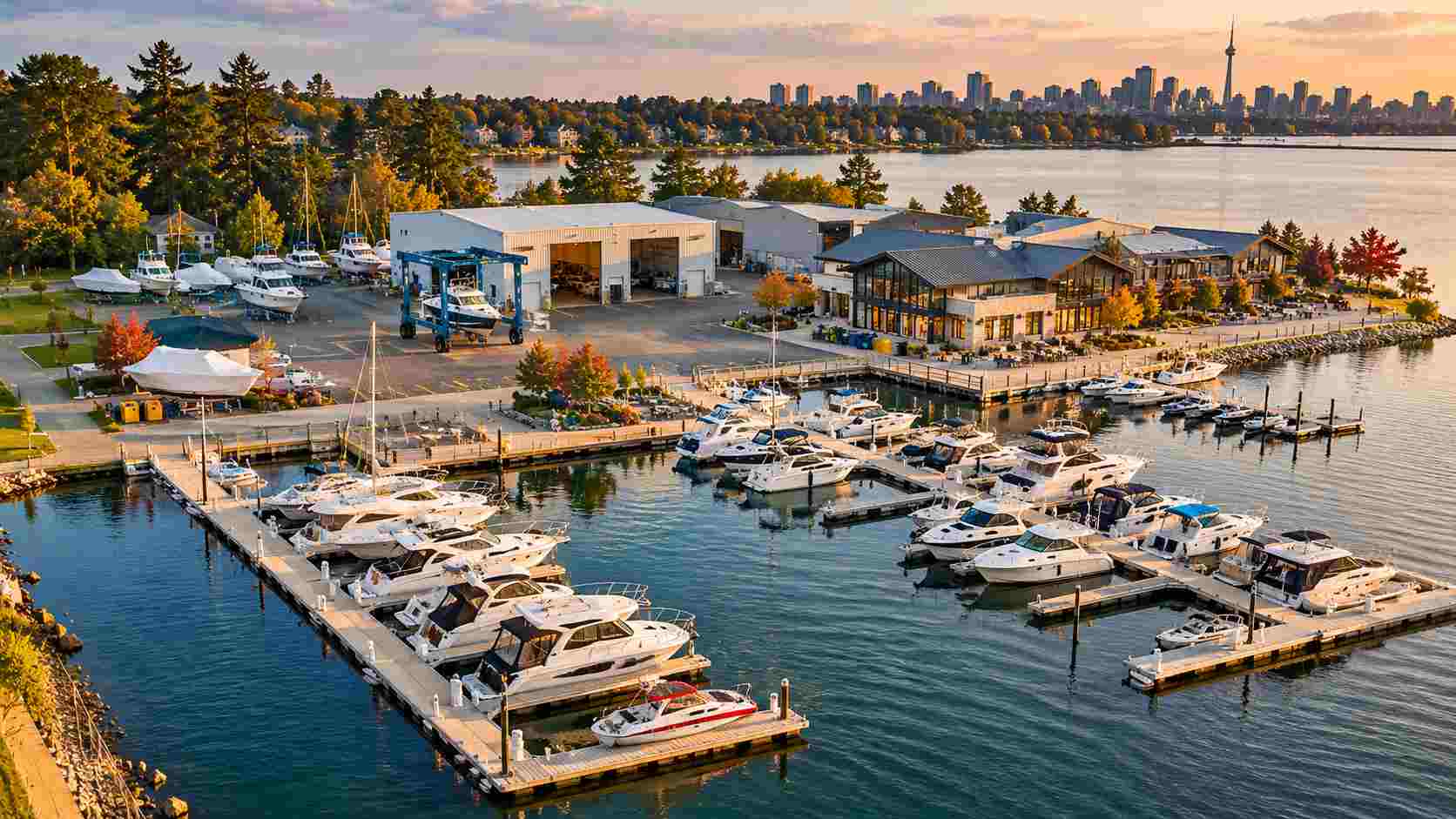
A waterfront property with dozens of boats tied to its docks might look like a simple rental business. In reality, a marina can operate more like a specialised commercial property, combining rental income, storage, maintenance and customer services.
For investors considering marina investment in Canada, the opportunity lies in serving boat owners who need somewhere reliable to dock, store and maintain their vessels. But attractive waterfront views alone do not make a marina profitable.
How Do Marinas Make Money?
The main income source is usually boat slip rental. Customers pay to keep their boats in designated docking spaces, either monthly or for an entire boating season. Rates can depend on boat length, location, available services and access to the water.
Marina operators can also earn money through:
- Seasonal and winter storage: Indoor and outdoor storage for boats when they are not being used.
- Boat launching: Fees for launching and retrieving privately owned boats.
- Fuel and marine supplies: Sales of fuel, safety equipment and boating essentials.
- Repairs and maintenance: Services such as engine servicing, cleaning and winterisation.
- Additional facilities: Parking, washrooms, restaurants, rentals and charter services.
Canada's official industry classification recognises docking and storage as core marina activities, alongside services such as fuel, repairs and rentals. Its 2024 small-business financial data reported average marina revenue of approximately $735,900, with 69.6% of businesses profitable. These figures describe existing businesses, not guaranteed returns for new investors.
Where Could Marina Investment Opportunities Exist?
Location matters more than simply owning waterfront land. Investors should look for established boating communities, accessible waterways, sufficient water depth and a customer base that needs permanent or seasonal docking.
Ontario offers access to the Great Lakes, cottage-country lakes and established recreational boating destinations. Toronto's waterfront research found that many surveyed marinas and yacht clubs had waiting lists of one to two years for wet berths. This suggests local demand, although it should not be treated as evidence of a shortage across Ontario or Canada.
British Columbia also offers opportunities around coastal and lake-based boating markets. However, waterfront tenure, land availability and operating requirements need careful examination. Atlantic Canada and Quebec have their own boating communities, but season length, local demand and site conditions differ considerably.
What Costs Can Reduce Marina Profits?
A marina has expenses that ordinary rental properties do not. Dock repairs, floating infrastructure, dredging, insurance, utilities, security, staff and winter maintenance can consume a significant part of revenue.
Water levels, storms, ice damage and changing shoreline conditions can also create unexpected capital expenses. A marina with high occupancy may still struggle financially if its infrastructure requires major repairs or its operating costs are poorly controlled.
Consider an illustrative example: a marina with 100 rentable slips charging an average of $3,000 for a full season would generate $300,000 in annual slip revenue at full occupancy. At 85% occupancy, that falls to $255,000. This is before storage, service income, payroll, repairs, insurance, taxes and other expenses. The figures are hypothetical, not verified market rates.
What Approvals Should Investors Check Before Buying?
Waterfront ownership does not automatically provide the right to build docks, expand mooring capacity or carry out dredging. Under the Canadian Navigable Waters Act, certain works in navigable waters may require Transport Canada approval, depending on their classification and potential effect on navigation.
Projects that could affect fish or fish habitat may also require Fisheries and Oceans Canada review or authorisation. Provincial and municipal requirements can add further conditions. Saskatchewan's Water Security Agency, for example, warns that marina approvals can take months or years, depending on project complexity.
Before purchasing, investors should confirm land ownership or tenure, permitted uses, existing approvals, environmental obligations, dock conditions and any restrictions on expansion.
Is Marina Investment Worth Considering in 2027?
Marinas can offer several income streams, but they are specialised businesses with location-specific risks. A property with established customers, reliable infrastructure and permission to operate may be more attractive than undeveloped waterfront land that still needs years of approvals and construction.
Investors should examine occupancy records, waiting lists, seasonal pricing, maintenance history, operating expenses and the condition of docks before making an offer. They should also test whether the business can remain viable during weaker boating seasons.
TwikUp's Perspective
At TwikUp, we believe marina investment deserves attention as a niche part of Canada's commercial property market, but it should not be judged by waterfront appeal or rental rates alone. The strongest opportunities are likely to depend on proven local demand, sound infrastructure, manageable operating costs and clear legal permissions. Investors comparing specialised property income opportunities can also read our guide to Canada Rental Property Investment 2027: Which Cities Offer Better Cash Flow Potential?. The same discipline applies: understand the real costs, test the income assumptions and assess the risks before committing capital.
Disclaimer This article is for informational and educational purposes only and should not be considered financial, investment, legal, or tax advice. Marina ownership and development involve financial, operational, environmental, and regulatory risks. Rental income and profitability are not guaranteed. Investors should independently verify market conditions, property ownership, permits, operating costs, and financial projections, and consult qualified professionals before making investment decisions.