
Key Takeaways
- Canada's film and television production volume reached CAD $10.17 billion in 2024–25, supporting demand for specialised production infrastructure.
- Toronto, Vancouver and Montreal have established studio ecosystems, while British Columbia, Ontario and Quebec remain important production destinations.
- Film studio properties require substantial capital, specialised infrastructure and reliable production tenants, making location and occupancy critical investment considerations.
Why Is Canada Film Production Real Estate Attracting Investor Attention?
A film studio is more than a large industrial building with high ceilings. It is specialised commercial infrastructure designed for sound recording, lighting, production equipment, set construction and the technical requirements of film and television projects.
Canada has developed a strong position in international production, supported by experienced crews, established studios and government incentives. According to Profile 2025, Canada's film and television production volume increased 4.6% to CAD $10.17 billion in 2024–25. Foreign location and service production alone reached $5.32 billion.
This activity creates an interesting opportunity for investors considering sound stages, production campuses and specialised studio buildings. However, higher production spending does not automatically translate into higher property rents or guaranteed investment returns.
Which Canadian Markets Could Offer Studio Investment Opportunities?
Toronto remains one of Canada's most established production markets. The city's 2026 screen industry strategy reports almost three million square feet of studio space and annual direct industry spending of up to $2.6 billion.
Vancouver and the wider British Columbia market also deserve attention. Creative BC reported more than 2.2 million square feet of mapped stage space as of March 2026. Its production ecosystem includes purpose-built studios, warehouse conversions and facilities supporting visual effects and virtual production.
Montreal offers another established market, with approximately 450,000 square feet of studio space reported by the Bureau du cinéma et de la télévision du Québec. Its production facilities and post-production capabilities provide a different investment opportunity from traditional sound-stage properties.
These markets already have established competition. Investors should therefore examine local studio availability, production bookings, labour access and upcoming developments before purchasing property.
What Types of Film Studio Properties Can Investors Consider?
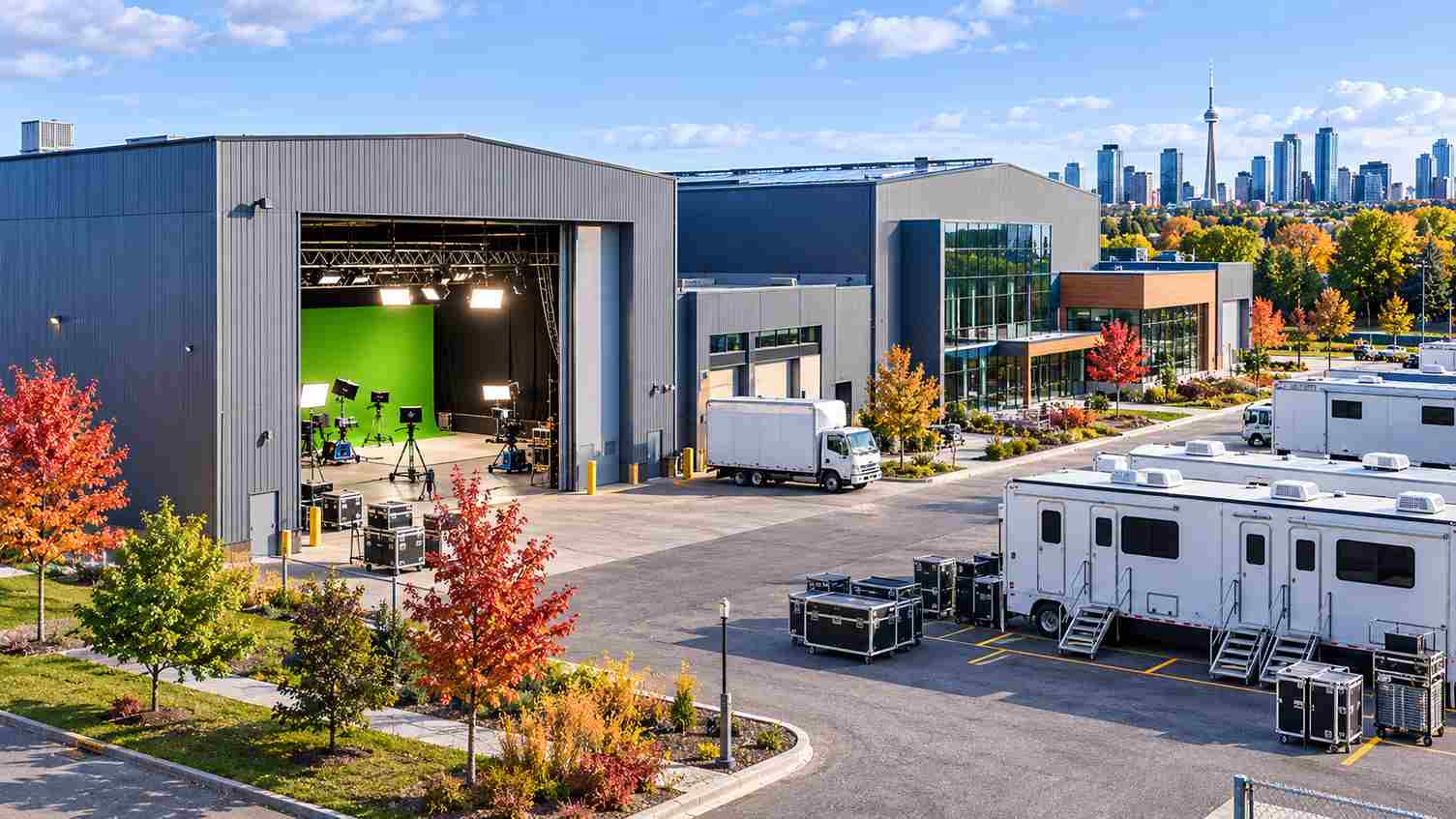
Traditional sound stages are enclosed spaces designed for filming, with acoustic treatment, high ceilings and specialised electrical systems. Production campuses combine stages with offices, workshops, storage and supporting facilities.
Virtual production studios use large LED screens and advanced technology to create digital filming environments. These facilities may attract productions requiring complex visual environments, although technology costs and equipment upgrades can be substantial.
Investors can also consider warehouse conversions, but ordinary industrial buildings are not automatically suitable for film production. Structural capacity, sound insulation, ceiling height, power supply and fire-safety requirements can significantly affect conversion costs.
How Can Film Studio Properties Generate Rental Income?
Studio owners generally earn income through sound-stage rentals, longer-term production agreements, production-office leases, workshop space and supporting facilities. Consider an illustrative property with two sound stages generating $25,000 each per week when occupied. At 40 booked weeks annually, gross stage rental revenue would reach $2 million.
This is a hypothetical example, not a verified Canadian studio rental rate. Actual revenue depends on stage specifications, location, production demand, booking duration and competition.
Owners must still account for property taxes, insurance, maintenance, utilities, staffing, equipment replacement, financing and periods without bookings. A studio can have impressive rental rates but still struggle financially when occupancy is inconsistent.
What Risks Should Film Studio Investors Examine?
The biggest risk is dependence on production activity. Film schedules can change, projects can move between countries and international studios may choose locations offering stronger financial incentives.
Development costs are another concern. Sound stages require specialised construction, technical infrastructure and significant capital investment. A building designed for film production may also have fewer alternative uses if demand weakens.
Investors should examine tenant agreements, existing booking commitments, construction budgets, local tax incentives and competing studio supply. Government production tax credits should not be treated as direct subsidies for property owners.
Can Film Studio Real Estate Become a Long-Term Investment Opportunity?
Canada's production infrastructure provides a foundation for specialised commercial property investment, particularly in established filming markets. However, long-term success will depend on more than industry growth.
Properties with adaptable facilities, experienced operators, reliable production relationships and diversified rental income may have stronger investment potential than speculative developments built without confirmed demand.
TwikUp's Perspective
For investors exploring different ways to participate in Canada's property market, understanding alternative real estate investments is equally important. Mortgage Investment Corporations (MICs), for example, offer exposure to private mortgage lending rather than direct property ownership. However, their returns, liquidity conditions and credit risks require careful evaluation. Readers can explore our guide on Canada Mortgage Investment Corporations 2027: Are MICs Worth Considering for Investors? to understand how MIC investments work and what investors should examine before committing capital.
Disclaimer This article is for informational and educational purposes only. Film studio real estate involves specialised construction, financing, tenant, technology and market risks. Investors should conduct independent due diligence and consult qualified real estate, legal, tax and financial professionals before making investment decisions.