
Key Takeaways
- Tenant insurance protects personal belongings, provides personal liability coverage and may pay additional living expenses after an insured event.
- Standard policies have exclusions and coverage limits, particularly for certain water damage, valuable possessions and business equipment.
- Your landlord's building insurance and your tenant policy serve different purposes, so one should not be treated as a substitute for the other.
What Does Tenant Insurance Cover in Canada?
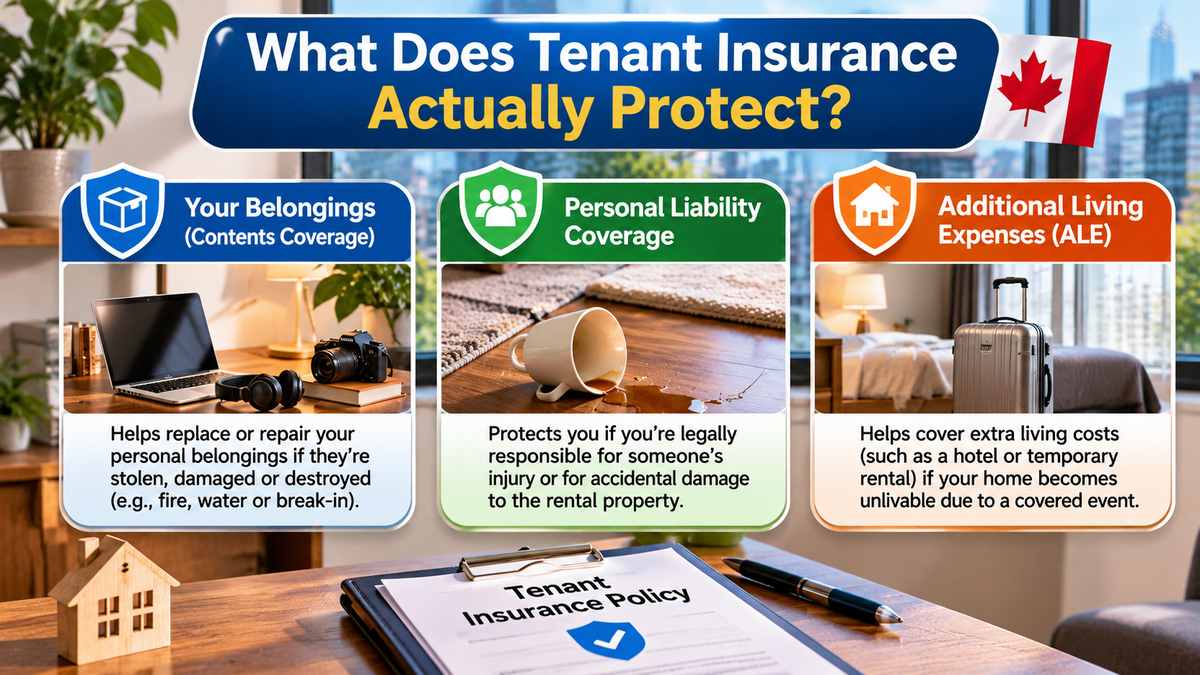
Tenant insurance in Canada generally protects renters through three main types of coverage: personal belongings, personal liability and additional living expenses. It can help replace damaged or stolen possessions, cover certain claims involving accidental injury or property damage, and pay eligible temporary living costs after an insured event.
However, coverage depends on the policy wording, exclusions, limits and deductible. A policy does not automatically cover every accident or every item inside your rental home.
1. Personal Belongings and Contents Coverage
Contents coverage protects the personal property you own inside your rented home. This can include furniture, clothing, laptops, televisions, kitchen appliances, bicycles and other household belongings.
Depending on the policy, covered events may include fire, smoke, theft, vandalism and certain types of water damage. Some policies also protect belongings temporarily kept outside your apartment, such as items stolen from your vehicle or possessions you take while travelling.
One common mistake is choosing coverage based only on the value of a few expensive items. Consider the cost of replacing everything you own, including everyday items such as clothes, bedding, cookware and electronics.
Create a home inventory with photographs, purchase receipts where available and estimated replacement costs. This can help you select a more realistic contents coverage limit and provide useful evidence if you need to make a claim.
2. Personal Liability Coverage
Personal liability coverage helps protect you financially if you are legally responsible for accidentally injuring someone or damaging another person's property.
For example, a visitor could slip on a wet floor in your apartment and suffer an injury. Another situation might involve a cooking accident that starts a fire and damages a neighbouring unit.
Depending on the circumstances and policy terms, liability coverage may help pay eligible compensation, legal defence expenses and repair costs. Your policy will specify the maximum amount available.
This protection is important because a relatively small accident can create expenses far beyond the value of your personal belongings. Review the liability limit carefully rather than choosing a policy based only on its contents coverage.
3. Additional Living Expenses Coverage
What happens if a fire or another insured event makes your apartment temporarily unlivable?
Additional living expenses coverage, often called ALE, may help pay reasonable extra costs while your rental home is being repaired. Eligible expenses can include temporary accommodation, additional meal costs and certain other necessary living expenses.
For example, imagine a kitchen fire makes your apartment unsafe for several weeks. Your policy may help pay for a hotel or temporary rental, subject to the coverage limit and conditions.
ALE does not automatically cover every reason you need to leave your home. The disruption generally needs to result from an event covered by your policy.
What Does Tenant Insurance Usually Not Cover?
Tenant insurance has important exclusions. The exact list differs between insurers and policy types, but common limitations may include:
- Certain floods: Overland flooding or groundwater damage may require optional coverage.
- Sewer backup: Protection may need to be added through a separate endorsement.
- Earthquake damage: Often excluded from basic policies unless additional protection is purchased.
- Business equipment: Standard personal policies may provide limited protection for property used for business.
- Wear and tear: Gradual deterioration, maintenance problems and neglect are generally not insured events.
- Roommates' belongings: Another tenant's possessions may not be covered under your policy unless the contract specifically includes them.
Do not assume that the word "water damage" means every water-related event is insured. A burst pipe, sewer backup and overland flood can receive different treatment under the same policy.
Actual Cash Value vs Replacement Cost
The way an insurer calculates your claim payment can make a significant difference.
Actual cash value generally accounts for depreciation. If a five-year-old television is stolen, the insurer may calculate its value based on its age and condition rather than the price of a new model.
Replacement cost coverage generally aims to pay the cost of replacing an insured item with a comparable new one, subject to the policy conditions and limits.
For example, if replacing an eligible laptop costs $1,200 but its depreciated value is $500, an actual-cash-value policy may pay based on the lower amount. A replacement-cost policy may provide a higher payment, depending on its terms.
Check whether your contents coverage uses actual cash value or replacement cost before purchasing.
Is Tenant Insurance Mandatory in Canada?
There is no single nationwide rule requiring every renter to purchase tenant insurance. However, a landlord may include an insurance requirement in a rental agreement, depending on the applicable provincial or territorial law.
Requirements and tenant protections can differ across Canada. Review your lease carefully and check the rules that apply where you live.
Even when a policy is not legally required, going without coverage means you may have to replace your belongings yourself and handle eligible liability costs without insurance support.
How Much Tenant Insurance Coverage Should You Buy?
Start by estimating the replacement cost of your possessions. Then consider your financial exposure if someone is injured or your actions accidentally damage another unit. Compare policies using more than the monthly premium. Check the contents limit, liability limit, deductible, additional living expenses limit, special limits for valuables and available water-damage endorsements.
Also ask whether jewellery, collectibles, bicycles, musical instruments or expensive electronics need separate coverage. Some policies impose individual limits even when the overall contents limit appears sufficient.
TwikUp's Perspective
The biggest mistake an executor can make is treating estate administration as a simple family handover. Before distributing money or property, the executor must confirm ownership, settle outstanding debts and address the deceased person's tax obligations.
If you want to understand the responsibilities involved after someone passes away, read our guide on Executor Responsibilities in Canada: What Happens After Someone Dies. It explains the key steps involved in managing an estate, handling probate, filing final tax returns and distributing assets to beneficiaries.
Disclaimer
This article is for general educational purposes and is not individualized insurance or legal advice. Tenant insurance coverage, exclusions and rental requirements vary by insurer, policy and province or territory. Read your policy and confirm coverage directly with your insurer.