
Key Takeaways
- Leasing generally costs less per month, but returning the vehicle leaves you without an asset.
- Financing can provide better long-term value when you keep the vehicle beyond the loan term.
- Annual kilometres, lease-end charges, interest rates and resale value can change which option is cheaper.
Car Lease vs Financing in Canada: Which Costs Less?
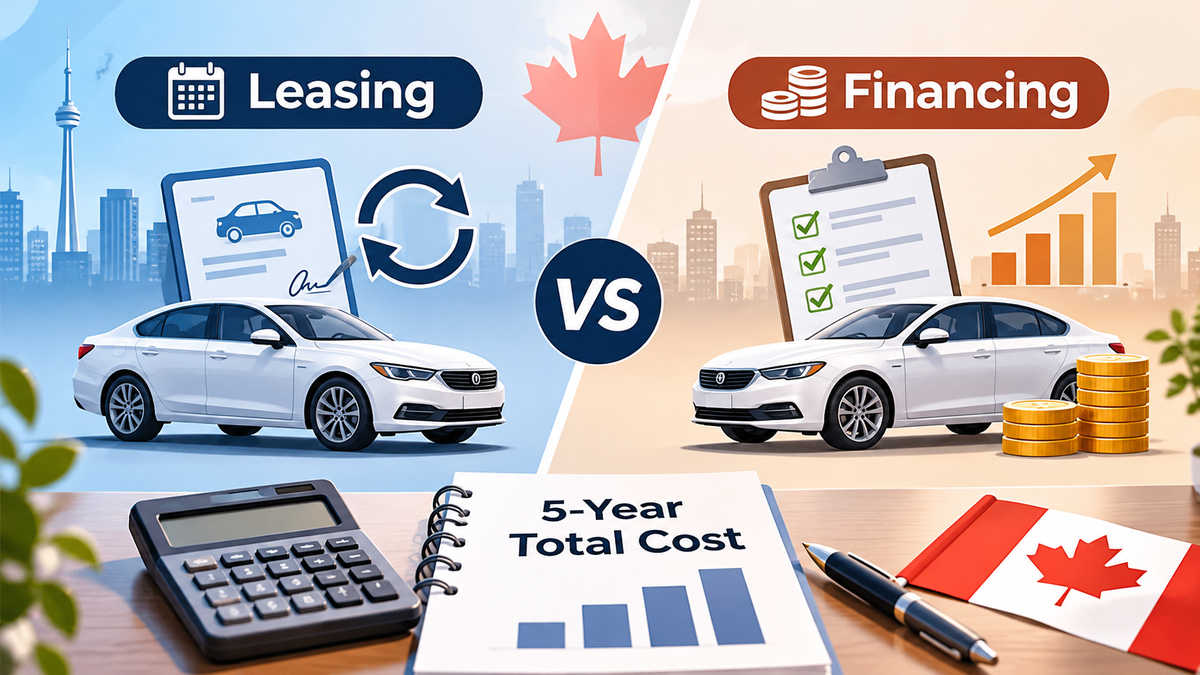
Financing a car can cost less over five years if you keep the vehicle and account for its resale value. Leasing usually offers lower monthly payments, but you generally return the vehicle without owning it. The cheaper option depends on the contract, interest rate, mileage and how long you plan to drive the car.
The important comparison is not simply $600 versus $800 per month. It is how much money leaves your pocket over five years and what you own at the end.
How Does Car Leasing Work in Canada?
A car lease is an agreement that lets you use a vehicle for a fixed period, commonly three to five years. You make regular payments based largely on the vehicle's expected depreciation during the lease, along with financing charges and applicable taxes.
At the end, you generally return the vehicle, purchase it for the agreed residual value if the contract allows, or arrange another vehicle.
Leasing can suit drivers who prefer changing cars regularly. However, contracts may include annual kilometre limits, vehicle-condition requirements and charges for excessive wear. Ending a lease early can also be expensive.
How Does Car Financing Work?
When you finance a vehicle, you borrow money to purchase it and repay the loan through scheduled instalments. Each payment covers principal and interest. Once the loan is fully repaid, you own the vehicle outright, subject to any other registered claims being discharged.
Unlike a typical lease, financing does not impose a contractual annual kilometre allowance. You can generally keep the vehicle, sell it or trade it in, although its condition and mileage will affect resale value.
The trade-off is a higher monthly payment in many cases because you are financing the vehicle's purchase price rather than only its expected depreciation over the lease period.
Five-Year Cost Comparison: An Illustrative Example
Consider a vehicle with a negotiated pre-tax price of $40,000. To compare the options, assume the following illustrative offers:
| Cost detail | Lease | Finance |
|---|---|---|
| Contract period | 60 months | 60 months |
| Monthly payment | $540 | About $773 |
| Total scheduled payments | $32,400 | About $46,400 |
| Estimated value after five years | Not owned | $16,000 |
| Net cost after estimated resale value | $32,400 | About $30,400 |
For the financing example, the loan assumes a $40,000 amount financed at 6% annual interest over 60 months, with no down payment. The estimated monthly payment is approximately $773. The $16,000 resale value is an illustrative assumption, not a guaranteed market price.
For the lease, the $540 monthly payment is an assumed quote, and the vehicle is returned at the end. The comparison excludes taxes, upfront charges, lease-end fees, maintenance, insurance and fuel. Actual contracts may produce very different results.
This example shows why a higher monthly payment does not automatically mean a higher five-year economic cost. Financing leaves the borrower with a vehicle that can be sold. Leasing does not.
What Costs Can Make a Lease More Expensive?
A lease quote should be checked for more than the advertised payment. Pay attention to:
- Kilometre allowance: Driving beyond the contracted limit can trigger additional charges.
- Excess wear and tear: Damage, neglected maintenance or poor vehicle condition may lead to return charges.
- Upfront costs: Initial payments, acquisition fees and other charges increase the amount paid.
- Early termination: Ending the agreement before its scheduled date may involve substantial costs.
- Lease buyout: Purchasing the vehicle at the end requires paying the agreed residual amount, plus applicable taxes and fees.
A lower monthly payment can lose its appeal if your driving habits do not fit the contract.
When Does Financing Make More Financial Sense?
Financing is often worth considering if you plan to keep the vehicle for longer than five years. Once the loan is paid off, you can continue driving without another monthly loan payment.
It may also suit people who drive long distances, travel frequently or want to avoid lease kilometre restrictions. Ownership gives you more control over when to sell or replace the vehicle.
However, ownership does not eliminate costs. Repairs, maintenance, depreciation and resale-market changes remain your responsibility. A vehicle that loses value quickly may deliver less financial benefit than expected.
Which Option Should You Choose?
Leasing may fit someone who values newer vehicles, predictable replacement cycles and lower monthly payments. Financing may suit someone who wants ownership, drives more kilometres or intends to keep the same vehicle for many years.
Before signing, compare written offers using the same vehicle price, contract length, down payment and tax assumptions. Ask the dealer to disclose all fees and the total amount payable. Canada's official Vehicle Lease or Loan Calculator can help compare the figures.
TwikUp's Perspective
The five-year decision should reflect your long-term financial plans, not just monthly payments. If a vehicle owner passes away, managing outstanding financial obligations may also become part of estate administration. Read our guide on Executor Responsibilities in Canada: What Happens After Someone Dies to understand how an executor handles the deceased person's financial affairs.
Disclaimer
This article is for general educational purposes and is not individualized financial advice. Vehicle prices, interest rates, taxes, lease conditions and consumer protections vary by province, lender and contract. Confirm all figures and obligations in writing before signing.