
Key Takeaways
- An executor must protect the deceased person's property, identify beneficiaries and settle the estate according to the will and applicable law.
- Probate is not automatically required for every estate. The assets involved and provincial or territorial rules determine whether court authorization is necessary.
- Distributing inheritances before resolving tax obligations can expose an executor to personal financial liability.
What Does an Executor Do After Someone Dies in Canada?
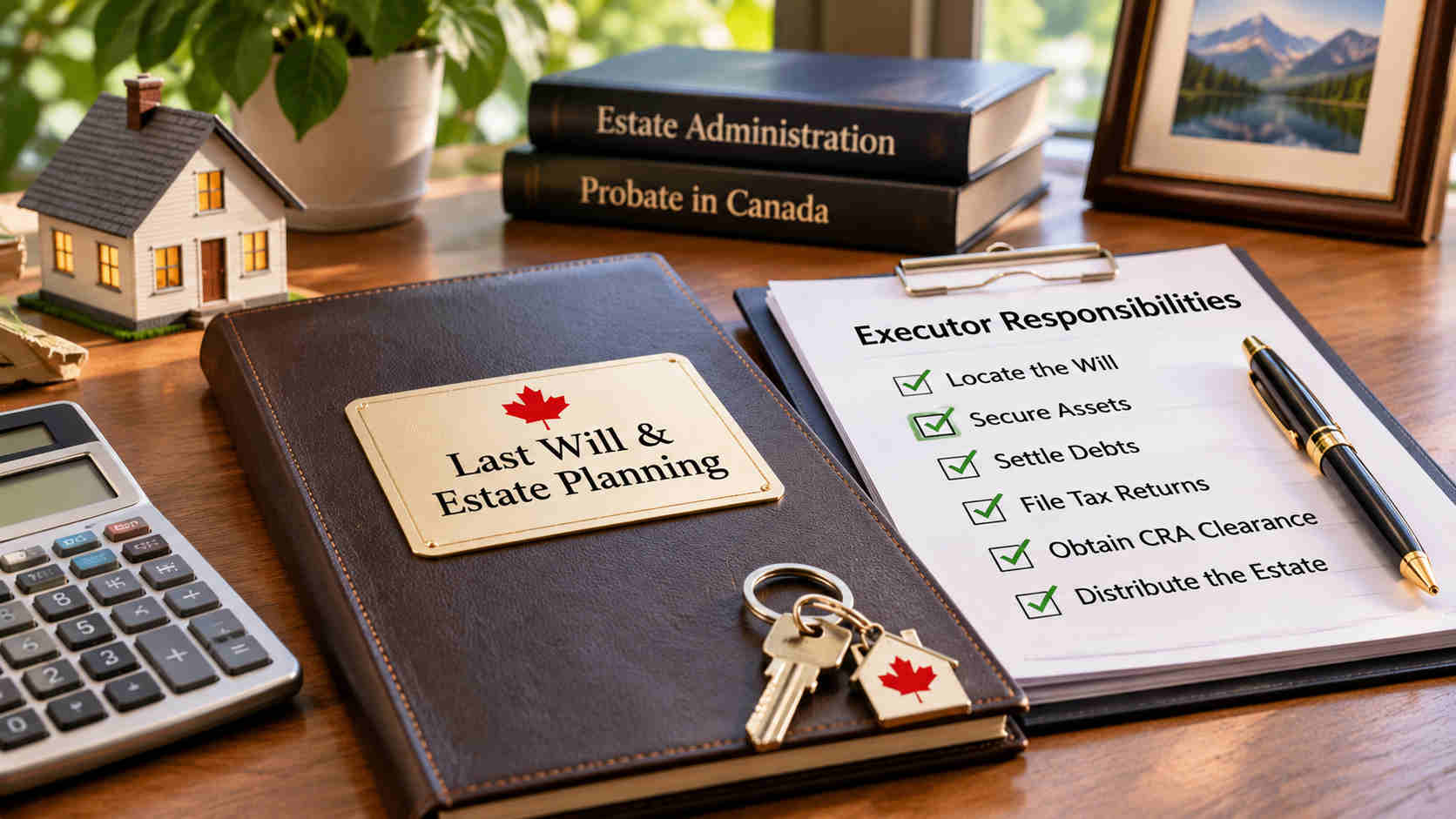
An executor is the person named in a will to manage the deceased person's estate and carry out their final instructions. The role involves locating assets, dealing with financial institutions, paying legitimate debts and taxes, and distributing the remaining property to beneficiaries.
Being an executor is not simply a matter of reading the will and handing out inheritances. It is a legal and administrative responsibility that can continue for months or longer, depending on the estate's complexity.
Step 1: Locate the Will and Confirm Your Authority
The first responsibility is to locate the most recent valid will and any amendments or codicils. Read the document carefully to understand who has been appointed, who the beneficiaries are and whether the deceased left specific instructions about property.
Contact the lawyer, notary or other professional who may have prepared or stored the will. You should also obtain the necessary death certificate and keep copies of important documents.
Being named as executor does not always mean you must accept the appointment. If you are unwilling or unable to act, obtain legal advice about declining or renouncing the role before taking steps that could amount to accepting it.
Step 2: Secure the Estate's Property
An executor must identify and protect the deceased person's assets. These may include bank accounts, investment portfolios, real estate, vehicles, valuable personal belongings, business interests and money owed to the deceased.
Prepare an inventory showing each asset, its ownership, estimated value and supporting documents. Record outstanding liabilities separately. Keep financial statements, property records, insurance documents and receipts organized.
Protect physical property by arranging appropriate insurance, maintaining essential utilities where necessary and securing vacant homes. Do not assume that every account or asset automatically forms part of the estate. Joint ownership and named beneficiaries can affect how certain assets pass after death.
Step 3: Determine Whether Probate Is Required
Probate is the court process that confirms a will's validity and gives or confirms legal authority to the estate representative. Banks, investment firms or land registries may require probate documents before releasing or transferring certain assets.
However, probate is not compulsory for every estate. Whether it is needed depends on the property involved, ownership arrangements, financial institution requirements and provincial or territorial law.
For example, Ontario uses a Certificate of Appointment of Estate Trustee in many probate situations. Its simplified small-estate process is available for qualifying estates valued at $150,000 or less. Other provinces use different procedures and terminology.
Do not assume that an estate can avoid probate simply because it appears small. Check the requirements of the institutions holding the assets and the applicable court rules.
Step 4: Notify Institutions and Identify Outstanding Debts
Once your authority is established, notify the relevant banks, investment companies, insurance providers, pension administrators and government departments. You may also need to cancel subscriptions, utilities, credit cards and services that are no longer required.
Prepare a complete list of outstanding obligations, including mortgages, credit cards, personal loans, utility bills, funeral expenses and unpaid taxes. Review creditor statements rather than relying only on information supplied by family members.
Estate debts are generally paid from estate assets, not automatically from the executor's personal funds. However, an executor can face personal consequences for mishandling the estate, breaching legal duties or distributing assets improperly.
If the estate may not have enough money to cover its debts, do not distribute property or choose which creditors to pay without legal advice.
Step 5: File the Deceased Person's Tax Returns
Tax administration is one of the most important executor responsibilities in Canada. The legal representative must ensure that the deceased person's final T1 income tax and benefit return is filed. Depending on the circumstances, previous unfiled returns, optional returns and a T3 trust income tax return for the estate may also be required.
The final return reports relevant income and tax matters up to the date of death. The estate may also have to report income earned after death, such as interest, dividends or rental income.
Keep records of asset values, transactions, expenses and payments. The applicable filing and payment deadlines depend on the date of death and the circumstances of the estate.
Step 6: Obtain a CRA Clearance Certificate
Before distributing the estate's remaining assets, the executor should consider applying for a CRA clearance certificate. This confirms that the known tax amounts covered by the certificate have been paid or secured.
Without the certificate, an executor who distributes estate assets may become personally liable for certain unpaid tax amounts, up to the value distributed. The CRA requires supporting documents, including proof of legal authority, tax filings and details of the estate's assets and distributions.
A clearance certificate is not a formality to leave until the final day. Build the application into the settlement process and keep sufficient funds available for outstanding liabilities.
Step 7: Distribute the Estate and Complete the Accounts
After debts, taxes and required administrative expenses have been addressed, the executor can distribute the remaining estate according to the will and applicable law.
Some beneficiaries may receive specific items or cash amounts, while others receive a share of what remains. Keep a clear record of every payment, transfer, sale and expense. Provide beneficiaries with an understandable accounting of the estate administration.
Do not rush the final distribution because beneficiaries are asking for their inheritance. Claims, tax adjustments, disputed assets or unexpected liabilities can change the amount available.
What If There Is No Will?
When someone dies without a valid will, they are generally considered to have died intestate. The court may appoint an administrator to manage the estate. The administrator performs many duties similar to an executor, but the authority and distribution process follow provincial or territorial intestacy laws.
The order of inheritance is not necessarily decided by family agreement. A surviving spouse, children and other relatives may have rights determined by the law that applies to the estate.
TwikUp's Perspective
The biggest mistake an executor can make is treating estate administration as a family handover rather than a formal financial process. A relative may be eager to receive a house, vehicle or bank balance, but the executor must first establish ownership, liabilities and the estate's tax position.
A practical way to reduce disputes is to maintain a dated record of decisions, valuations, invoices, professional advice and beneficiary communications. If a property is jointly owned or has a named beneficiary, examine the legal ownership before including it in the distributable estate. Our guide to what happens to a joint bank account when one owner dies explains why ownership arrangements matter.
Professional legal and accounting help can be worthwhile when the estate includes real estate, private businesses, tax complications, family disagreements or significant debts. An organized process protects beneficiaries and helps the executor fulfil the responsibility properly.
Disclaimer
This article provides general educational information about estate administration in Canada. Executor duties, probate procedures, liability rules and inheritance laws vary by province and territory. It is not legal, tax or financial advice. Executors should consult a qualified estate lawyer or tax professional about the circumstances of a specific estate.