
Key Takeaways
- A chargeback is generally requested through your credit card issuer, not directly through Visa or Mastercard.
- Merchant disputes and unauthorized transactions are different situations and should be reported using the appropriate process.
- A successful dispute depends on the reason for the claim, supporting evidence, applicable deadlines and the card issuer's investigation.
What Is a Credit Card Chargeback in Canada?
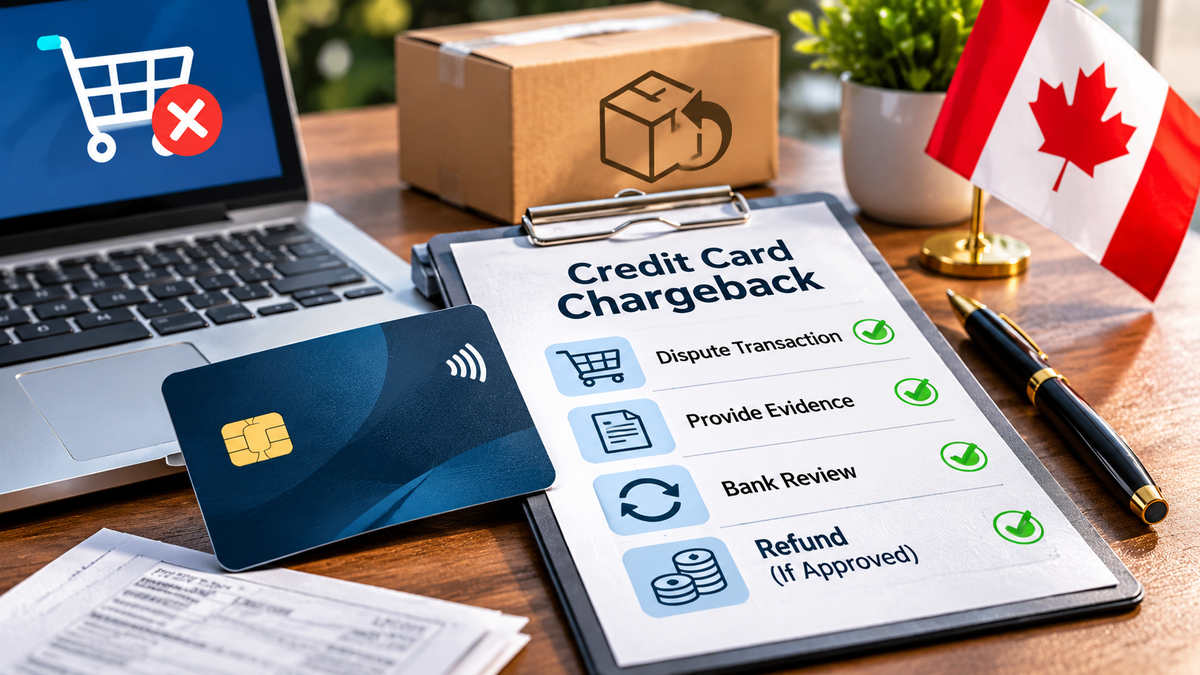
A credit card chargeback is a process through which a cardholder asks their credit card issuer to reverse a transaction. It may help when a merchant does not deliver what was promised, charges the wrong amount, processes a duplicate payment or fails to issue an eligible refund.
In Canada, consumers generally start by contacting the financial institution that issued their card. The issuer reviews the complaint and, where applicable, submits the dispute through the payment network. The merchant may then be asked to provide evidence supporting the transaction.
A chargeback is not an automatic refund. The issuer reviews the circumstances, the evidence and the applicable card network rules before making a decision.
When Can You Dispute a Credit Card Transaction?
You may have grounds to dispute a charge in situations such as:
- Product not received: You paid for an item, but the merchant never delivered it.
- Service not provided: A business charged you for a service it did not deliver as agreed.
- Duplicate billing: The same purchase appears more than once on your statement.
- Incorrect amount: The merchant charged more than the agreed purchase price.
- Refund not received: The merchant approved a refund, but the credit never appeared on your account.
- Cancelled subscription: You cancelled a recurring service according to its terms, but the business continued charging you.
- Goods not as described: The item received was materially different from what the seller advertised or agreed to provide.
Eligibility depends on the facts and the issuer's applicable dispute rules. A customer who simply changes their mind about a purchase may not have a valid chargeback reason.
Chargeback vs. Unauthorized Credit Card Transaction
These two situations require different approaches.
A chargeback usually concerns a transaction you recognize but believe was processed incorrectly or breached the purchase agreement. For example, you ordered a laptop, paid for it and never received it.
An unauthorized transaction involves a payment you did not make or approve. It may indicate stolen card details, account compromise or identity fraud.
If you see a transaction you do not recognize, contact your card issuer immediately using its fraud-reporting channel. Ask whether the card should be locked or replaced. Do not wait for a merchant response when you suspect fraud.
The Financial Consumer Agency of Canada explains that federally regulated financial institutions must investigate unauthorized transactions. For an unauthorized credit card transaction, your legal maximum liability generally cannot exceed $50 unless gross negligence is established. Card-network zero-liability commitments may provide additional protection.
How to File a Credit Card Chargeback in Canada
The process varies by issuer, but these steps provide a practical starting point.
1. Review the transaction
Check the merchant name, purchase date and amount. Sometimes a business appears under a different legal or billing name. Also confirm that the transaction has posted. Some issuers do not accept ordinary merchant disputes while a payment is still pending.
2. Contact the merchant when appropriate
For a purchase-related disagreement, explain the problem and request a correction or refund. Use email or another written channel where possible. Include the order number, transaction date and a clear description of what went wrong.
If the merchant has closed, is unreachable or the transaction appears fraudulent, tell your issuer rather than delaying the report.
3. Contact your credit card issuer
Use the phone number on the back of your card or the issuer's secure online banking service. Explain why you are disputing the payment and ask how to submit the claim.
Mastercard also advises cardholders to contact the financial institution that issued their card when a purchase cannot be resolved with the merchant.
4. Submit supporting documents
Provide the information requested by your issuer. This may include receipts, order confirmations, delivery records, cancellation notices, refund promises, screenshots and copies of messages exchanged with the merchant.
5. Monitor the investigation
The issuer may request further details or provide a temporary credit while reviewing the case. Keep checking your account and respond quickly to requests. A temporary credit is not necessarily a final decision.
What Evidence Can Strengthen Your Dispute?
Your documents should show what you purchased, what the merchant promised and how the transaction went wrong.
For example, if a $450 online order never arrived, useful evidence could include the order confirmation, the expected delivery date, tracking information and messages asking the seller to resolve the problem.
For a duplicate charge, keep the receipt and statement showing both payments. For a cancelled subscription, save the cancellation confirmation and any later billing records.
Avoid editing screenshots or leaving out relevant details. Give the issuer an accurate account, including any response or refund already received from the merchant.
How Long Do You Have to File a Chargeback?
There is no single deadline that applies to every Canadian credit card dispute. Time limits can depend on the payment network, dispute reason, card agreement and date of the transaction or statement.
Some issuers publish their own recommended reporting periods. For example, TD recommends contacting it within 30 days after the statement period end date for certain credit card disputes. Other issuers may apply different requirements.
The safest approach is to report a problem as soon as you notice it. Do not assume that a general 30-day or 60-day period applies to every purchase.
What If Your Bank Rejects the Chargeback?
Ask the issuer for the reason behind its decision and whether you can provide additional documents or request a review. Check whether the decision relates to missing evidence, an expired deadline, an ineligible dispute reason or information supplied by the merchant.
If your concern is about how a federally regulated bank handled your complaint, use its formal complaint process. The Financial Consumer Agency of Canada explains that banks must provide a written response within 56 calendar days. If you remain dissatisfied, you may be able to take the complaint to the Ombudsman for Banking Services and Investments (OBSI).
FCAC supervises financial institutions but does not decide individual disputes or award refunds.
A Provincial Consumer Protection Right Worth Knowing
Some provinces provide additional legal remedies beyond card-network chargeback procedures. Ontario's Consumer Protection Act, 2002, for example, contains a provision allowing consumers to request that a credit card issuer cancel or reverse certain charges connected with agreements cancelled under the Act, payments received contrary to the Act and other specified situations.
This is not a general right to reverse every disappointing purchase. The statutory conditions, written-request requirements and prescribed deadlines matter. Consumers should check the law that applies in their province before relying on a legal remedy.
TwikUp's Perspective
A credit card dispute can become more complicated when the cardholder passes away before the issue is resolved. Outstanding balances, refunds and financial claims may then need attention during estate administration.
For a better understanding of what happens next, read our guide on Executor Responsibilities in Canada: What Happens After Someone Dies. It explains how an executor manages the deceased person's financial affairs, handles outstanding obligations and administers the estate.
Disclaimer
This article is for general educational purposes and is not legal or financial advice. Chargeback eligibility, deadlines and consumer rights depend on the card issuer, payment network, transaction details and applicable provincial or territorial laws. Contact your card issuer promptly for guidance about a specific transaction.