
Key Takeaways
- The Bank of Canada’s next interest-rate announcement and Monetary Policy Report are scheduled for October 28, 2026.
- The latest business survey found that renewed Canada-US trade tensions are weighing on firms’ export and investment outlooks.
- Businesses continue to face cost pressures, while hiring intentions remain soft and inflation expectations are still elevated.
Bank of Canada Decision Approaches Amid Economic Uncertainty
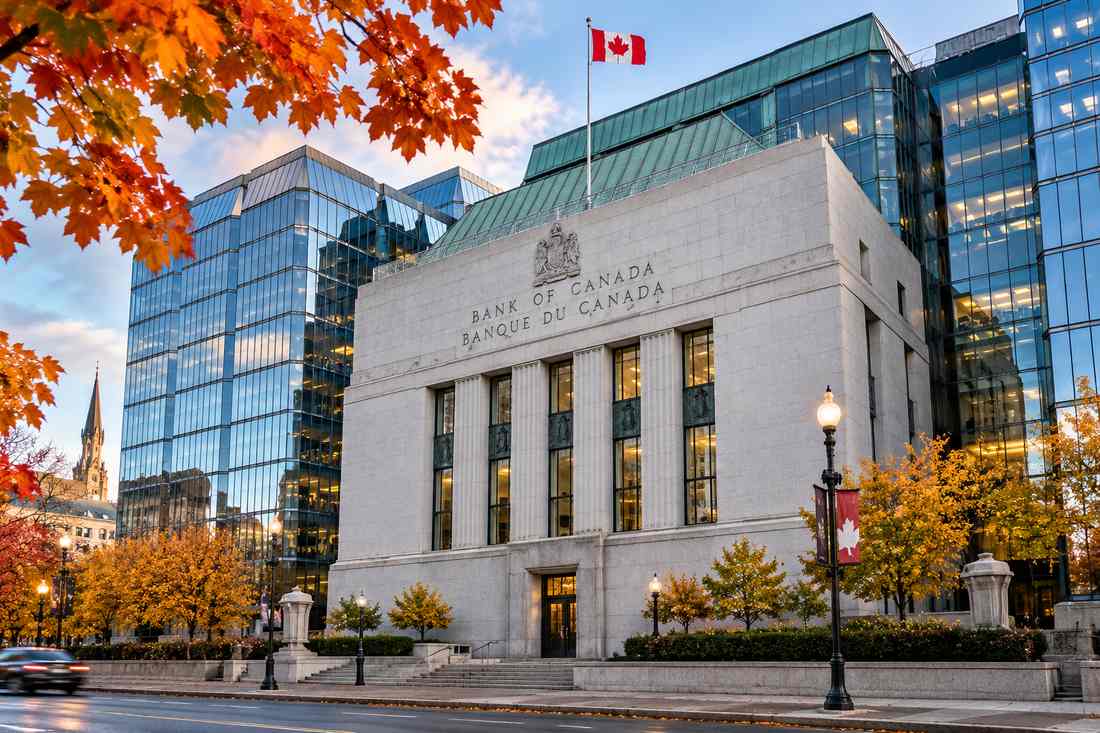
Canadian households, businesses and financial markets are approaching an important economic date. The Bank of Canada is scheduled to announce its next policy interest-rate decision on Wednesday, October 28, alongside its quarterly Monetary Policy Report.
The announcement will provide an updated assessment of inflation, economic growth and the risks facing Canada. The Bank has not confirmed what its next rate decision will be, making the accompanying economic analysis especially important for borrowers, savers and employers.
Trade Tensions Complicate the Business Outlook
The Bank of Canada’s third-quarter Business Outlook Survey, published October 19, found that business sentiment improved during the quarter after weakening previously. Firms reported better sales outlooks, while investment intentions remained relatively robust.
However, the survey also identified a more difficult picture following the breakdown of Canada-US trade talks on August 21. Responses collected afterward suggested that new US tariffs and Canadian counter-tariffs were weakening business sentiment and weighing on export and investment plans.
The timing matters: most interviews took place before the trade talks broke down. The Bank’s subsequent consultations therefore provide additional context about how conditions changed after the initial survey responses were collected.
Costs, Inflation and Hiring Remain in Focus
Businesses reported that expectations for input costs and selling-price growth had eased overall but remained elevated. Higher fuel prices and tariffs were among the pressures cited by firms.
Employment intentions also remained soft. Many businesses expected to keep staffing levels unchanged, while some planned to use automation and efficiency improvements to manage demand without adding workers.
These findings do not determine the Bank’s next move. Instead, they highlight the competing pressures policymakers must assess when considering inflation and economic activity.
TwikUp's Perspective
The October announcement matters because interest rates affect borrowing costs, savings returns and business investment decisions. Yet the policy outlook cannot be understood through inflation alone: trade uncertainty can weaken demand while simultaneously raising costs.
For readers, the most useful signal will be how the Bank weighs those competing risks in its updated projections. Until the decision is published, predictions about a rate cut or increase should be treated as speculation, not confirmed policy.