
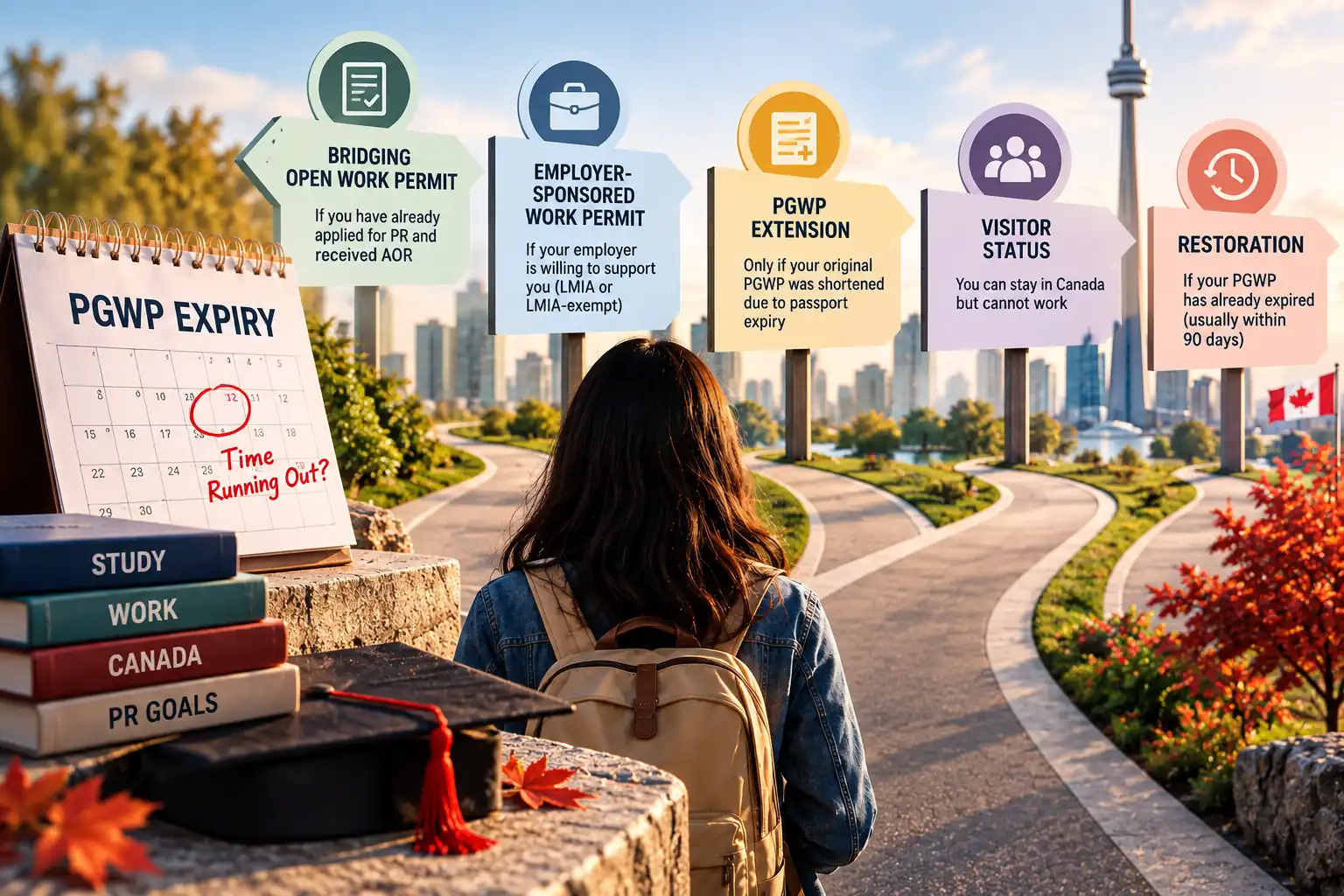
Key Takeaways
- A PGWP usually cannot be renewed just because permanent residence is pending, except where passport expiry shortened the eligible permit period.
- A BOWP generally requires a complete PR application and an Acknowledgement of Receipt; an Express Entry profile or invitation alone is insufficient.
- Applying before permit expiry may preserve work authorization through maintained status, while visitor status allows a stay but not continued work.
You’ve finished your studies, found a job and started building a life in Canada. Now your Post-Graduation Work Permit (PGWP) is approaching its expiry date—and permanent residence is still uncertain.
What happens next depends on your situation. Permission to stay in Canada and permission to work are separate issues. Some options may protect both; others may only allow you to remain in the country.
Here’s how to identify the route worth exploring before your permit expires.
1. Can You Extend Your PGWP?
Generally, you cannot renew a PGWP simply because you are waiting for permanent residence.
One exception applies if your permit was shortened because your passport expired before the end of your eligible PGWP period. After renewing your passport, you may apply for the remaining period. IRCC currently requires this extension application to be submitted on paper.
Check whether your permit’s expiry date reflects your full entitlement or your previous passport’s validity. See IRCC’s PGWP guidance.
2. Already Applied for PR? Check Bridging Permit Eligibility
A Bridging Open Work Permit (BOWP) may allow eligible applicants to keep working while their permanent residence application is processed.
Having an Express Entry profile—or receiving an invitation to apply—is not enough.
For eligible Express Entry programs, you must have submitted a complete PR application, passed the completeness check and received an Acknowledgement of Receipt (AOR). You must also meet the requirements concerning your status in Canada and other eligibility conditions.
Provincial nominees may qualify too, although requirements differ by application route, including restrictions attached to the nomination.
Check the BOWP requirements for your specific PR program before relying on this option.
Still working out your PR route? Our guides explain PR pathways for international graduates in Ontario and PR options after graduation in British Columbia. Exploring a pathway, however, does not extend your current work authorization.
3. Still Waiting for a PR Invitation? Speak With Your Employer
Your employer may be able to support an employer-specific work permit.
Depending on the job and your circumstances, this could involve:
- An LMIA-based permit: the employer generally needs a positive Labour Market Impact Assessment.
- An LMIA-exempt permit: a qualifying exemption must apply, with the required employer submission where applicable.
A job offer alone does not establish eligibility. Ask whether your employer is willing to support the process and which permit category could apply. Employer support can involve steps that must be completed before your application is ready. See IRCC’s work permit application guidance.
If you are considering this route, our guide to closed work permit-to-PR pathways explains how an employer-specific permit could fit into your longer-term immigration plan.
4. Can You Keep Working While an Application Is Pending?
If you submit a work permit extension or change application before your current permit expires, you may benefit from maintained status.
When the applicable conditions are met, you can remain in Canada and continue working under your existing permit’s conditions while IRCC processes the application. You must remain in Canada to retain this work authorization; travel can affect your ability to resume work.
For example, a PGWP holder who qualifies for maintained work authorization may continue working under their existing open-permit conditions while awaiting a decision.
Submitting a PR application alone does not provide this protection. Check that your temporary-status application supports the right to work while you wait. See IRCC’s guidance on expiring permits.
5. No Work Permit Route Available? Consider Visitor Status
Applying to change to visitor status before your current status expires may allow you to remain in Canada while the application is processed.
It does not extend your right to work beyond your work permit’s expiry date. You would need financial support for a period without employment.
Consider the effect on future applications too. Changing to visitor status may mean you must leave Canada to apply for a new work permit, unless you qualify under an inside-Canada application category.
Visitor status can provide time to plan, but consider it alongside your next immigration step. Read IRCC’s guidance on changing to visitor status.
6. Has Your PGWP Already Expired?
If your permit expired without maintained work authorization, you must stop working.
You may be eligible to apply to restore your status within 90 days of losing it, provided you meet the restoration requirements. Approval is not automatic, and you generally cannot work until your status is restored and your new work permit is issued.
Check your dates and application history promptly with an authorized immigration professional. See IRCC’s restoration guidance.
Which Option Should You Check First?
| Your situation | What to explore |
|---|---|
| PGWP shortened because of passport expiry | Extension for the remaining eligible period |
| Complete PR application submitted and AOR received | BOWP eligibility under your PR program |
| Still waiting for a PR invitation | Employer-supported permit or another category you qualify for |
| Work permit application submitted before expiry | Maintained status and continued work authorization |
| No work permit route currently available | Visitor status and a plan for stopping work |
| Permit already expired without maintained status | Restoration eligibility and deadlines |
Your next step is to identify the route you qualify for, gather its required documents and act before your current authorization ends. As you prepare, use our IRCC application checklist to check for missing records and inconsistent information.
Waiting for a PR invitation is not a substitute for protecting your temporary status.
This guide summarizes selected options using IRCC guidance reviewed in October 2026. It provides general information, not individual legal advice. Eligibility and policies can change; consult IRCC or an authorized Canadian immigration professional before acting.