
Key Takeaways
- The study analysed 67.9 million hospitalisations among ages 0–19 in 1,012 communities from 2000 to 2019
- Each 10 µg/m³ rise in fire-sourced PM2.5 was associated with 1.4% more admissions at low tree cover, versus 0.5% at high tree cover
- The study is observational — it shows an association, not proof of causation
When the smoke rolls in, do trees around a community make a difference?
Every wildfire season, the same question hangs over smoke-filled towns: how much is this air hurting our kids? A study published November 21 in Nature Communications offers one of the largest answers yet — and finds the harm is not the same everywhere.
Researchers analysed 67.9 million hospitalisations among children and youth aged 0 to 19 across 1,012 communities in seven countries and territories, covering the years 2000 to 2019. They tracked daily levels of PM2.5 — the fine particles in smoke — that came specifically from landscape fires, and compared admission rates on smokier and cleaner days.
For every 10 µg/m³ increase in fire-sourced PM2.5, the risk of a child being admitted to hospital rose by 1.4% in communities with low tree cover. In communities with high tree cover, the same increase in smoke was associated with a rise of only 0.5% — roughly a third as much.
The author list includes Eric Lavigne of Health Canada and the University of Ottawa, alongside a Monash University-led international team.
Two cautions matter. First, this is an observational study: it shows smoke and admissions rising together, not proof that smoke caused each admission. Second, the tree-cover result shows the association is weaker where cover is high — it does not prove that trees themselves block the harm, and the researchers did not test planting trees as an intervention.
This article summarizes a research study and is not medical advice. Families concerned about smoke exposure should follow local air-quality guidance during fire events.
The Twikup Take
The smoke itself is the hazard — that part is consistent across nearly 68 million records. What varies is the landscape around the child. For fire-prone regions planning how communities are built and buffered, that difference is worth taking seriously.
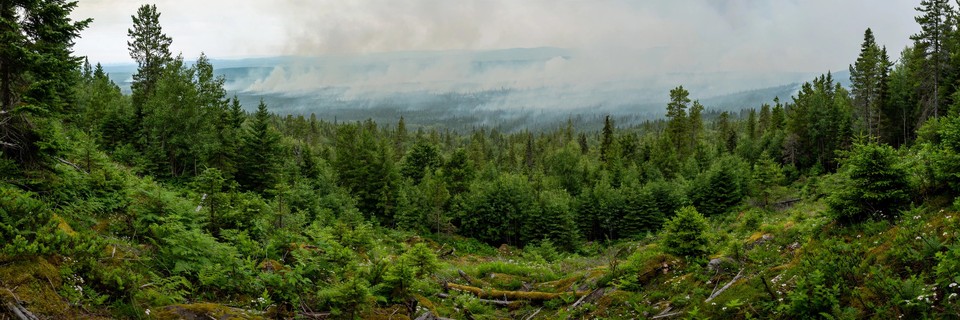
Image: Illustrative image.