
Key Takeaways
- In H1N1-infected mice, mucociliary clearance remained impaired for more than 14 days after infection
- The study identifies two mechanisms: ciliated cells converting to mucus cells, and the viral M2 protein suppressing cilia-building genes
- This is an animal and lab-model study — it does not measure how long human airways stay impaired
Why does a cough linger long after the flu is gone?
The fever breaks, the aches fade — but the cough and congestion can hang on for weeks. A study published November 21 in Nature Communications offers a mechanism: influenza does not just infect the airway lining, it remodels it, and the cleanup system stays impaired long after the virus is beaten.
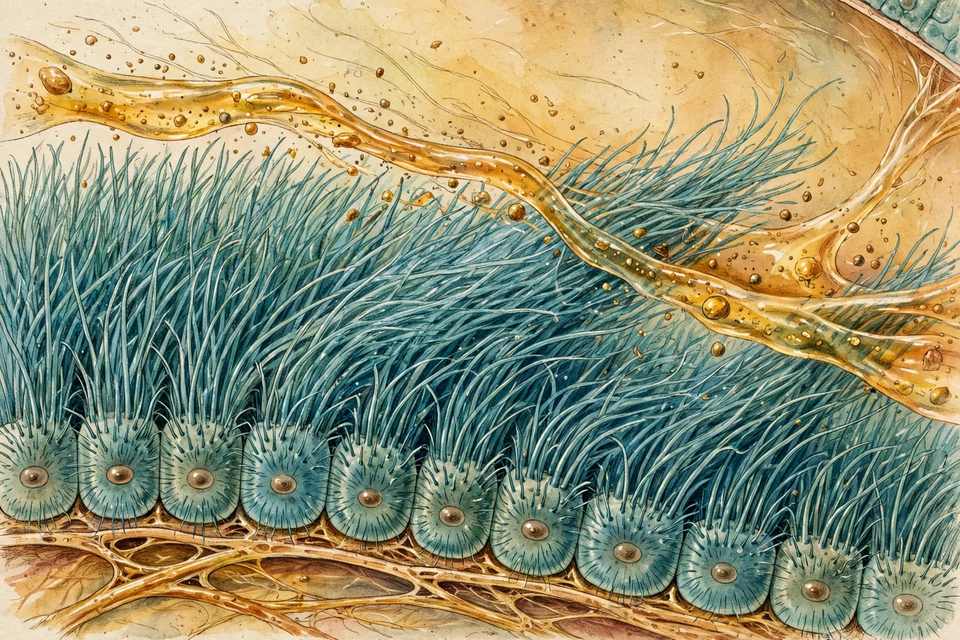
Your airways are lined with ciliated cells — microscopic hairs that beat in waves to sweep mucus, dust and pathogens up and out. In male mice infected with H1N1 influenza, and in a lab-grown model of human bronchial tissue, the researchers found that impairment of that mucociliary clearance persisted for more than 14 days after infection, with weakened ciliary activity and continued excess mucus production. In other words, the sweepers stopped working properly — and the mucus kept coming.
The study traces two drivers. First, an interferon-driven pathway (the IDO1–AhR axis) pushed ciliated cells to convert into mucus-producing cells — more mucus, fewer sweepers. Second, the virus's own M2 protein suppressed the gene programme (centred on TP73, FOXJ1 and RFX3) that builds and maintains cilia, accelerating the loss of the ciliated cells themselves.
The crucial caution: this is an animal and lab-model study, not a trial in people. It explains a plausible biology behind lingering post-flu symptoms; it does not measure how long human airways stay impaired, and it tests no treatment.
This article summarizes a research study and is not medical advice. Anyone with breathing symptoms that worsen or do not improve should seek medical care.
The Twikup Take
The flu's tail may not be the virus lingering — it may be the damage schedule. If the airway's sweepers take weeks to regrow in mice, the weeks of coughing after a human flu start to look less like a mystery and more like a repair bill.
Image: Illustrative image.