
Key Takeaways
- Neuroplasticity is the nervous system's ability to reorganize its structure and connections in response to experience — driven mainly by synapses strengthening or weakening with us
- London taxi drivers and adult juggling students both showed measurable brain-structure changes from learning, and jugglers lost some of the change when they stopped practising
- Plasticity is real for life but specific: training improves the trained skill far more than general "brainpower," and whether adults grow new neurons is still unsettled science
Your brain is not finished — but it is not magic, either
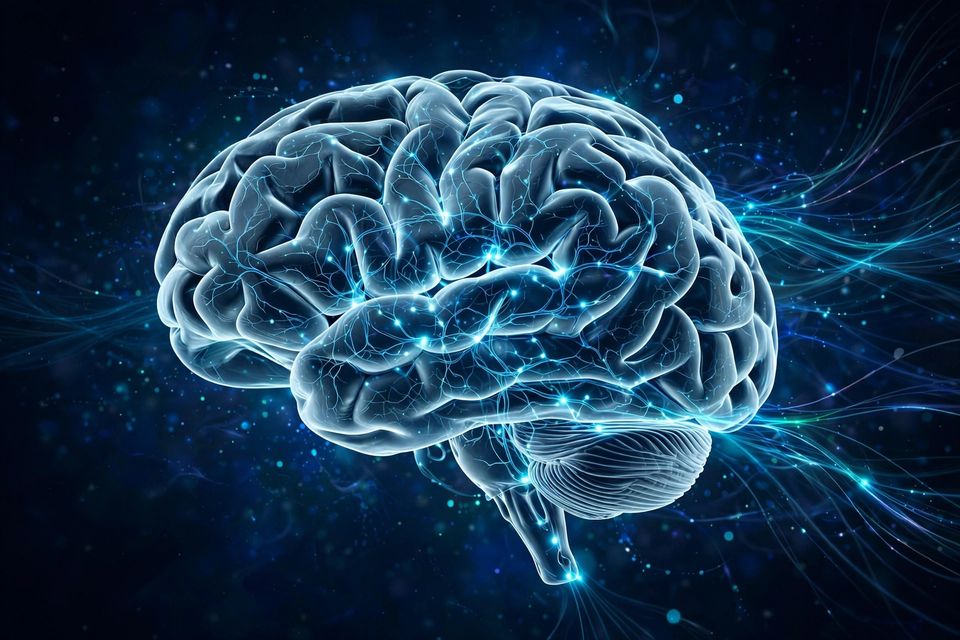
For most of the twentieth century, the adult brain was treated as fixed hardware: wired in childhood, slowly decaying thereafter. That picture is wrong. Neuroplasticity — in the standard medical reference StatPearls' words, "the ability of the nervous system to change its activity in response to intrinsic or extrinsic stimuli by reorganizing its structure, functions, or connections" — is now one of the best-established ideas in neuroscience. It is also one of the most oversold. Here is what the evidence actually supports.
The mechanism: connections that fire together, wire together
In 1949, Canadian psychologist Donald Hebb proposed that when one neuron repeatedly helps fire another, the connection between them strengthens. The slogan "neurons that fire together, wire together" is a later paraphrase, but the idea became the field's foundation. Its cellular machinery arrived in 1973, when Bliss and Lømo described long-term potentiation (LTP) in the rabbit hippocampus: stimulating a pathway repeatedly made synapses along it respond more strongly for a long time afterward, as extra receptors were added to the receiving membrane. The counterpart, long-term depression, weakens connections that fall out of use. Learning, at the physical level, is largely this: billions of small volume adjustments, up and down, plus structural changes in the spines and branches where synapses sit.
The proof you can see on a scan
Two famous studies made plasticity visible. In 2000, researchers scanned 16 London taxi drivers — who spend years memorizing the city's streets — and found their posterior hippocampi were significantly larger than controls', with the difference growing the longer a driver had been on the job. In 2004, German researchers taught adults to juggle: after three months of practice, the learners showed a measurable increase in grey matter in brain regions that process moving objects. Three months after they stopped, much of the increase had faded — use it or lose it, written in tissue.
The strongest medical proof comes from stroke care. In the EXCITE trial, published in JAMA in 2006, 222 stroke survivors had their stronger hand restrained for two weeks while they intensively practised with the weakened one. The forced-use group improved far more than usual care — and kept the gains a year later. The brain had rerouted around damage, because therapy gave it no choice.
The honest limits
Three cautions separate the science from the sales pitch. First, plasticity is specific: practice rewires the circuits for the practised task. A major 2016 review of 132 studies on commercial "brain training" found people reliably improve at the trained games, somewhat at similar tasks — and barely at all at everyday cognition. Second, plasticity is not always good: the same machinery produces central sensitization in chronic pain, where the nervous system learns to hurt. Third, one headline question remains genuinely open: whether adult humans grow significant numbers of new neurons in the hippocampus. Two major 2018 studies — one in Cell Stem Cell, one in Nature — reached opposite conclusions from similar tissue, and the field still has not settled it.
And the oldest myth of all — that we use only 10% of our brains — is simply false; surveys find nearly half of teachers once believed it, but no brain study has ever supported it, and imaging shows activity across virtually the whole brain over a day. What does support lasting change, per the evidence: repetition with attention (passive exposure does little), sleep — especially slow-wave sleep, when the day's memories are replayed and consolidated — exercise, and motivation. Windows of heightened plasticity are widest in childhood, but they never fully close.
Health note: Neuroplasticity is a description of how brains change, not a treatment. Stroke rehabilitation and cognitive concerns belong with your care team, who can match therapy to your situation.
The Twikup Take
The truth about neuroplasticity is better than the myth: your brain really does remodel itself around what you repeatedly do — which means the strongest brain intervention available is also the least marketable one. Practise the actual thing, pay attention, sleep, repeat.
Image: Illustrative image.