
Key Takeaways
- Ordering of Alzheimer's blood biomarker tests in the U.S. rose 6.5-fold in 18 months, to 179.7 per 100,000 patients
- Of 69,907 people tested, 15.6% got a new Alzheimer's diagnosis within 90 days but only 0.1% started anti-amyloid therapy
- The study measures how fast testing is spreading, not how accurate the tests are
A blood draw instead of a spinal tap?
Imagine getting a blood test instead of undergoing a spinal tap or paying for an expensive PET scan to investigate Alzheimer's disease.
That option is rapidly gaining ground in the United States.
Ordering of Alzheimer's blood tests rose 6.5-fold in just 18 months, according to a research letter in JAMA. Orders climbed from 27.5 tests per 100,000 patients in early 2025 to 179.7 per 100,000 by mid-2026.
The tests measure blood markers linked to Alzheimer's — phosphorylated tau and amyloid-beta. Since 2025, four have been cleared by the U.S. Food and Drug Administration for adults showing symptoms of cognitive impairment.
Until recently, confirming Alzheimer's biology traditionally meant a spinal tap or an expensive PET scan.
Now, a blood draw is becoming another option.
Researchers at Yale's Collaboration for Regulatory Rigor, Integrity, and Transparency examined records from Epic Cosmos, covering 2,358 hospitals and 52,500 clinics.
Among 35.9 million adults aged 50 and over, 69,907 — about 0.19% — had an Alzheimer's blood biomarker test ordered between January 2025 and June 2026.
Neurologists accounted for 51.6% of tests where the ordering specialty was recorded.
The surprising gap: testing is rising, treatment isn't
Here's where the numbers get interesting.
Within 90 days of testing, 15.6% of patients received a new Alzheimer's diagnosis.
But only 0.1% — just 63 patients — started anti-amyloid drug therapy.
That's a striking gap between identifying potential Alzheimer's cases and actually starting treatment.
The researchers say it's still unclear how doctors are using these tests. They may be ordering them mainly to rule out Alzheimer's, decide who needs confirmatory testing, or make a diagnosis on their own.
There are also important limitations. The study counted test orders, not results, and could not see insurance coverage. That means it reveals how quickly these tests are spreading, but not how accurately they perform in everyday practice.
Health note: This is U.S. practice data on people who mostly already had documented dementia or cognitive symptoms. It measures how widely the tests are being ordered — it is not a study of how well the tests work, and the tests are cleared for people with symptoms, not for screening healthy adults.
The Twikup Take
Alzheimer's testing may be getting easier, faster and less invasive. But getting a blood test is only the beginning.
The real challenge isn't just finding Alzheimer's earlier — it's making sure patients can do something about the result.
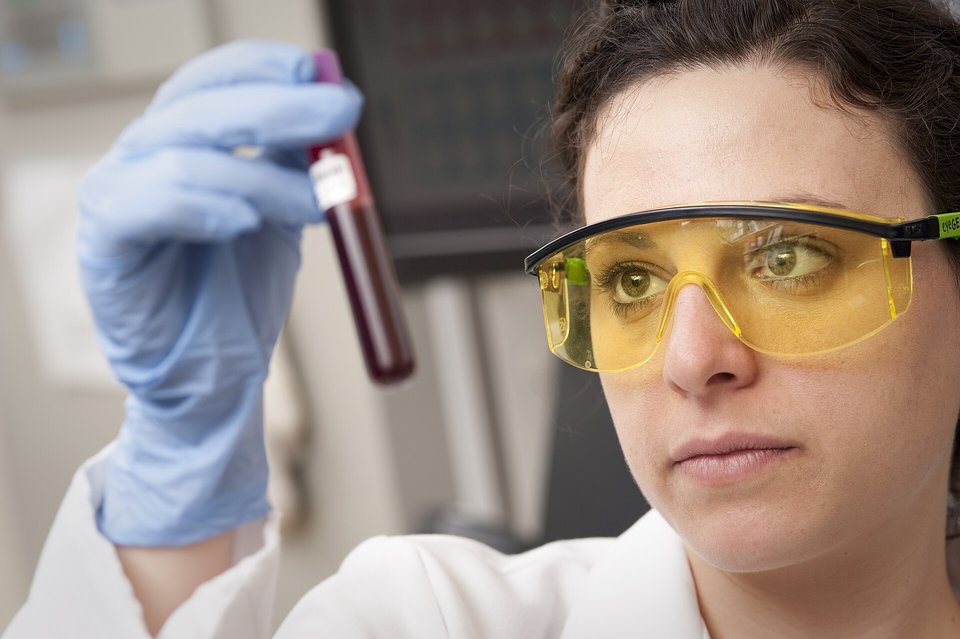
Image: A laboratory technician holding a blood sample vial, by the National Eye Institute, CC BY 2.0, via Wikimedia Commons.