
Key Takeaways
- In 2 Phase 3 trials with 712 adults who had moderate-to-severe sleep apnea and obesity,the daily oral drug orforglipron cut breathing-interruption events by about 13 more per hour.
- The benefit showed up both in people not using a breathing machine and in people already on one, and six of seven key secondary measures favoured the drug.
- Stomach and gut side effects were common — reported by about 68–71% of people on the drug versus about 37% on placebo — and the trials excluded several groups.
What if treating sleep apnea started with a pill instead of a mask?
Imagine going to bed without strapping a breathing mask to your face. For millions of people with obstructive sleep apnea, that is an appealing thought. Now, researchers have tested a different approach: a once-daily pill.
Two Phase 3 trials published in JAMA put an experimental drug called orforglipron to the test. The results were encouraging, including among people already using CPAP machines.
The numbers that caught researchers' attention
The ATTAIN-OSA trials enrolled 712 adults with moderate-to-severe sleep apnea and a BMI of at least 27, across 66 sites in nine countries.
One trial involved people not using positive airway pressure treatment. The other involved people who had been using it for at least three months.
Participants received orforglipron or a placebo for 52 weeks.
The main measurement was the apnea-hypopnea index, which counts how many times a person's breathing stops or becomes shallow each hour.
Here's what happened:
- Without breathing-machine treatment: apnea events fell by 17.8 per hour with orforglipron, compared with 4.5 with placebo.
- Among people receiving breathing-machine treatment: events fell by 17.3 per hour, compared with 5.3 with placebo.
That translates into treatment differences of about 13 and 12 fewer events per hour, respectively.
Six of seven key secondary endpoints also favoured the drug.
The catch? Your stomach might have something to say
The results weren't free of trade-offs.
Gastrointestinal side effects were reported by 68.0% of participants taking orforglipron in the first trial and 70.6% in the second. The corresponding placebo figures were 37.4% and 36.6%.
There are other reasons to be cautious.
The trials lasted just 52 weeks. Most participants had severe sleep apnea, racial and ethnic diversity was low, and people with diabetes, milder sleep apnea or a BMI below 27 were excluded.
The research was funded by Eli Lilly, the company developing orforglipron.
And there's one crucial detail: orforglipron remains investigational. It is not an approved sleep apnea treatment that patients can be prescribed today.
The Twikup Take
A pill that reduces sleep apnea events in people both using and not using CPAP could open an important new treatment direction.
But the real breakthrough isn't simply replacing a mask with a tablet. It's finding a treatment that people can tolerate, stick with and benefit from over the long term.
Better sleep could start with a pill. But the science isn't ready for bedtime just yet.
This article is general information, not medical advice. Do not stop or change CPAP therapy or any prescribed treatment without talking to your own doctor or sleep specialist.
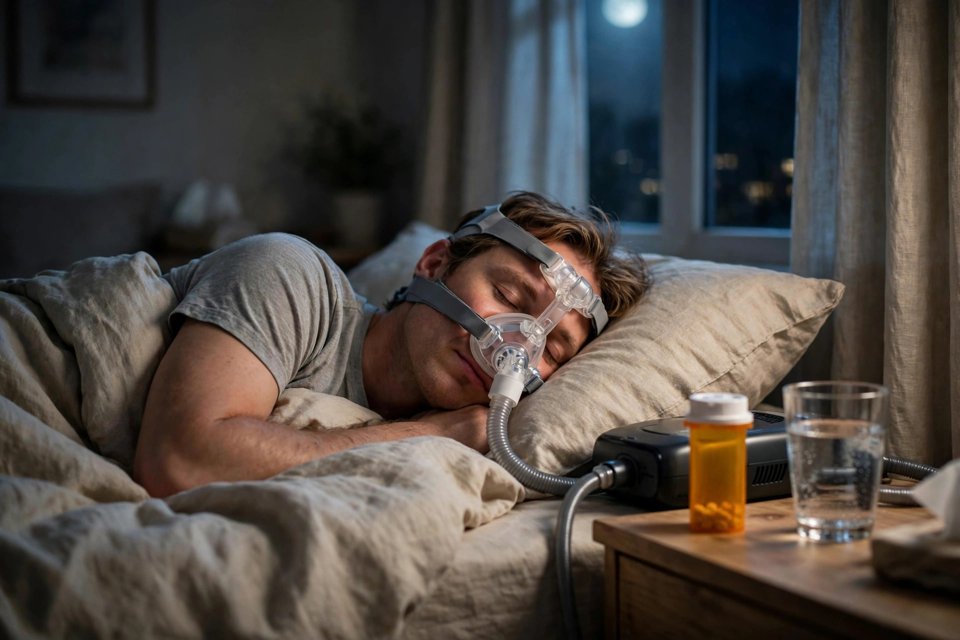
Image: Illustrative image.