
Key Takeaways
- After 50–60 minutes of hard cycling, volunteers discounted rewards for both physical and cognitive effort more steeply
- Cognitive performance was unchanged — the effect was on motivation, not ability
- Mathematical modelling showed exertion lowered the threshold at which effort stopped feeling worthwhile
Why does everything feel like too much effort after a hard workout?
You finish a long, hard ride and your thinking is fine — but the idea of doing anything else, even something mental, suddenly feels like a negotiation you're losing.
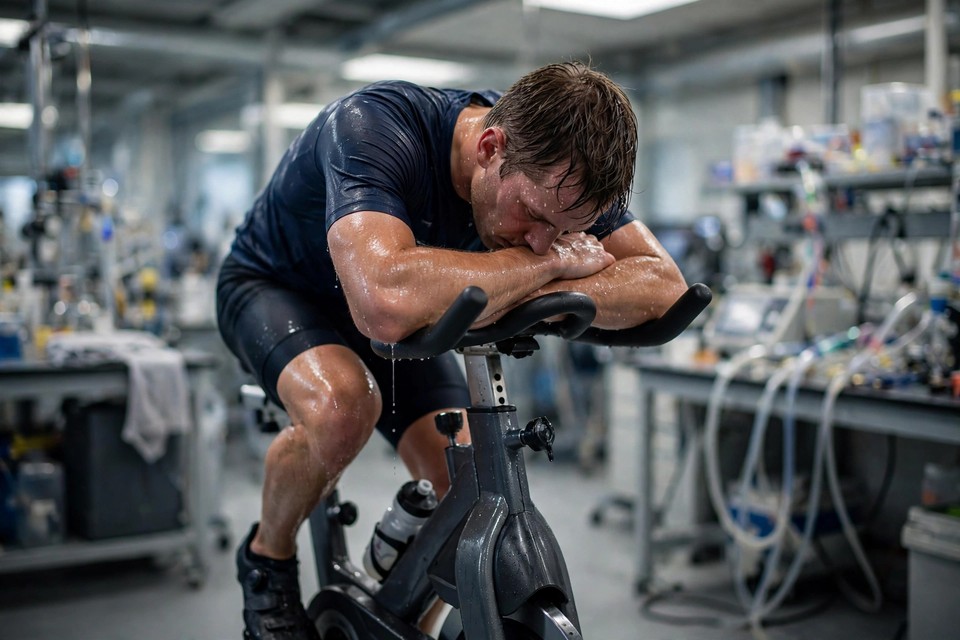
Researchers at the National University of Singapore have now measured that feeling. In two experiments published November 23 in Scientific Reports, volunteers cycled for 50 to 60 minutes at a "somewhat hard" intensity, and on a separate occasion at an "extremely light" intensity — then made decisions about how much additional effort, physical and mental, a reward was worth to them.
The effect, in plain terms
After the hard ride, participants in both experiments (30 volunteers in the first, 32 in the second) discounted rewards more steeply for both kinds of effort — they needed a bigger payoff to sign up for more physical work, and also for more cognitive work.
That held in hypothetical choices and in real-stakes ones, where a randomly selected choice was actually carried out. Mathematical modelling showed exertion lowered the threshold beyond which effort was no longer worthwhile, and heart-rate signals tracked how big the shift was.
Crucially, cognitive performance did not change. The capacity was intact. The willingness was not.
What this does and doesn't show
This was a laboratory study of single exercise bouts, with effort measured in decision-making tasks right afterwards. It shows an acute, short-term dip in motivation after one hard session — it does not say exercise makes people lazier over time, and it says nothing about the well-established long-term benefits of regular training.
Read honestly, it may explain a familiar scheduling mistake: the hour right after a hard workout is a poor time to demand extra effort from yourself, at the gym or at a desk.
This study measured motivation immediately after single exercise sessions in small laboratory samples. It is not medical advice and does not change general guidance to stay physically active.
The Twikup Take
Your post-workout brain isn't tired — it's negotiating. The machinery works fine; the price it charges for effort just went up. Plan the hard thinking for before the hard ride.
Image: Illustrative image.