
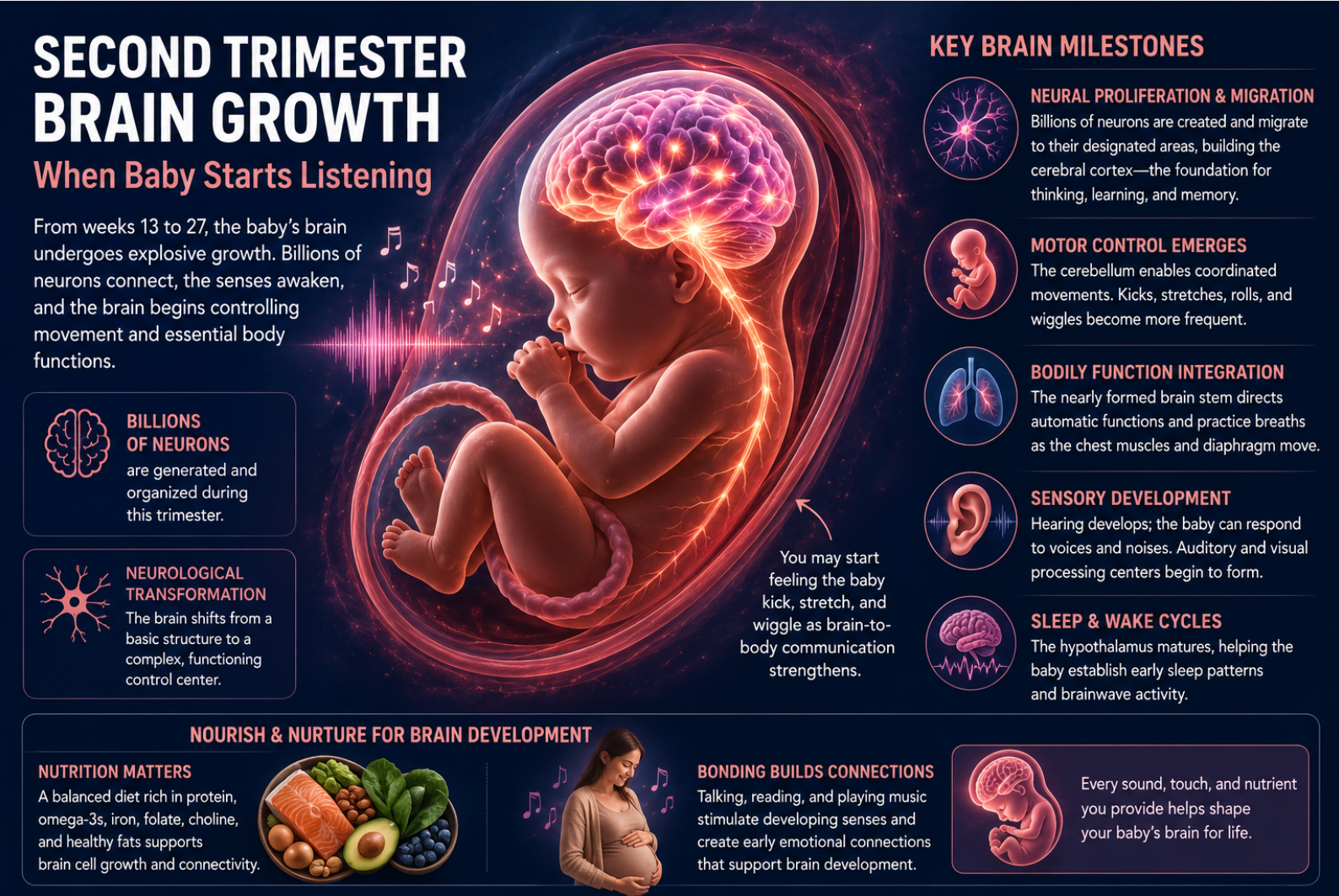
The first trimester built the blueprint. The second trimester brings that blueprint to life.
During this stage of pregnancy, the fetal brain undergoes explosive growth. Billions of neurons are created, organized, and connected as the brain begins directing movement, processing sensory information, and regulating automatic body functions that will be essential after birth.
From Brain Construction to Brain Function
The second trimester marks a major neurological transition.
Instead of simply creating structures, the developing brain begins coordinating systems across the body. Areas responsible for movement, sensation, breathing, and sleep become increasingly active as neural networks expand at remarkable speed.
This is the period when many parents first experience a baby’s movements, offering visible proof that brain-to-body communication is strengthening.
Billions of Neurons Find Their Place
One of the most important developments during the second trimester is neural proliferation and migration.
The brain generates vast numbers of neurons that travel to precise destinations throughout the developing cerebral cortex. This process establishes the foundational architecture needed for higher cognitive functions later in life.
Key neurological developments include:
- Rapid production of new neurons.
- Migration of brain cells to specialized regions.
- Expansion of the cerebral cortex framework.
- Increasing complexity of neural networks.
Every neuron must reach the correct location for the brain's future systems to function effectively.
Kicks, Stretches, and Wiggles Signal a Growing Brain
Movement becomes increasingly coordinated as the cerebellum develops.
This region of the brain is responsible for motor control and helps the fetus perform a wider range of physical actions. Kicks, stretches, rolls, and other movements become more noticeable as communication between the brain and muscles improves.
Common motor milestones include:
- Coordinated kicking.
- Stretching movements.
- Limb flexing.
- Early swallowing and sucking actions.
These activities are more than simple motions; they demonstrate a rapidly maturing nervous system.
Learning to Breathe Before Birth
By the end of the second trimester, the brain stem is nearing completion and begins managing several automatic functions.
Although the baby is not breathing air, the brain starts directing practice breathing movements. Chest muscles compress and the diaphragm moves rhythmically, preparing the body for life outside the womb.
The brain also helps coordinate:
- Swallowing.
- Reflexive movements.
- Internal body regulation.
- Basic physiological responses.
These systems form the foundation of survival after birth.
The Moment Sound Enters the Developing World
One of the most fascinating milestones of the second trimester is sensory development.
As auditory processing centers mature, the baby gains the ability to hear sounds from outside the womb. The brain begins processing voices, environmental noises, and sudden sounds.
At the same time:
- Auditory pathways become increasingly active.
- Visual processing centers continue developing.
- Responses to external stimuli become more noticeable.
This neurological progress creates the earliest opportunities for sensory learning.
The Emergence of Sleep and Wake Patterns
The developing hypothalamus begins producing more organized brainwave activity during the second trimester.
As a result, the fetus starts establishing recognizable sleep and wake cycles. These early rhythms represent another sign that the brain is becoming increasingly sophisticated and coordinated.
Although still immature, these patterns provide an early framework for future sleep regulation.
Why Maternal Nutrition and Bonding Matter More Than Ever
The second trimester is an exceptionally sensitive period for brain development.
Nutrients supplied through the placenta provide the building blocks needed for neuron production, migration, and connectivity. Consistent access to essential macronutrients helps support healthy neurological growth.
Parents can also encourage sensory stimulation through simple bonding activities such as:
- Talking to the baby.
- Reading aloud.
- Playing music.
- Maintaining positive interaction routines.
While the brain is still developing, these experiences introduce sensory input that the fetus can begin processing.
Looking Ahead: Preparing for the Final Growth Surge
By the end of the second trimester, the fetal brain has evolved into a far more active and integrated organ.
Neural networks continue expanding, sensory systems become increasingly responsive, and automatic body functions gain greater coordination. The third trimester will build upon these foundations with further brain growth, connectivity, and refinement before birth.
The transformation is remarkable: a brain that spent the first trimester building its framework now spends the second trimester learning how to communicate, respond, and prepare for life beyond the womb.
FAQ: Brief Insights on Second Trimester Brain Development
Can a baby hear during the second trimester?
Yes. Developing auditory centers allow the fetus to detect and respond to sounds from outside the womb.
Why do mothers begin feeling kicks during this period?
As the cerebellum and motor pathways mature, the brain gains better control over muscle movements, making fetal activity more noticeable.
Does the baby practice breathing before birth?
Yes. The brain directs practice breathing movements involving the chest muscles and diaphragm, even though the baby is not yet breathing air.
Why is nutrition especially important during this stage?
The developing brain requires a steady supply of nutrients to support neuron production, migration, and network formation.
Medical Disclaimer
This article is intended for informational and educational purposes only and should not be considered medical advice. Research on fetal brain development describes general developmental patterns and milestones and does not predict individual outcomes.
Pregnancy, fetal growth, and neurological development can vary between individuals. Readers should consult a qualified healthcare professional regarding pregnancy-related concerns, diagnosis, treatment decisions, nutritional planning, or personalized medical guidance.