
Key Takeaways
- Global sea level rose about 4.7 mm annually from 2014 to 2023, then increased by a record 5.9 mm in 2024.
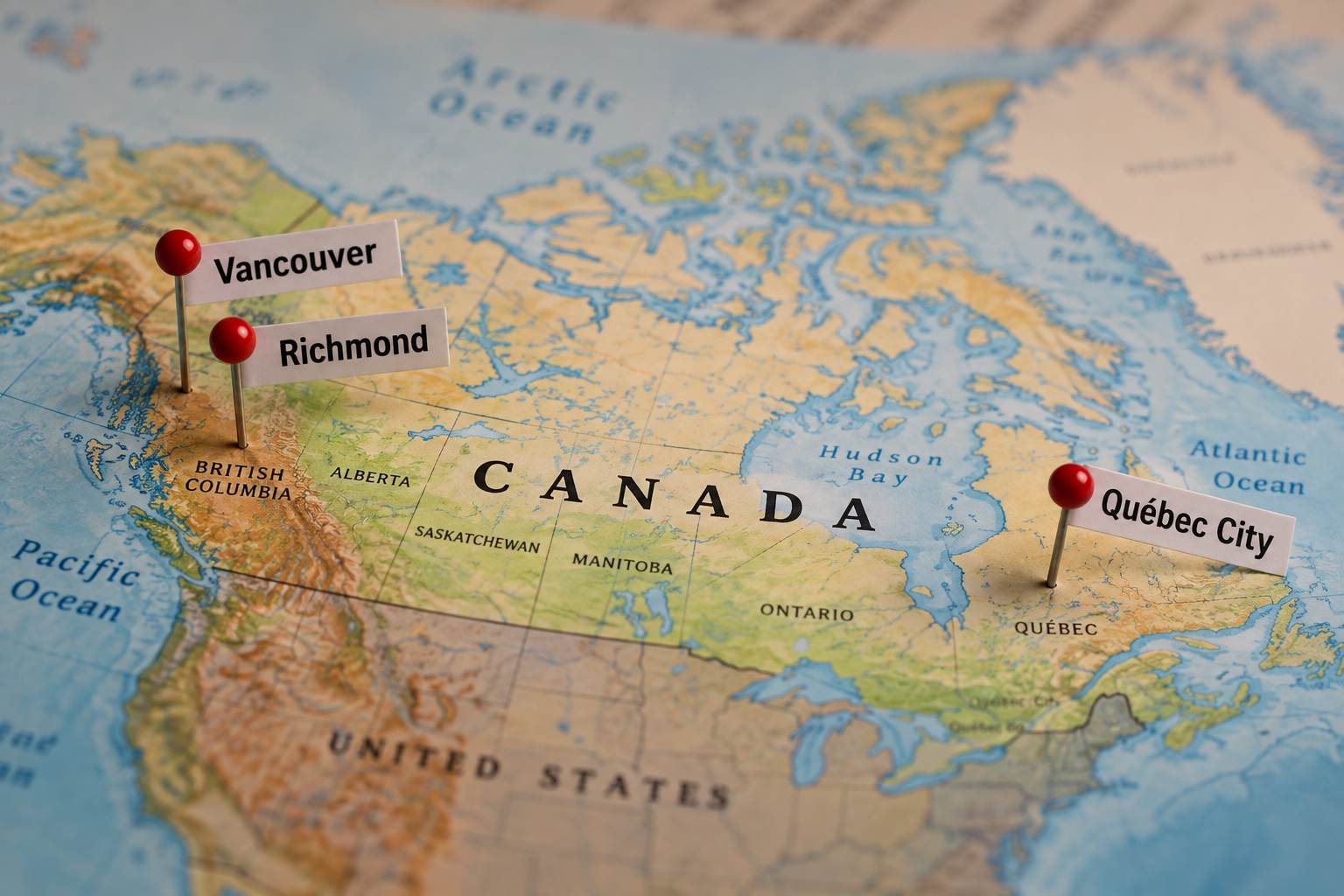
- UN research projects roughly 8 cm of rise in Vancouver and Richmond, and 14 cm in Québec City, from 2020 to 2050.
- Higher baseline water can worsen storm surges, flooding, erosion and risks to homes, ports and infrastructure.
Canada touches three oceans, has the world's longest coastline and has spent generations building cities, ports, roads and communities beside the water. But according to a new United Nations report, the water beside those communities is changing — and the important part isn't simply that global sea level is rising. The rate of rise has accelerated.
On August 31, the United Nations presented a new Secretary-General's report examining the growing challenge of sea-level rise. For Canadians, this doesn't mean Vancouver is about to disappear into the Pacific or Halifax is going underwater. The more realistic question is much more interesting: What happens when the next major coastal storm arrives, but the ocean beneath it is already higher?
A Few Millimetres That Can Eventually Matter a Lot
According to the UN, global mean sea level rose at an average rate of about 4.7 millimetres per year between 2014 and 2023. In 2024, the annual increase reached a record 5.9 millimetres.
Five or six millimetres doesn't sound dramatic. Your smartphone is thicker than that. But imagine a bathtub filled almost to the top. Adding a little more water might not cause a problem — until you start making waves.
That's why sea-level rise matters. A higher baseline means storm surges, unusually high tides and coastal flooding can begin from a higher starting point. At the UN's August 31 briefing, officials said roughly half a metre of sea-level rise is already locked in this century because of warming that has already occurred, although how much farther the ocean rises will depend heavily on future warming.
Three Canadian Cities Have Already Appeared in UN Research
The new 2026 UN report doesn't announce that specific Canadian cities are going underwater. However, a separate 2024 UN technical brief included three Canadian locations in a table examining sea-level change in coastal cities: Vancouver, Richmond and Québec City.
For 2020 to 2050, that analysis projected approximately 8 cm for Vancouver, 8 cm for Richmond and 14 cm for Québec City, with ranges of roughly 7–12 cm for Vancouver and Richmond and 12–17 cm for Québec City.
Québec City might seem like the odd one. It's nowhere near an Atlantic beach, but it sits on the tidal St. Lawrence system, which connects to the Atlantic through the St. Lawrence Estuary and Gulf. In other words, you don't have to be staring directly at the open ocean for changing sea levels to matter.
And those figures don't mean 8 or 14 centimetres of the cities will be underwater. They're about the changing height of the water itself — and therefore the starting point for future high-water events.
Then There's Halifax — And Its Story Is Even More Interesting
Halifax wasn't one of the three Canadian cities in that UN table, but Canada's own 2026 Changing Climate Report gives the Nova Scotia capital particular attention.
The federal assessment says Halifax and Tuktoyaktuk have the greatest projected relative sea-level rise among the Canadian locations it assessed. Halifax has an additional problem: while the ocean rises, the land there is also slowly sinking because of long-term geological processes.
Think of it as the water moving up while the ground moves slightly down. For someone standing on the Halifax waterfront, it's the distance between the two that ultimately matters.
Under an intermediate-emissions scenario, Canada's assessment gives Halifax a median projection of approximately 28 cm of relative sea-level rise by 2050, compared with the 1995–2014 baseline.
That 28 cm figure should not be directly ranked against the UN's 8 cm for Vancouver or 14 cm for Québec City because the two assessments use different baselines and methodologies. But it demonstrates just how different Canada's sea-level story can look from one coastline to another.
Halifax Has an Even More Striking Number
The Canadian assessment gives another example that makes the risk easier to understand.
It examines an extreme water level in Halifax that currently has approximately a 1% chance of occurring in any given year. Under the report's intermediate scenario, that same water level is projected to have roughly a 14% annual chance by 2050.
That's a remarkable change.
Halifax doesn't need to become Atlantis for sea-level rise to matter. If a water level that was once extremely unusual becomes much easier to reach, coastal flooding risks can change substantially.
Imagine Tomorrow's Storm Starting With More Water
This is where centimetres stop sounding boring.
Imagine a powerful storm hitting Halifax or Vancouver decades from now. The storm doesn't necessarily need to be dramatically stronger than storms Canadians have experienced before. But if it arrives on top of a higher sea level, storm surge and waves are starting with an advantage.
The UN warns that rising seas can threaten homes, ports, transportation networks, energy infrastructure and water systems, while also worsening erosion and allowing saltwater to reach farther into freshwater environments.
So the real story isn't necessarily permanent inundation. It's that the threshold required to create trouble can become easier to cross.
No, Canadian Cities Aren't About to Disappear
This distinction matters because dramatic maps of cities swallowed by oceans spread quickly online, but that's not what these reports are predicting for Vancouver, Richmond, Québec City or Halifax by 2050.
Local sea-level change is complicated. Ocean circulation, tides, geography and whether the land itself is rising or sinking all influence what an individual community experiences. That's why Halifax's future can look different from Vancouver's, while Canada's Arctic presents another set of challenges entirely.
But all of them demonstrate the same basic idea: the ocean doesn't have to swallow a city to make living beside it more difficult and expensive.
Canada's Sea-Level Story Is Really an Infrastructure Story
Canada has spent centuries building communities beside the water. Ports move goods, waterfront roads carry commuters, neighbourhoods stretch along shorelines and billions of dollars of infrastructure sit close to oceans and major waterways.
That means rising seas aren't simply a climate story. They're potentially a housing, transportation, infrastructure, insurance and trade story too.
Vancouver isn't expected to vanish into the Pacific. Québec City isn't becoming Atlantis. Halifax isn't disappearing into the Atlantic. The more realistic change is quieter: every additional centimetre can alter what happens when an extreme tide, storm surge or major coastal storm arrives.
TwikUp Insight
Instead of asking “Which Canadian city will be underwater?”, there's a much more useful question:
If the ocean keeps getting higher, will Canada's coastal cities be ready when the next major storm arrives?
That's where the UN's warning becomes relevant to Canada. The ocean doesn't have to take over a city overnight to create expensive consequences. Sometimes, changing the starting water level is enough to change what happens when the waves arrive.
Sources
- United Nations — Challenges Related to Sea-Level Rise and Ways and Approaches to Address It (A/81/74, 2026)
- United Nations — Rising Seas, Rising Stakes (August 31, 2026)
- United Nations — August 31, 2026 Sea-Level Rise Report Briefing
- United Nations — Surging Seas in a Warming World Technical Brief (2024)