
Key Takeaways
- The PBO projects Canadian real GDP growth of 0.9% in 2026 and 1.5% in 2027.
- The federal deficit is forecast to reach $70.2 billion in fiscal year 2027–28, after $63.3 billion in 2026–27.
- The PBO estimates that persistent Canada-US trade measures could reduce real GDP by 1.4% over five years compared with a pre-tariff baseline.
Canada Growth Forecast Cut to 0.9% as Federal Deficit Set to Reach $70.2 Billion
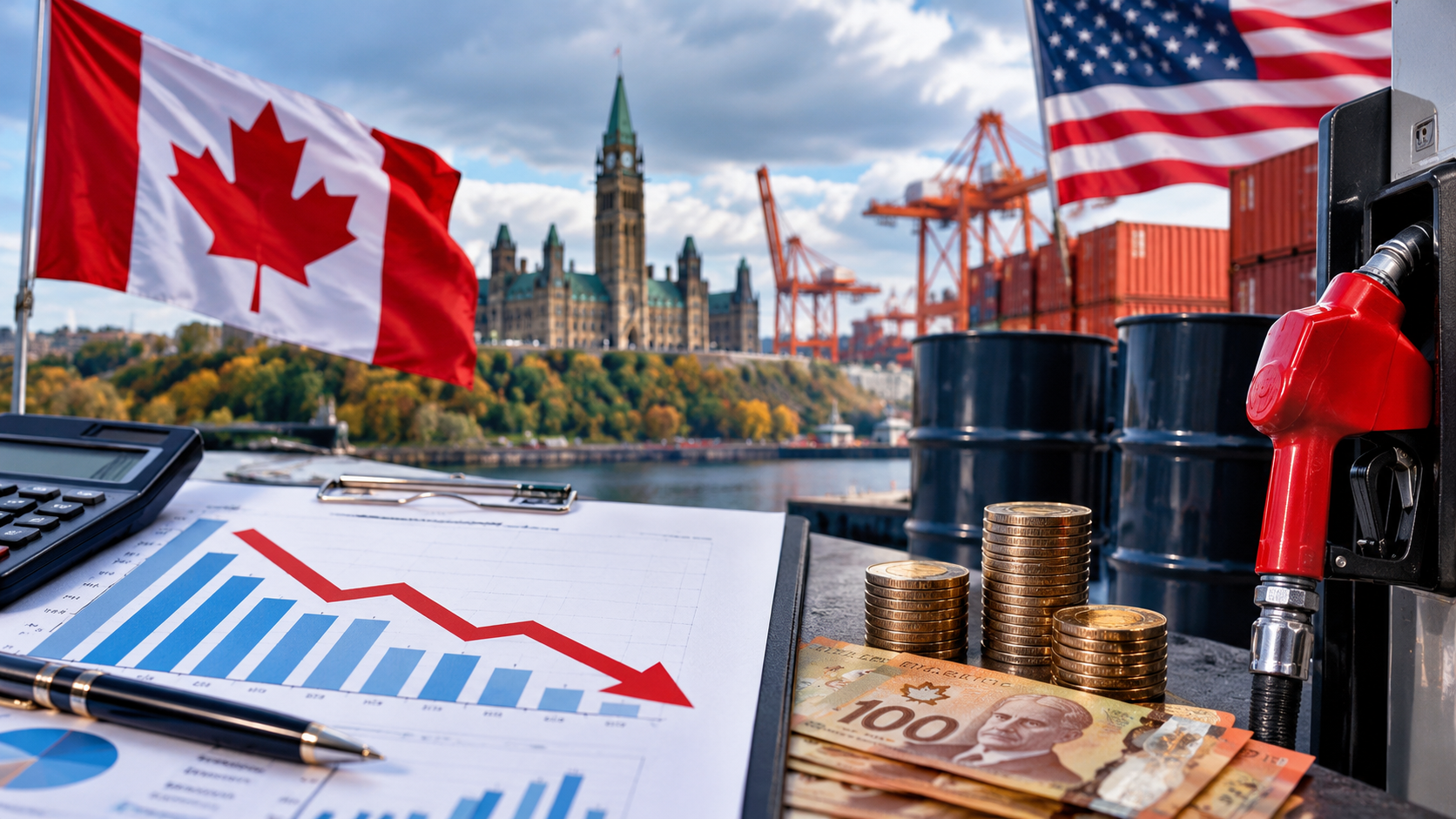
Canada’s economy faces a tougher road ahead as trade tensions and rising government borrowing put pressure on the country’s financial outlook. The Parliamentary Budget Officer (PBO) has lowered its growth forecast for 2026 and warned that federal deficits will remain substantial over the coming years.
In its Economic and Fiscal Outlook released October 20, 2026, the independent parliamentary watchdog projects real GDP growth of just 0.9% in 2026, down from its previous estimate of 1.1%. Growth is expected to improve to 1.5% in 2027.
US Tariffs Weigh on Canada's Economic Outlook
The PBO attributes much of the weaker outlook to changing trade conditions between Canada and the United States. New tariffs and Canadian countermeasures are expected to affect exports, business investment and employment as companies adjust to higher trade costs.
The watchdog estimates that trade measures introduced since early 2025 could reduce Canada's real GDP level by approximately 1.4% after five years if they remain in place, compared with a scenario without those measures.
Federal Deficit Expected to Peak at $70.2 Billion
The PBO projects a federal deficit of $63.3 billion in fiscal year 2026–27, rising to $70.2 billion in 2027–28. The deficit is then expected to remain above $63 billion through 2030–31, reaching a projected $67.8 billion in that final year.
Over the five-year forecast period, cumulative deficits are expected to total $333.3 billion, while federal borrowing is projected to increase by $732.9 billion.
TwikUp's Perspective
Slower economic growth and persistent deficits create a difficult balancing act for policymakers. Support for businesses and workers may soften the impact of trade disruptions, but long-term fiscal resilience will also depend on productivity, investment and whether public spending strengthens Canada's future economic capacity.