
Key Takeaways
- Canada warmed by 2.0°C between 1948 and 2023, according to the federal climate assessment.
- Canada’s North experienced 2.6°C of warming over the same period, with warming generally stronger in winter.
- The assessment documents changes in precipitation, fire seasons, snow and ice cover, glaciers, permafrost and Canadian oceans.
Canada Climate Report Finds 2°C Warming Since 1948 Across the Country
Canada’s Changing Climate Report 2026 provides a detailed assessment of how the country’s climate has changed over the past 75 years and what scientists expect in the decades ahead. The federal report draws on peer-reviewed scientific literature, observational data and expert assessment.
The report finds that Canada’s annual average temperature increased by 2.0°C between 1948 and 2023. During the same period, Canada’s North, including Yukon, the Northwest Territories and Nunavut, warmed by 2.6°C.
Canada Has Warmed Across All Regions and Seasons
The assessment states that Canada is warming in all regions and seasons, although the pace differs considerably across the country.
Between 1948 and 2023, annual average temperatures increased at an estimated rate of 0.26°C per decade across Canada and 0.35°C per decade in the North. Winter experienced the greatest seasonal warming.
The report also finds that most of Canada's observed warming has occurred since 1970. From 1970 to 2023, Canada's warming rate was almost twice the global warming rate.
Precipitation Patterns Are Also Changing
Temperature is not the only climate indicator showing a long-term shift.
Canada's annual total precipitation increased between 1949 and 2023, with the largest percentage increases occurring in northern Canada. The report estimates that annual precipitation increased by 9.7% across Canada during this period.
Snowfall patterns have also changed. Annual snowfall amounts and the number of snowfall days have generally decreased at most stations in southern Canada, while some northern locations have experienced increases.
Climate Effects Extend Beyond Temperature
The report connects Canada's warming climate with a broad range of observed environmental changes.
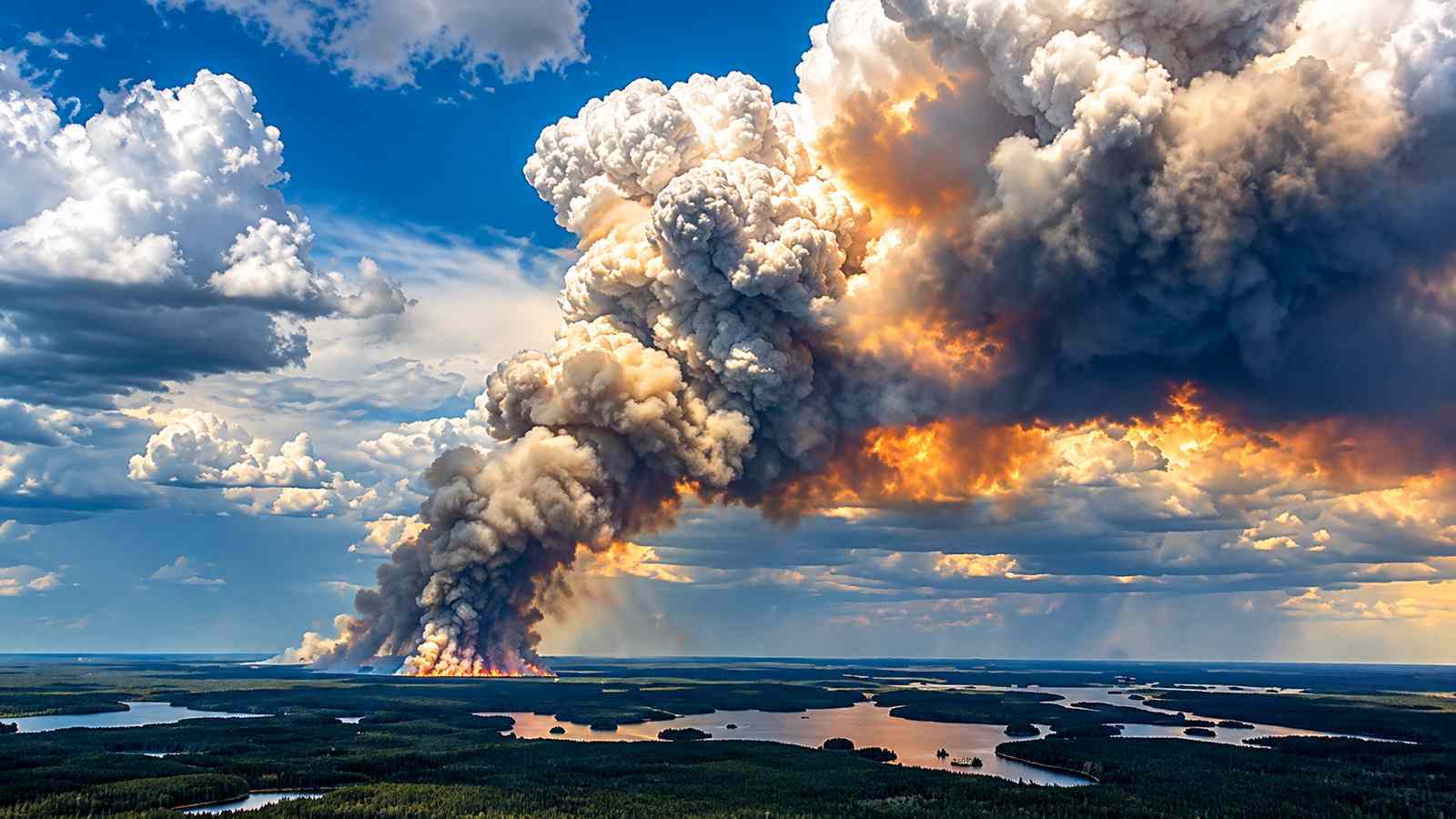
These include more extreme heat, fewer extreme cold events, longer growing seasons and longer wildfire seasons. The assessment also documents changes in streamflow, snow and ice cover, glacier mass, permafrost and the oceans surrounding Canada.
Human influence is identified as the dominant driver of Canada's observed warming. The report says greenhouse gas emissions from human activities provide the only plausible explanation for the collective pattern of observed climate changes across Canada.
What the Report Projects for Canada
The assessment also examines future climate conditions under different greenhouse gas emissions scenarios.
For 2021 to 2040, Canada's average warming relative to the 1850 to 1900 pre-industrial period is projected at about 2.7°C under the report's central scenario, compared with approximately 1.5°C globally.
By 2081 to 2100, projected Canadian warming varies substantially depending on future emissions. Under a current-policies scenario, average Canadian warming is projected at about 5.0°C relative to 1850 to 1900.
TwikUp’s Perspective
The report is significant because it brings observations, attribution research and future projections together in a single national scientific assessment.
For readers, one important distinction is between observed warming and future projections. The 2.0°C figure describes measured change between 1948 and 2023, while future figures depend on assumptions about global greenhouse gas emissions.
The assessment also shows why national climate trends cannot be understood through temperature alone. Changes in precipitation, snow, wildfire seasons, glaciers, permafrost and oceans form part of a wider pattern documented across Canada's climate system.
What the New Assessment Shows
Canada’s Changing Climate Report 2026 updates the country's scientific understanding of past and future climate change. The federal assessment is intended to support decision-making by providing evidence about how Canada's climate has changed and how those changes are expected to develop.
The report's findings cover the country as a whole while highlighting significant regional differences, particularly the faster warming observed across northern Canada.