
Key Takeaways
- Canada is investing $200 million in Woodfibre LNG near Squamish, B.C., built in partnership with the Squamish Nation.
- The project was the first major industrial project in Canada approved through a non-treaty, Indigenous-led environmental assessment.
- Powered by BC hydro, it is expected to be the world's first net-zero LNG facility when operations start in late 2027.
A $200-million bet on cleaner Canadian LNG
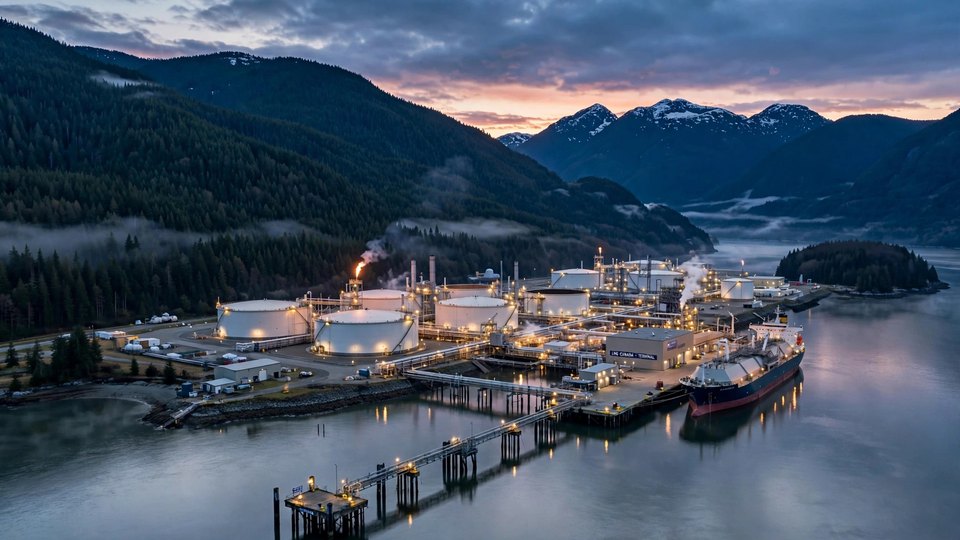
Canada is building an LNG export terminal near Squamish, B.C., with an ambitious promise: ship natural gas overseas while operating as the world's first net-zero LNG facility.
Ottawa is putting $200 million into Woodfibre LNG, a project under construction in partnership with the Sḵwx̱wú7mesh Úxwumixw (Squamish Nation).
But the project has already made Canadian history.
Woodfibre is the first major industrial project in Canada approved through a non-treaty, Indigenous-led environmental assessment. The Squamish Nation conducted its own review and approved the project under its own law.
And instead of using gas-fired power, the terminal will run on BC Hydro electricity. Ottawa expects that to help make it the world's first net-zero LNG facility when operations begin in late 2027, with projected emissions intensity about nine times lower than the global LNG average.
That's an ambitious claim for an industry regularly challenged over its emissions.
What the Money Buys
The $200 million isn't just about building the terminal. It's about making it bigger.
The investment will raise Woodfibre's planned annual capacity from 2.1 million tonnes a year to a target of 2.5 to 2.6 million tonnes — an increase of roughly 19% to 24% — while opening the possibility of exploring a second phase.
Construction is already about three-quarters complete, with approximately 1,500 people working on site daily. Once operational, the facility is expected to support about 100 full-time jobs.
For Ottawa, there's another prize: reducing Canada's dependence on American gas buyers by shipping Canadian LNG directly to Asian markets from the West Coast.
The Twikup Take
$200 million, Indigenous-led approval and a promise of net-zero operations. Woodfibre LNG is trying to change the conversation around Canadian natural gas.
But electricity-powered operations don't automatically make the entire LNG supply chain net-zero. The real test begins in 2027, when the terminal must demonstrate whether its ambitious emissions promise holds up in practice.
Canada isn't just betting on exporting more gas. It's betting that cleaner production can become a competitive advantage.
Image: Illustrative image.