
Key Takeaways
- The Parti Québécois won the Quebec provincial election and will form a minority government.
- Paul St-Pierre Plamondon has committed his party to pursuing Quebec independence during its first mandate.
- The minority government will need opposition support to advance major legislation and navigate the independence debate.
Parti Québécois Returns to Power in Quebec
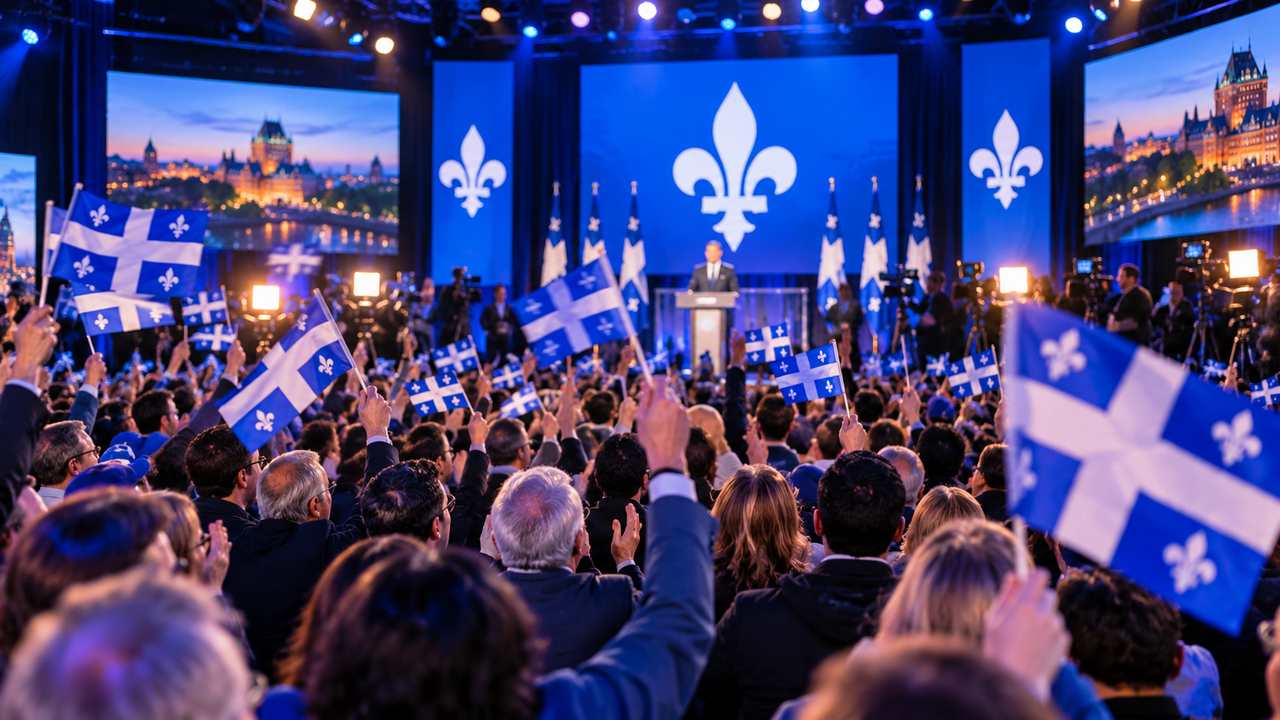
Quebec has opened a new chapter in its political history. The Parti Québécois has won the October 5 provincial election, bringing the separatist party back to government under leader Paul St-Pierre Plamondon.
Élections Québec confirmed that preliminary results began being published after polling stations closed at 8 p.m. on election night. The election covered all 127 provincial electoral divisions, with results continuing to be updated as counting progressed.
The PQ's victory returns a party committed to Quebec sovereignty to power after more than a decade away from government. However, it does not give the party a majority, meaning the new administration will need cooperation from opposition lawmakers to pass legislation and survive important votes.
Independence Debate Returns
The election result also puts Quebec's independence question back at the centre of provincial politics.
Before the election, Plamondon publicly reaffirmed that a Parti Québécois government would consult Quebecers on independence during its first mandate. The party separately said it would not hold such a referendum while Donald Trump remains U.S. president.
That position gives the new government a potentially complicated timeline. It can advance its political agenda immediately, while the independence question remains a longer-term issue requiring legislative and public support.
What It Means for Ottawa
The result also creates a new federal-provincial dynamic. Quebec has significant responsibilities over areas such as health care, education and immigration, while Ottawa remains responsible for national economic policy, defence and foreign affairs.
TwikUp's Perspective
The most immediate challenge for the PQ may not be the independence debate itself, but governing effectively without a majority. A minority government must negotiate constantly, making budgets, economic measures and major policy changes dependent on political compromise.
For Ottawa, the relationship will require careful handling. Cooperation on trade, jobs and economic pressures can continue even when the federal and Quebec governments disagree over constitutional questions.
The election therefore changes the tone of Canadian politics, but it does not automatically change Quebec's constitutional status. Any future independence process would require significant political and public steps before becoming a reality.