
Key Takeaways
- Ottawa will invest up to $125 million via the Trade Diversification Corridors Fund in a HOPA-led expansion of the Port of Sault Ste. Marie
- The project would triple cargo capacity to more than 3.5 million metric tonnes annually by 2031
- The release projects 2,150 direct and 2,600 indirect jobs, with cargo including critical minerals, agriculture and forestry products
A new port for the middle of the Great Lakes
Ottawa is betting big on the middle of the Great Lakes.
The federal government will invest up to $125 million to expand trade capacity at the Port of Sault Ste. Marie, Transport Minister Steven MacKinnon announced on November 20. The project, led by the Hamilton-Oshawa Port Authority (HOPA), is funded through the Trade Diversification Corridors Fund.
Here's the plan: a new multimodal port on the north shore of the St. Marys River. Roughly 243 acres of industrial and brownfield land. Two seaway-draft marine berths. A rail transload yard. Roads, utilities and tenant-ready lands.
When complete, the port's cargo capacity is expected to reach more than 3.5 million metric tonnes a year by 2031 — a three-fold increase — supporting 2,150 direct and 2,600 indirect jobs, according to the release.
Ottawa frames the port as the region's first public multi-user marine port between Thunder Bay and Southern Ontario, handling agricultural products, mining and critical minerals, forestry goods and manufactured products, including shipments bound for Europe. "Building one Canadian economy means investing in the infrastructure that connects our regions," MacKinnon said.
The Twikup Take
Trade diversification is mostly a slogan until it becomes concrete — literally. A three-fold capacity increase at the Soo, aimed at Europe-bound cargo that doesn't cross the United States, is the slogan poured into berths and rail yards. The test, as always with corridor funds, is whether the 2031 capacity date survives contact with construction reality.
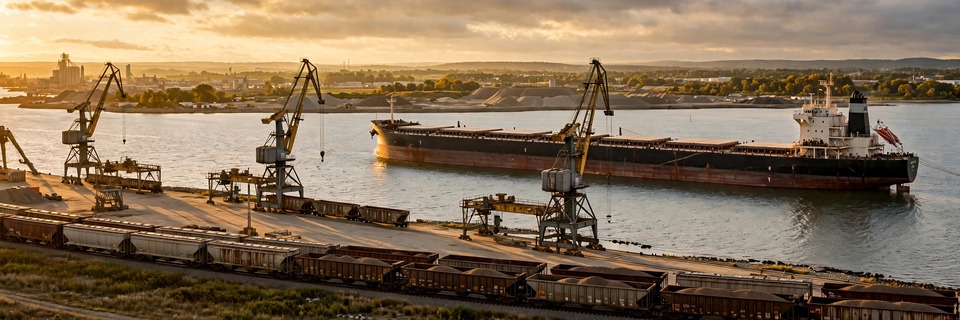
Image: Illustrative image.