
Key Takeaways
- The consumer fuel charge was set to zero on April 1, 2025 and repealed from federal law by Bill C-4 in March 2026; the Canada Carbon Rebate has ended
- The industrial carbon price remains, through the federal OBPS or provincial systems
- Ottawa replaced the price path in May 2026: $95 in 2026, $100 in 2027–2029, $115 in 2030, reaching $140 by 2040 — not $170 by 2030
Two carbon prices lived in Canada. Only one is left.
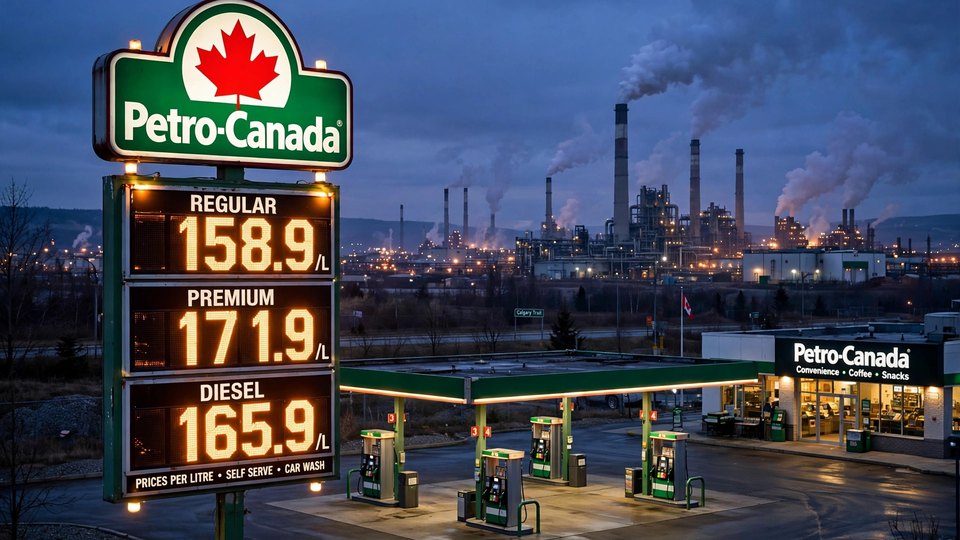
Most Canadians met carbon pricing at the gas pump. That price is gone in law, not just paused: the federal fuel charge was set to zero effective April 1, 2025, and Bill C-4, which received Royal Assent on March 12, 2026, repealed the consumer charge from the Greenhouse Gas Pollution Pricing Act altogether. The Canada Carbon Rebate ended with it — the final individual payments went out starting April 22, 2025. In that last round, a family of four received $302 in Ontario and $456 in Alberta — those were the base amounts; rural residents received an additional 20% top-up on top of these figures.
The price that remains is the one most people never see: the industrial carbon price. Large emitters pay it through the federal Output-Based Pricing System (in Prince Edward Island, Manitoba, Yukon and Nunavut) or through provincial systems everywhere else — Quebec runs cap-and-trade; Ontario, Alberta, Saskatchewan, British Columbia and others run their own industrial regimes.
The second surprise is the price path itself. The old benchmark climbed $15 a year toward $170 a tonne in 2030. On May 15, 2026, Ottawa replaced that trajectory: $95 in 2026, $100 a year in 2027, 2028 and 2029, $115 in 2030, then $3 a year to $130 in 2035, and a slow escalator to $140 in 2040. Anyone quoting the $170 figure in late 2026 is reading a dead schedule.
One wrinkle: Saskatchewan announced it was pausing its industrial system effective April 1, 2025, so the map of who actually pays what is uneven across the country.
The Twikup Take
"Canada has a carbon tax" and "Canada scrapped the carbon tax" are now both half true. The visible half — the pump price and the rebate cheques — is repealed. The invisible half — the industrial price that shapes electricity, cement and steel economics — survived, at a flatter trajectory than anyone campaigned on. That is the actual 2026 state of play, and it is more interesting than either slogan.
Image: Illustrative image.