
Key Takeaways
- Canada has established a national master standing offer for carbon dioxide removal credits from 19 projects — a claimed world first in competitive procurement
- The credits target hard-to-decarbonize federal emissions such as National Defence fleets, under the net-zero government operations by 2050 commitment
- The standing offers run to March 31, 2029 (extendable to 2031) and build on a 2024 commitment to buy at least $10 million in CDR credits by 2030
Ottawa has created a new market for something governments rarely buy: carbon pulled out of the atmosphere
Governments have standing offers for office supplies. Now Canada is using the same procurement approach for something far less ordinary: carbon removed from the sky.
On November 19, Treasury Board President Shafqat Ali announced a national master standing offer for carbon dioxide removal (CDR) credits. It gives federal departments access to credits from 19 projects across Canada.
The government says Canada is the first national government in the world to establish competitive standing offers for permanent carbon-removal credits.
Five ways to pull carbon out of the atmosphere
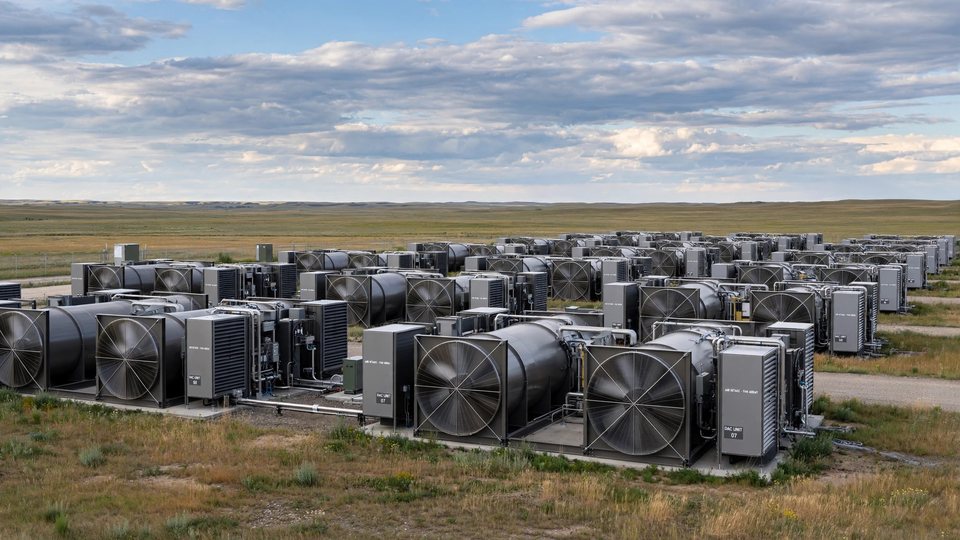
The 19 projects cover five technology pathways: direct air capture with permanent storage, including Deep Sky's projects in Alberta and Quebec; bioenergy with carbon capture; biochar; other biomass storage; and enhanced mineralization.
Projects must follow rigorous scientific protocols and pass independent verification and certification. The standing offers run until March 31, 2029, with an option to extend to 2031.
Why does the federal government want these credits?
Some emissions are particularly difficult to eliminate. The government specifically identifies National Defence's air and marine fleets as examples. The credits are intended to address these residual emissions under the Greening Government Strategy's net-zero-by-2050 commitment for federal operations.
This isn't an entirely new initiative. The program builds on an October 2024 commitment to purchase at least $10 million in CDR credits by 2030. Industry was consulted in February 2025, and the Request for Standing Offers launched in March 2026.
"Achieving net-zero government operations requires both deep emissions reductions and innovative approaches to addressing residual emissions," Ali said.
The Twikup Take
Here's the important distinction: Ottawa has created a way for federal departments to buy these credits, but it hasn't automatically purchased them. A standing offer buys nothing until a department places a call-up. So the "world first" is a procurement shelf, not yet a pile of removed carbon. But that shelf matters. Nineteen Canadian projects now have access to a federal purchasing channel — and that could help give a young industry the demand signal it needs to finance plants.
Image: Illustrative image.