
Key Takeaways
- Ottawa is providing $2.2 million to Ecostrat's Canada FIRM Challenge to certify up to 15 investment-ready BDO Zones across Canada
- The goal is more than $1 billion in new market opportunities for Canadian forest products within two years
- The announcement sits inside Budget 2026's proposed $6.5 billion forest-sector package
Fifteen regions, certified ready for the world's bioeconomy investors
Canada's forest sector employs nearly 200,000 people and sustains 300 communities. Ottawa's latest bet on its future is not a mill subsidy — it is a sales pitch, professionally prepared.
At the Scaling Up conference on November 19, Parliamentary Secretary Corey Hogan announced $2.2 million for Ecostrat's Canada Forest Innovation and Renewable Markets (FIRM) Challenge. The Challenge will certify up to 15 Bioeconomy Development Opportunity (BDO) Zones across Canada — regions technically assessed and rated for their readiness to host commercial-scale plants that convert local biomass and organic waste into low-carbon fuels, energy, chemicals and everyday materials.
Working with Global Affairs Canada and the Trade Commissioner Service's 160 offices, Ecostrat will market those zones to developers and investors worldwide. The stated goal: more than $1 billion in new market opportunities within two years. "We expect to see over $1 billion in new projects in these BDO Zones within two years," said Ecostrat CEO Jordan Solomon.
The Challenge advances a recommendation of the Canadian Forest Sector Transformation Task Force, ahead of a formal Forest Sector Strategy. The backdrop is Budget 2026's proposed $6.5 billion forest package — the largest in Canadian history — including $500 million for fibre supply chains, $2 billion for mill modernization and a $4 billion Forest Sector Accelerator.
"As demand grows for new kinds of sustainable and low-carbon forest products, Canada's forest sector is uniquely positioned to grow," said Energy and Natural Resources Minister Tim Hodgson.
The Twikup Take
The forest sector's problem is no longer just tariffs — it is that the world's buyers don't know which Canadian towns can actually host a biorefinery. A certification that answers that question, sold through 160 trade offices, is a cheap $2.2 million option on a $1 billion claim. Whether investors bite is the part no press release can certify.
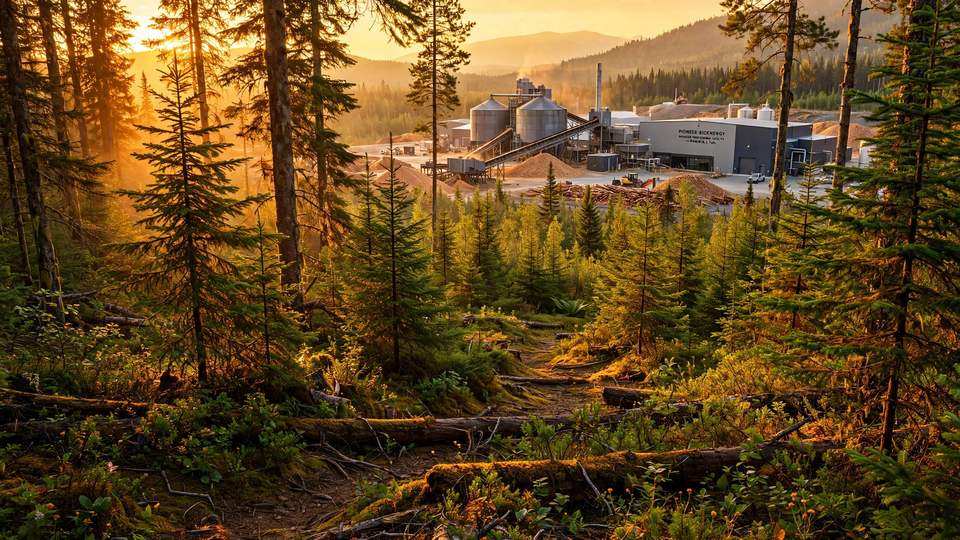
Image: Illustrative image.