
Key Takeaways
- Canada and Newfoundland and Labrador have jointly approved Equinor's Bay du Nord development plan
- The proposed $14-billion project could generate $20 billion in government revenues over a 20-year operating life
- A final investment decision by Equinor and Shell is expected in early 2027
A $14-billion oil project just cleared a major hurdle
Five hundred kilometres east of St. John's, a proposed $14-billion offshore oil project has just moved one step closer to reality.
On November 20, the federal and Newfoundland and Labrador governments jointly approved Equinor's development plan for the Bay du Nord project in the Flemish Pass Basin.
But there's a catch.
Government approval doesn't mean the $14 billion is committed yet.
Equinor and its partner Shell still need to make a final investment decision in early 2027. That call will depend on oil prices and costs — not press releases.
What the project could mean for Canada
If it goes ahead, the project is expected to operate for about 20 years. Over that time, Ottawa projects the development could:
- Generate $20 billion in government revenues
- Contribute $50 billion to Canada's GDP
- Create thousands of jobs
Newfoundland and Labrador Premier Tony Wakeham highlighted the scale of the work involved, citing "over 31 million person-hours of work over 25 years" and billions in future royalties.
The province's energy minister pointed to approximately $6.4 billion in projected direct provincial revenues and the option of a provincial equity stake.
What about the emissions?
The approval also highlights Newfoundland's offshore oil emissions record.
Newfoundland's offshore oil is already 30% below the global average for extraction emissions.
Bay du Nord is expected to come in 50% below the global average for offshore projects.
That's a key part of the argument for the project — producing oil with lower emissions than many other sources.
The $14-billion question still waiting for an answer
The approval is a milestone, but the final investment decision is the number that really matters.
If Equinor and Shell commit the money in early 2027, Bay du Nord will become one of Canada's largest offshore energy projects.
If they don't, the approval will be little more than a piece of paper.
The Twikup Take
For Newfoundland, this is the offshore's next generation.
For Ottawa, it is a live test of whether "lower-emission oil" can sit inside its climate story.
But the most important number isn't $20 billion in revenues or $50 billion in GDP. It's $14 billion — the investment Equinor still has to decide whether to make.
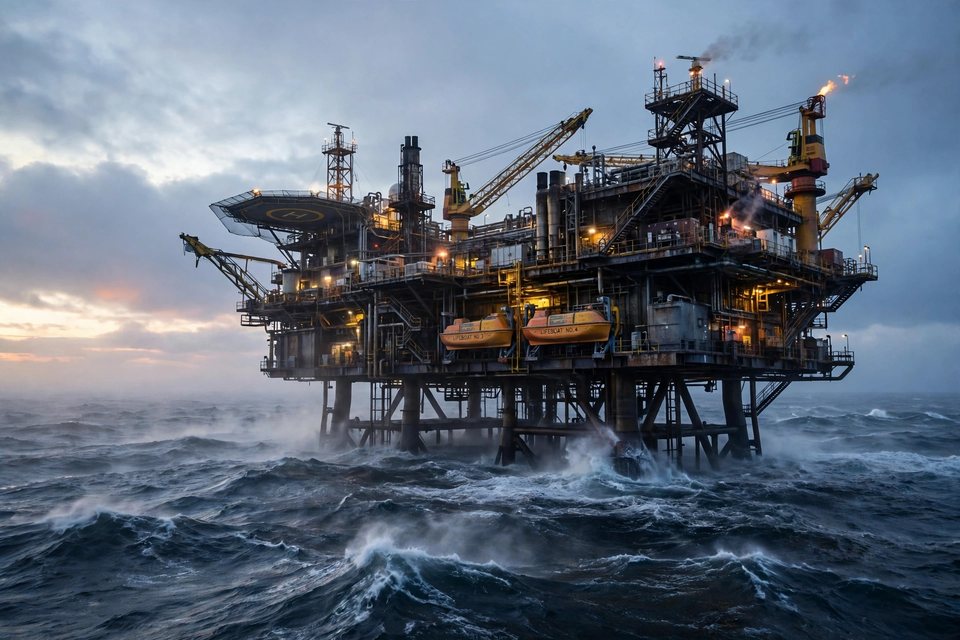
Image: Illustrative image.