
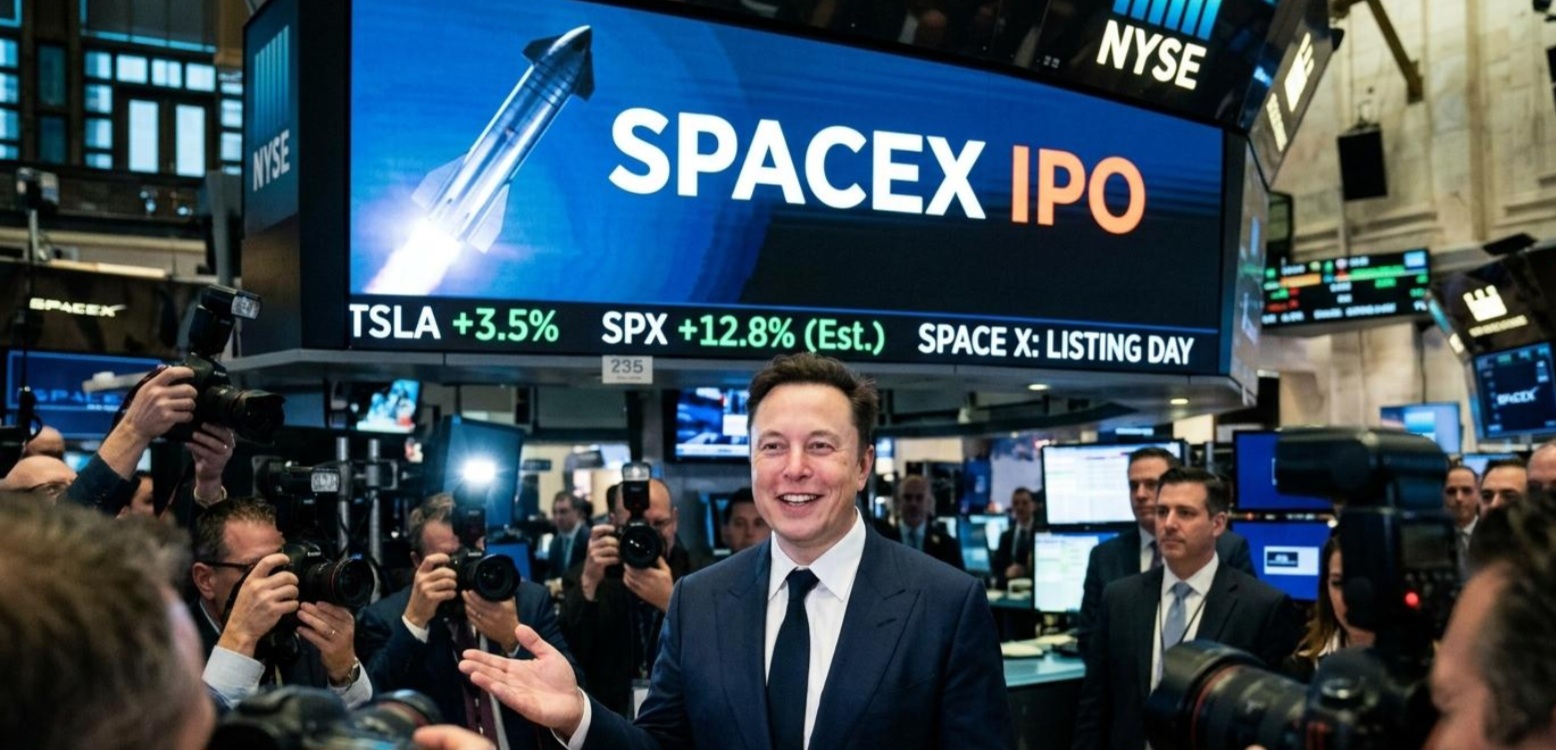
SpaceX has crossed one of the biggest milestones in its history. After remaining private for nearly twenty-five years, Elon Musk's aerospace company has entered public markets in what could become the largest initial public offering ever recorded.
The event represents more than a financial milestone. It signals changing investor sentiment, renewed enthusiasm for technology stocks, and the growing importance of companies operating at the intersection of infrastructure and innovation.
A Historic Listing Reshapes the IPO Landscape
SpaceX began trading on the Nasdaq after pricing shares at $135 each. The offering raised approximately $75 billion, giving the company a valuation of about $1.77 trillion.
That scale places SpaceX among the most valuable publicly traded companies in the world and surpasses previous records for initial public offerings.
Investor demand has been exceptionally strong, reflecting years of anticipation surrounding one of the world's most closely watched private firms.
Why SpaceX Waited Decades Before Going Public
Since its founding in 2002, SpaceX deliberately stayed away from public markets.
Remaining private allowed the company to pursue projects with long development timelines without the pressure of quarterly earnings expectations.
Over the years, the company expanded far beyond rocket launches.
-
Space transportation
-
Starlink satellite internet
-
Artificial intelligence initiatives
-
Advanced communications infrastructure
This evolution mirrors a broader trend in which technology companies have delayed public listings while building scale behind closed doors.
The IPO Is About More Than Space
The significance of the listing extends well beyond aerospace.
Its success could revive confidence in the broader IPO market after years of subdued activity. Investors increasingly appear willing to support companies with ambitious long-term visions, even when profitability remains secondary to growth.
The story also highlights an important shift in economic power. As explored in TwikUp's analysis, "SpaceX IPO Redefines Private Infrastructure Power" (https://twikup.ca/technology/space-tech/spacex-ipo-redefines-private-infrastructure-power), the company now occupies a position that reaches beyond commercial launches and into communications, artificial intelligence, and strategic infrastructure.
This growing influence reflects a broader transition in which private firms are assuming roles once associated primarily with governments.
What Investors Will Watch Next
The market's attention will now shift toward execution.
Key areas to monitor include:
-
Share price performance
-
Revenue growth from Starlink
-
Expansion of long-term space projects
-
Capital requirements for future investments
-
Implications for the broader IPO market
A successful debut could encourage other highly valued private companies to pursue public listings.
Why This Could Mark the Return of the Mega-IPO
SpaceX's debut represents more than the arrival of another stock.
It demonstrates that investors remain willing to place enormous bets on companies promising transformative technologies and infrastructure.
If successful, the listing may become a defining moment for both the future of the space economy and the next chapter of global capital markets.
FAQ: Brief Insights on SpaceX's IPO
Why is SpaceX's IPO considered historic?
The company raised approximately $75 billion, making it the largest IPO ever recorded.
What valuation did SpaceX receive?
The offering valued SpaceX at roughly $1.77 trillion.
Why did SpaceX remain private for so long?
Remaining private allowed the company to focus on long-term projects without pressure from quarterly earnings expectations.
Why does this IPO matter beyond SpaceX?
Its success could revive the market for large public offerings and influence how investors value future technology companies.
What businesses drive SpaceX today?
The company operates across rocket launches, Starlink satellite internet, advanced communications infrastructure, and emerging technology initiatives.
FAQ: Brief Insights on SpaceX's Historic IPO
Why is SpaceX's IPO considered record-breaking?
SpaceX raised approximately $75 billion through its public offering, making it the largest IPO in history and valuing the company at around $1.77 trillion.
Why did Elon Musk keep SpaceX private for so long?
Remaining private allowed SpaceX to pursue ambitious long-term projects without the short-term pressures of quarterly earnings expectations.
Where are SpaceX shares trading?
SpaceX shares began trading on the Nasdaq, marking the company's first appearance on public markets after nearly twenty-five years as a private firm.
Why does this IPO matter beyond SpaceX?
The offering could revive the market for mega-IPOs and signal renewed investor appetite for technology and infrastructure companies with long-term growth ambitions.
What businesses contribute to SpaceX's valuation?
Beyond rocket launches, SpaceX generates revenue from Starlink satellite internet and is expanding into communications infrastructure and emerging technology initiatives.
Is SpaceX profitable?
The company has generated significant revenue, but investors have focused more on its long-term growth potential than on near-term profitability.
Could other private technology companies follow SpaceX's lead?
Yes. A successful SpaceX debut could encourage other highly valued private firms to consider public listings, potentially revitalizing the IPO market.
Why are investors so interested in SpaceX?
SpaceX occupies a unique position at the intersection of aerospace, communications, and infrastructure, giving investors exposure to several high-growth industries through a single company.
How could the IPO affect Elon Musk's influence?
The listing further strengthens Elon Musk's role as one of the world's most influential business leaders, while increasing public scrutiny over SpaceX's financial performance and strategic decisions.
What could be the long-term significance of this IPO?
The SpaceX listing may represent a turning point in capital markets, demonstrating that investors are willing to place massive bets on companies building the technologies and infrastructure of the future.
Related Perspectives
SpaceX IPO Redefines Private Infrastructure Power
https://twikup.ca/technology/space-tech/spacex-ipo-redefines-private-infrastructure-power