
Key Takeaways
- Digital wallets replace your card number with a device-specific token, so merchants never receive or store the real number.
- Every tap sends the token plus a one-time dynamic code that cannot be reused.
- If you lose your phone, the tokens can be suspended without cancelling your physical card.
The number on your card is not the number your phone uses
When you add a payment card to Apple Pay, Google Pay or Samsung Pay, your phone does not simply store the 16 digits from the plastic. Your bank creates a substitute called a token — on Apple devices, a device-specific Device Account Number — and that stand-in is what lives on your phone. Each device gets its own token, and tokens are restricted to a specific device, merchant or channel, so a stolen token is useless anywhere else.
On iPhones, the Device Account Number is encrypted and stored in the Secure Element, a dedicated chip isolated from the main operating system. Apple says the number is never stored on its servers and never backed up to iCloud — and neither Apple nor your device ever sends your actual card number to a merchant.
What actually happens in the half-second of a tap
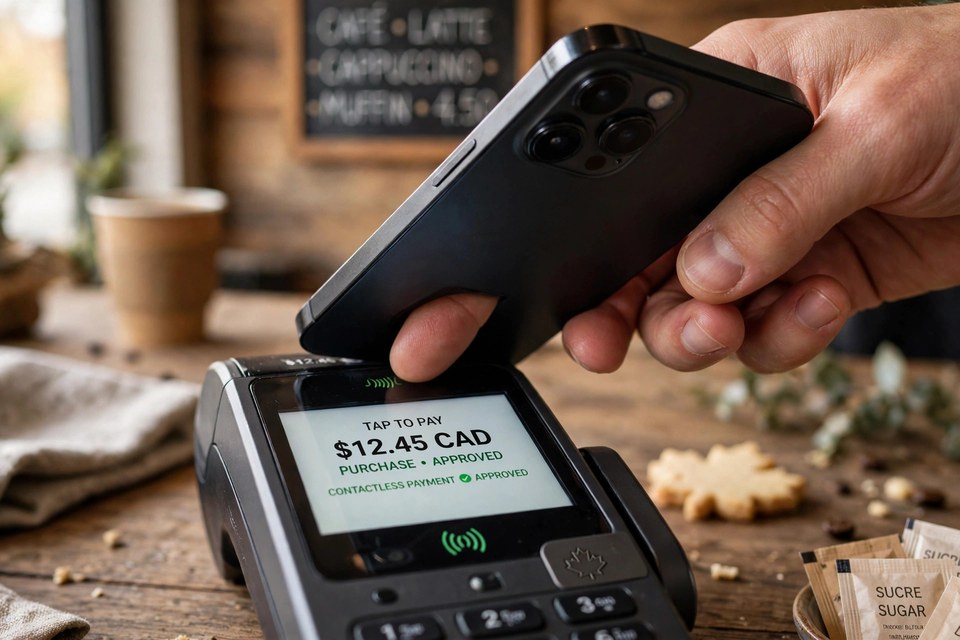
Before anything is transmitted, you authenticate — Face ID, a fingerprint or your passcode. Only then does the Secure Element release the token, together with a transaction-specific dynamic security code: a one-time cryptogram generated for that single purchase.
The merchant's terminal receives the token and the code — never your real number. Behind the scenes, the card network's token service (Visa Token Service, Mastercard's MDES, or the Interac Token Service Provider in Canada) holds the only map between token and real account. It converts the token back, your bank checks the one-time code, and the payment is approved. Because the code is generated fresh for each transaction, intercepted payment data cannot be replayed to buy something else — the classic weakness of the magnetic stripe, which handed over the same static number every time.
Why this is safer than the card in your wallet
Three consequences follow from the design:
- A breached store has nothing worth stealing. A retailer that is hacked leaks tokens restricted to that context, not card numbers that work everywhere.
- Your card number stays private. It is not printed on a receipt, read aloud to a call centre, or typed into websites.
- A lost phone is not a lost card. Put an iPhone into Lost Mode and Apple Pay is suspended — the physical card keeps working, and even erasing the phone suspends the tokens without you having to cancel and replace the card itself.
The same system powers Interac Debit in Canadian wallets: Interac's token service validates each Apple Pay transaction with a one-time unique token, your account number is not stored on the device, and purchases are covered by Interac's Zero Liability protection.
The limits worth knowing
Tokenization protects the payment itself, not everything around it. Your bank still sees every transaction, exactly as with a physical card. A phone with a weak passcode weakens the whole chain, because the passcode is what authorizes the token's use. And if you hand your unlocked phone to someone else, the wallet will happily pay — the system authenticates the device, not your intentions.
The Twikup Take
Tap-to-pay feels like a convenience feature, but it is really a security upgrade disguised as one: your real card number — the master key printed on plastic for anyone to copy — simply stops circulating. The plastic card is now the least secure way to use your own account.
Image: Illustrative image.