
Key Takeaways
- Canada's IDEaS program is conducting the 2026 Counter-Uncrewed Aerial Systems Sandbox.
- The program brings together 22 innovators representing six countries to demonstrate emerging counter-drone technologies.
- The demonstrations are designed to help assess technologies for detecting, tracking and countering uncrewed aerial systems.
Canada Tests Next-Generation Counter-Drone Technology With 22 Innovators at Defence Sandbox
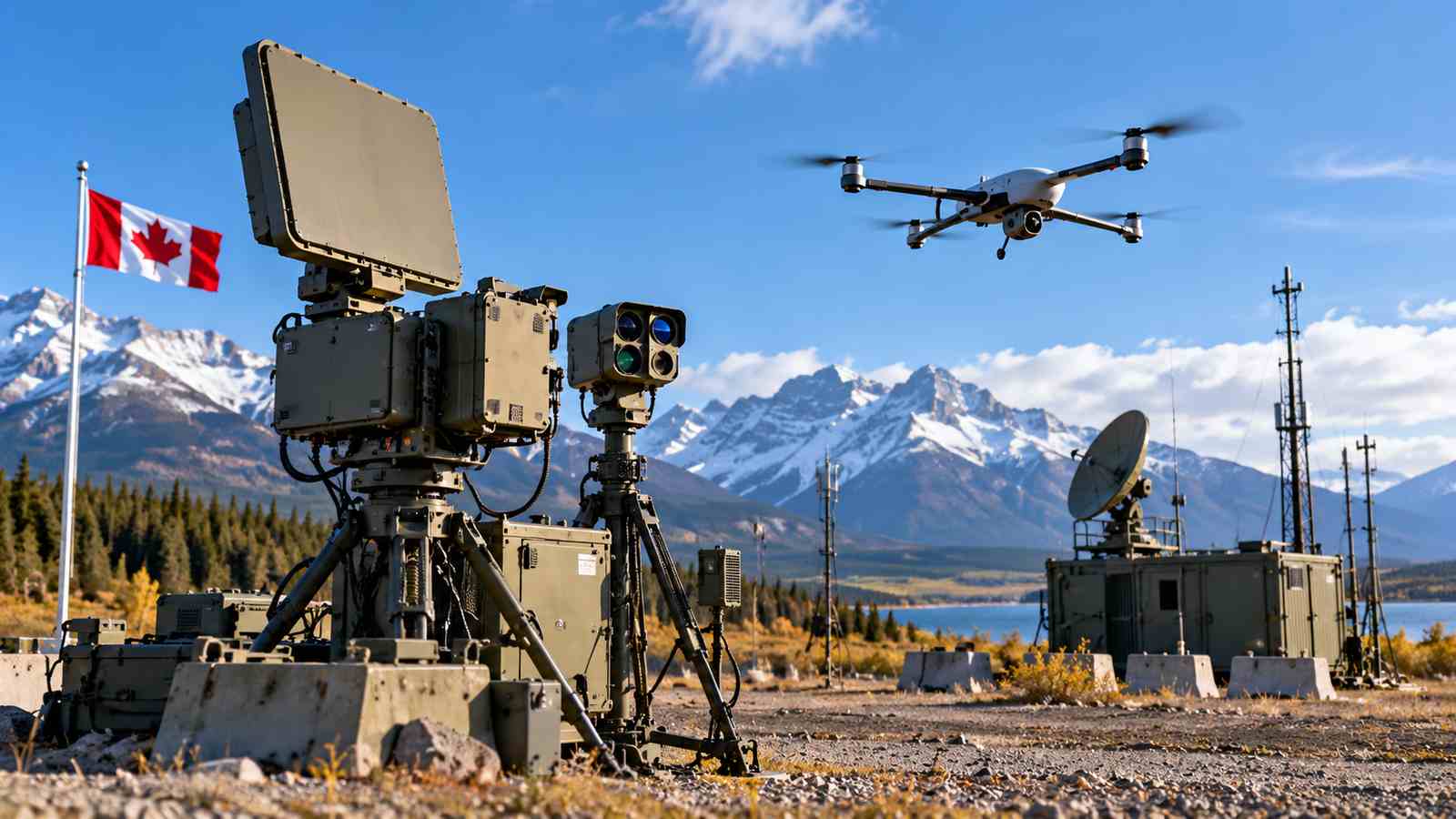
Canada is advancing the testing of counter-drone technologies through the 2026 Counter-Uncrewed Aerial Systems (CUAS) Sandbox, an initiative under the Department of National Defence's Innovation for Defence Excellence and Security (IDEaS) program.
The initiative brings together 22 innovators from six countries to demonstrate emerging technologies designed to address the growing challenge posed by uncrewed aerial systems.
Canada Brings 22 Innovators Together
The 2026 CUAS Sandbox provides participating innovators with an opportunity to demonstrate their counter-drone technologies in a defence testing environment.
According to Canada's Department of National Defence, 22 innovators from six countries are participating in the initiative.
The technologies are being evaluated in an environment designed to provide practical insights into their capabilities and potential applications.
What Is a Counter-Drone System?
Counter-Uncrewed Aerial Systems technologies are designed to detect, identify, track and respond to uncrewed aerial vehicles.
Drones can perform a wide range of civilian and military functions, but their increasing availability has also created new security and defence challenges.
Counter-drone technologies can involve multiple capabilities, including sensors, detection systems, tracking technologies and other methods designed to respond to uncrewed aerial systems.
The CUAS Sandbox allows emerging technologies to be examined in a controlled defence environment.
Canada's IDEaS Program
The CUAS Sandbox is being conducted through Canada's Innovation for Defence Excellence and Security program.
IDEaS is designed to connect the Department of National Defence and Canadian Armed Forces with innovators developing technologies that could address defence and security challenges.
Through activities such as testing and demonstrations, the program provides opportunities to evaluate emerging solutions before potential future development or adoption.
Demonstrating Emerging Technologies
The 2026 sandbox focuses on practical demonstrations rather than simply reviewing technology concepts.
Participating innovators have an opportunity to demonstrate their systems and capabilities in a defence-focused environment.
This can provide defence officials with information about how different technologies perform when addressing uncrewed aerial system threats.
The demonstrations can also help identify technical strengths, limitations and areas requiring additional development.
Why Counter-Drone Technology Matters
The growing use of uncrewed aerial systems has increased the importance of technologies capable of identifying and responding to drones.
For defence organizations, detecting an aerial system is only one part of the challenge. Systems may also need to determine what is present, track its movement and provide an appropriate response.
Testing multiple technologies can therefore help officials understand how different approaches perform under realistic conditions.
Testing Rather Than Immediate Deployment
The CUAS Sandbox should be understood as a testing and demonstration initiative rather than an announcement that all participating technologies will be deployed by Canada's military.
Participation gives innovators an opportunity to demonstrate their solutions and allows defence officials to assess emerging capabilities.
Further development, procurement or operational use would depend on subsequent evaluation and applicable government processes.
International Participation
The participation of 22 innovators from six countries gives the sandbox an international dimension.
Bringing together innovators from multiple countries allows Canada's defence innovation program to examine different approaches to countering uncrewed aerial systems.
It also provides participating companies and organizations with an opportunity to demonstrate their technologies to Canadian defence stakeholders.
TwikUp's Perspective
The importance of the CUAS Sandbox lies in its focus on practical evaluation.
Counter-drone technology is developing rapidly, and defence organizations need ways to understand how emerging systems perform before making decisions about potential future applications.
By bringing multiple innovators into a common testing environment, Canada can compare different technological approaches and identify capabilities that may warrant additional examination.
However, participation in the sandbox does not itself mean that a technology has been selected for procurement or operational deployment.
The initiative is better understood as part of Canada's broader defence innovation process, where emerging technologies are tested, evaluated and potentially developed further.
For the companies involved, the sandbox can provide an important opportunity to demonstrate their capabilities in front of defence stakeholders. For Canada, it provides another mechanism for exploring technologies that could address evolving security challenges.
What Comes Next?
The results of technology demonstrations can help inform future research, development and potential procurement decisions.
The CUAS Sandbox therefore represents one stage in the broader process of evaluating emerging counter-drone capabilities.
As uncrewed aerial systems continue to evolve, Canada's ability to test and assess technologies designed to detect and respond to them will remain an important part of defence innovation.