
Key Takeaways
- Two separate claims to have proved the Riemann hypothesis were announced on November 20, 2026; neither has been verified.
- One proof was produced by Anthropic's Levent Alpöge working with the AI Claude and written in the Lean language; the other is a human-only preprint by Alessandro Masullo.
- Experts are divided — Oxford's James Maynard is cautiously optimistic, while Montreal's Andrew Granville called the AI-assisted release "garbled."
Neither proof is verified. That caveat is the story.
Twice in a single day last week, mathematicians announced what the field has chased since 1859: a proof of the Riemann hypothesis, the conjecture about the distribution of prime numbers that sits atop the Millennium Prize list. Neither claim has been verified. Both are now in the hands of the only jury that matters — other mathematicians, checking line by line.
Claim one: a mathematician and his AI
On November 20, Levent Alpöge, a mathematician at the AI company Anthropic, announced: "I believe I have, working with Claude, discovered a proof of the Riemann hypothesis." His evidence is unusual even by the standards of unusual claims — a four-page sketch, with the proof itself written as code in Lean, a programming language designed for machine-checkable mathematics.
Hours later came claim two. Stanford mathematician Ravi Vakil posted a rival preprint by Alessandro Masullo, described as a "hurried announcement" of a proof that "is all human, with no AI."
What the experts say
The reactions split along a revealing line. Oxford's James Maynard, one of the world's leading number theorists, was strikingly open: "If this fully checks out, it is clearly a historic milestone," he said, adding, "I suspect that the proof will turn out to be correct."
Montreal's Andrew Granville was scathing about the Alpöge announcement: "What he released is garbled," he said, questioning the timing of the claim so soon after a drop in Anthropic's IPO valuation.
Why the checking matters more than the claiming
The Riemann hypothesis has absorbed more than 165 years of failed proofs, including celebrated near-misses and outright collapses. A proof is not a proof until independent experts have verified every step — a process that, for a result of this magnitude, takes months at minimum. The Lean formalization behind the first claim could speed that process up, because a computer can check each logical step; it could also expose the flaw faster. Until then, both announcements sit in the same category as every previous claim: intriguing, unproven, and one discovered error away from the footnotes.
The Twikup Take
The most 2026 detail in this story is the rivalry itself: within hours, the contest was no longer just about a 167-year-old problem, but about whether the machine or the unaided human got there first. Mathematics will settle the proof question the slow way. The symbolism, though, has already landed — even pure mathematics now runs on a clock set by AI.
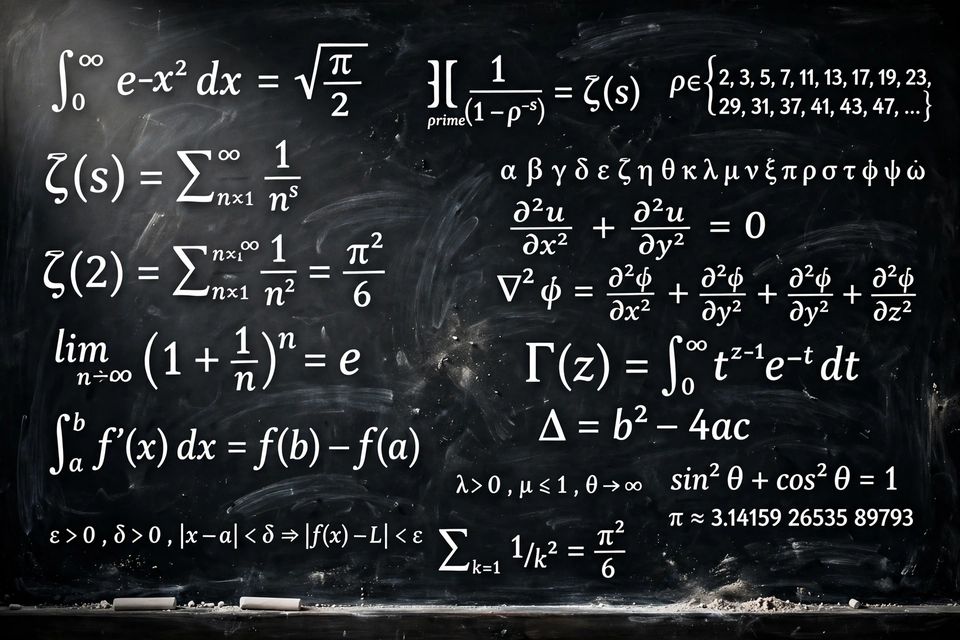
Image: Illustrative image.