
A beautiful listing can make the next step feel obvious. Before you offer—or remove conditions—slow down long enough to verify what the photos cannot show: the home’s condition, the costs you will carry, the records behind past work and the terms that protect your deposit.
This Canadian home-buying due diligence checklist helps you gather evidence before the deal becomes firm, then use appropriate offer conditions for material questions that remain unresolved. Due diligence will not make a home risk-free. It can, however, reveal whether you are accepting a normal ownership cost, a repair project or an uncertainty too large to own.
Illustrative scenario: You are relocating and have one showing before offer night. The basement looks newly finished, the condo fee seems manageable and the commute felt easy on a quiet Saturday. Rather than solve everything in the living room, use the steps below to turn impressions into documents, inspections and a clear decision.
1. Start with the costs after closing
The purchase price is not the full cost of ownership. According to Canada.ca’s home-buying guidance, buyers should plan for mortgage payments, property taxes, home insurance, heating and cooling, utilities, repairs, maintenance, yard care and driveway maintenance where applicable.
Ask for the latest property-tax bill and available utility information. List the work the property requires, such as snow removal, landscaping, roof maintenance or monthly condo fees. A detached house with a lower list price may need more direct upkeep than a condo; condo fees may cover services but remain a recurring cost.
Do this calculation before debating paint colours or appliances. If carrying costs strain your budget now, a promising inspection report will not fix that mismatch. For the separate question of location, compare your priorities before deciding where to buy your first home in Canada.
2. Build the property paper trail
A listing is marketing material, not a complete property file. Use it to identify questions.
Ask your real estate professional to help obtain available records and clarify what is included: appliances, window coverings, parking, storage and other items. If you see an addition, deck, finished basement or other substantial alteration, ask the seller for available permits and final-inspection records. Municipal rules and record systems differ, so confirm the process where the property sits.
Also ask whether a current land survey exists. According to CMHC, an offer may include a request for one. Your lawyer or notary can advise which title, survey and other searches are appropriate in your province or territory.
Keep each unanswered point in one place. “It was done years ago” may be an explanation, but it is not documentation you have reviewed.
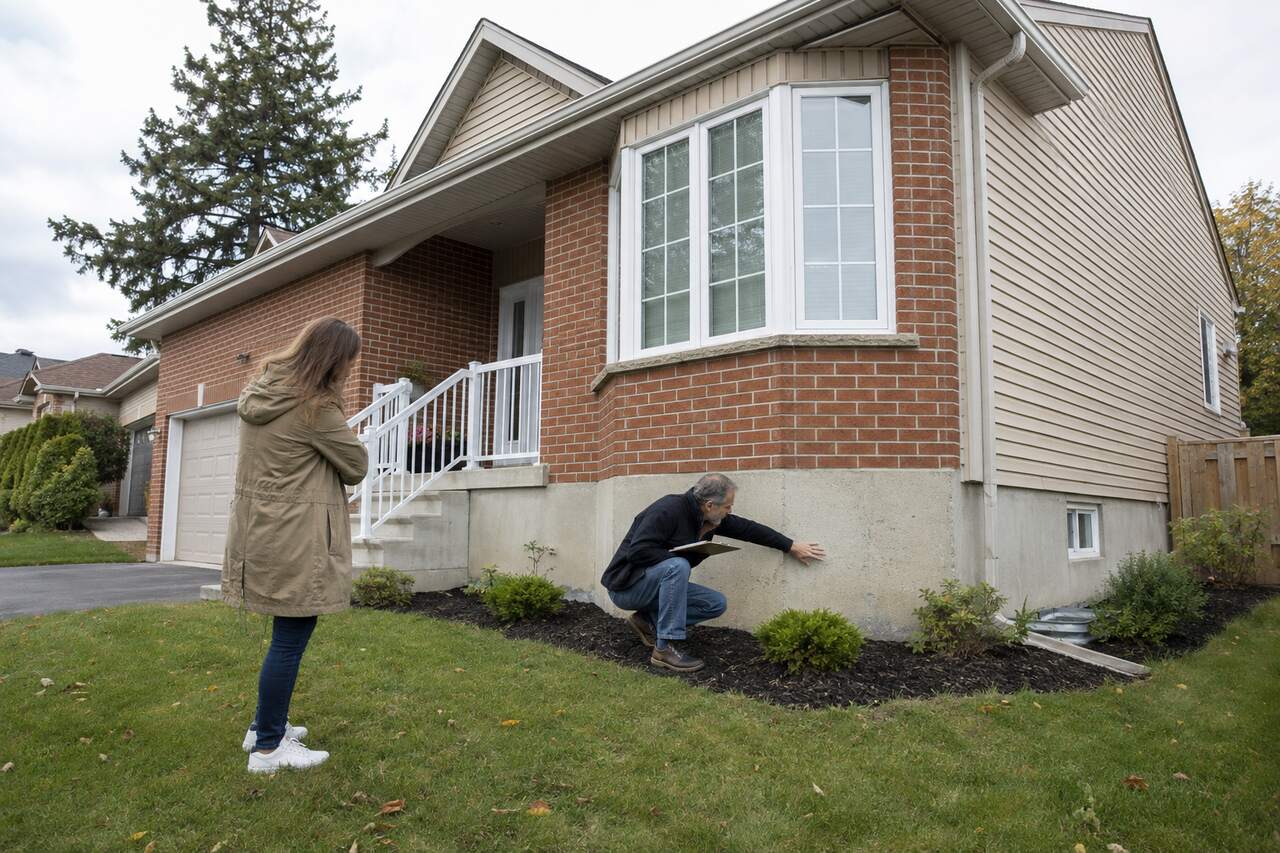
3. Use the home inspection for specific questions
A professional home inspection is a non-invasive visual evaluation, not an investigation behind walls or beneath finished surfaces. According to the federal Home inspections guide, it commonly considers the site, structure, roof, windows, plumbing, heating and cooling, electrical systems, interior finishes and life-safety features.
Access matters. A snow-covered roof, blocked crawlspace or locked mechanical room can limit what an inspector can report. Ensure accessible areas are available and read the report’s limitations rather than treating it as a blanket guarantee.
Before hiring an inspector, check whether licensing applies locally. Ask about training, experience with the property type, liability insurance, a sample report, the inspection contract, fee and reporting deadline. You can also ask whether the voluntary CSA A770 home-inspection standard will be used.
Bring your paper-trail questions to the inspection. If a concern needs a cost estimate or specialized diagnosis, consider the appropriate qualified professional. Federal guidance says a home inspector should not provide repair or renovation estimates.
4. Check the neighbourhood off-showing
The home may pass inspection and still fail your daily routine. Return at a different time if possible. Test the trip to work, school, transit, groceries and parking. Notice traffic, street activity and how long the route actually takes.
For a buyer moving from another city or province, one bright weekend showing cannot tell you how a street functions on a weekday morning or winter evening. Keep this decision distinct from the broader market-timing question. If that is holding you back, consider whether to buy a home now or wait until 2027 before an offer deadline decides for you.
5. Treat a condo as a unit and a corporation
A condo purchase is not only a review of the unit. According to CMHC, owners hold a private unit and share ownership of common elements and assets. Fees can support common-property upkeep, replacement, insurance, utilities and services; some may go to a reserve fund for future work.
Review the declaration, bylaws, rules, budget, financial statements, meeting minutes and available reserve-fund information. Confirm where your unit ends and common elements begin. Balconies, parking spaces, lockers and lawns may be common elements reserved for one owner’s use rather than property owned outright.
Focus on what affects your money or use of the home: fee changes, planned repairs, pet, parking, noise or occupancy restrictions, and available litigation information. Terms vary: British Columbia uses “strata corporation,” while Quebec uses “syndicate” or “syndicate of co-owners.” If market expectations are part of your condo decision, review the separate Toronto and Vancouver condo market outlook.
For a resale condo or strata purchase, CMHC says a satisfactory estoppel certificate or certificate of status should be a condition in the offer; this does not apply in Quebec. Ask local legal and real estate professionals what document and process apply.
6. Make offer conditions do real work
An offer commonly states the parties, property, price, deposit, possession date, included items, expiry time and conditions. According to CMHC’s offer guidance, inspection and mortgage-financing approval are common conditions.
A mortgage pre-approval is not final approval for a particular home. CMHC says buyers must still meet with their bank or credit union during the conditional period for final approval.
Conditions are legal contract terms, not a checklist to paste into every offer. Wording, deadlines and consequences vary by province, transaction and concern. Have the agreement prepared or reviewed by the appropriate real estate professional and lawyer or notary before signing. Do not assume a generic condition covers a specialized inspection, condo-document review or record request.
Your go-or-pause checklist
| Verify | Evidence to request | Decision if unresolved |
|---|---|---|
| Ongoing costs | Tax bill, utility information, condo budget | Recalculate monthly ownership costs |
| Alterations | Available permits and final records | Seek local verification and legal advice |
| Physical condition | Independent inspection report | Obtain specialist input if needed |
| Condo corporation | Governing, financial and reserve-fund documents | Keep applicable document review conditional |
| Financing and offer terms | Lender requirements and drafted conditions | Review before waiving conditions |
The payoff is clarity: proceed with defined protections, renegotiate in light of new information or walk away before an unresolved issue becomes your problem after closing.
Frequently asked questions
Should I inspect a home before making an offer?
You may arrange an inspection before offering or during a conditional period. According to Canada.ca, making an offer conditional on a satisfactory professional inspection lets serious findings inform whether you continue, change the offer or cancel it.
Is a seller’s pre-listing inspection enough?
It can be useful, but review its date, scope, access limitations and inspector credentials. You may still prefer an independent inspection obtained for your own decision-making.
What should I verify when buying a rural property?
Ask how water, wastewater, access, heating and outbuildings will be assessed. Choose an inspector with relevant experience and determine whether separate specialists are needed for issues outside a standard visual inspection.
Can I waive financing after mortgage pre-approval?
Pre-approval does not guarantee final approval for the specific property. According to CMHC, final approval must still be obtained during the conditional offer period. Consider the consequences carefully with your lender and appropriate professional advisers before waiving a condition.