
Key Takeaways
- Industrial land leasing allows owners to earn income from suitable land without necessarily funding the tenant's entire development.
- Long-term ground leases require careful agreements covering rent increases, property expenses, improvements, financing and lease expiry.
- Reliable income depends on tenant strength, permitted land use, location, lease enforcement and realistic rental assumptions.
Can Industrial Land Leasing Generate Reliable Income in Canada?
Owning industrial land does not always mean building a warehouse, distribution centre or manufacturing facility. In some cases, a landowner can lease the parcel to a business that wants to operate from the site or develop its own facilities.
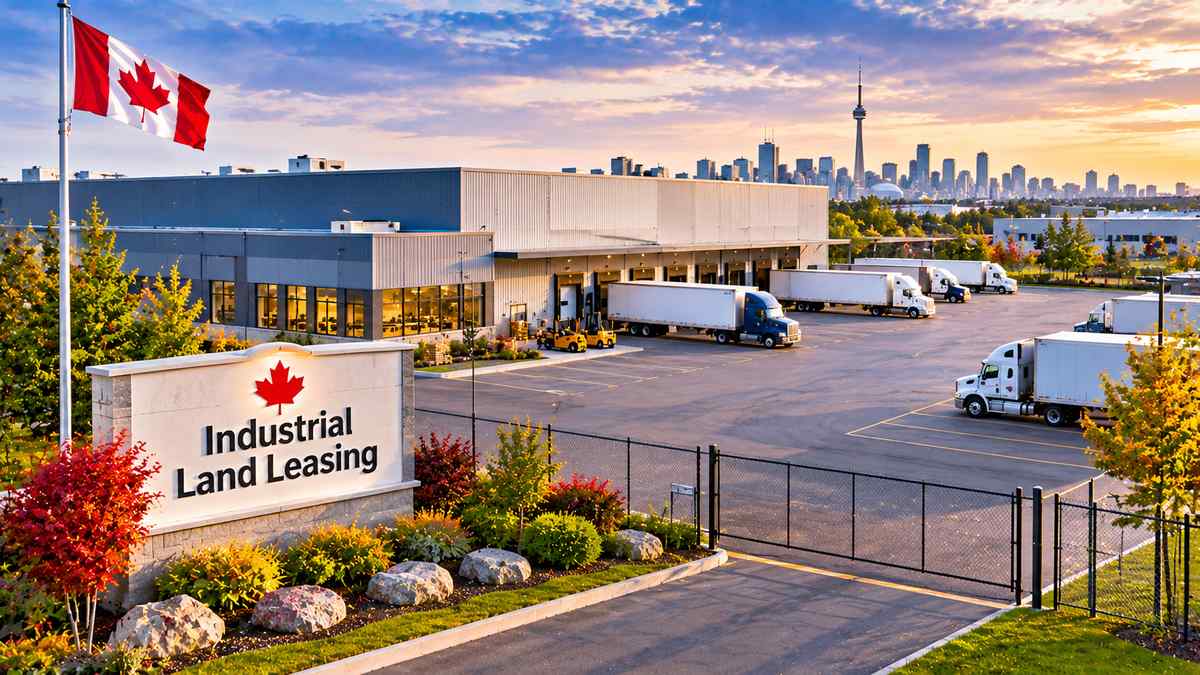
This approach is attracting attention from commercial property investors exploring industrial land leasing in Canada. Instead of managing a completed building, the owner may collect rent for allowing a tenant to use the land under an agreed contract.
A long-term ground lease can create a different investment structure. The tenant may construct and maintain improvements while the landowner retains ownership of the underlying property. However, the arrangement needs careful legal and financial planning.
How Does an Industrial Ground Lease Work?
A ground lease is a long-term agreement in which a tenant leases land and may construct buildings or other improvements at its own expense.
For example, a logistics operator might lease an industrial parcel to develop a distribution facility. Another tenant could use suitable land for equipment storage, vehicle parking or an industrial operating yard, subject to local approvals.
The agreement determines who pays property taxes, insurance, utilities, maintenance and other expenses. Some arrangements use an absolute net lease structure, under which the tenant assumes most property-related costs.
The lease should also explain who owns the improvements during the term and what happens when the agreement expires. In many traditional ground leases, improvements can revert to the landowner at the end of the term.
Why Might Landowners Consider Long-Term Leasing?
The biggest attraction is the opportunity to earn income without personally financing every part of a development.
A tenant may invest its own capital in site preparation, buildings, equipment and operating infrastructure. The landowner receives contractual rent while retaining the underlying land ownership.
This arrangement can also reduce the owner's day-to-day involvement compared with operating a warehouse or managing multiple building tenants.
However, it does not eliminate ownership responsibilities. Landowners still need to monitor contractual compliance, insurance coverage, environmental obligations, property taxes where applicable and the tenant's financial condition.
How Much Income Can Industrial Land Generate?
Rental income depends on the parcel's location, permitted use, size, access, servicing and local demand.
Consider a hypothetical industrial land parcel leased for $15,000 per month.
$15,000 × 12 months = $180,000 annual gross rental income.
This is an illustrative example, not a verified Canadian market rental rate.
The landowner must consider property expenses that remain their responsibility, financing costs, legal fees, taxes and any maintenance obligations. If the lease transfers certain expenses to the tenant, those responsibilities should be clearly documented.
Investors should also consider whether rent increases are linked to fixed annual adjustments, inflation or periodic market reviews. A long lease with no meaningful rent escalation can lose purchasing power over time.
Which Industrial Sites May Attract Tenants?
Location is important, but industrial land users also examine practical operating requirements.
Sites near highways, freight corridors, ports, rail connections and established industrial clusters may appeal to logistics and transportation businesses.
Other potential users include manufacturers, construction companies, equipment operators and businesses requiring outdoor storage or vehicle staging areas.
The parcel must also support the proposed activity. Road access, turning space, drainage, utility availability, soil conditions and environmental restrictions can influence whether a tenant can use the property efficiently.
What Risks Should Landowners Understand?
A long-term lease can create stable contractual income, but it also ties the property to one tenant for an extended period.
If the tenant becomes financially distressed, stops paying rent or abandons the property, replacing that tenant may take time.
Environmental liability deserves particular attention. Industrial operations may involve fuel, chemicals, vehicle maintenance or other activities that can affect the land. Agreements should address environmental assessments, reporting obligations, remediation responsibilities and insurance.
Another concern is the lease expiry. Buildings or site improvements may transfer to the landowner, but they may require expensive repairs, upgrades or demolition. The agreement should clearly address their condition and ownership.
What Should Investors Check Before Signing?
Start by confirming zoning, permitted industrial uses, title restrictions, access rights and environmental conditions. Obtain legal advice on registration, lease duration, rent adjustments, default remedies and tenant transfer rights.
Review the tenant's financial strength and require appropriate insurance and security where justified. The agreement should also define maintenance standards, redevelopment rights, assignment and subletting conditions, and what happens if the tenant defaults.
TwikUp's Perspective
Industrial land leasing can offer landowners another way to earn income from property without taking on the full cost of building and operating an industrial facility. But a long lease should never be treated as automatically secure simply because the tenant has agreed to remain for decades.
TwikUp believes investors should focus on the quality of the tenant, the legal strength of the agreement and the future usefulness of the land. Comparing this strategy with industrial outdoor storage investment can help clarify whether leasing vacant land or developing an operating facility makes more financial sense.
The strongest arrangement is one where the tenant can operate successfully, the landowner receives a fair and adjustable income stream, and both parties understand their responsibilities long before the lease reaches its final year.
Disclaimer
This article is for general educational and informational purposes only. It does not constitute financial, legal, tax or investment advice. Ground lease regulations, registration requirements, tax treatment and permitted land uses can vary across Canadian provinces and municipalities. Investors should obtain independent legal, tax, environmental and financial advice before entering into a ground lease.