
Key Takeaways
- Funeral homes may attract specialist tenants seeking purpose-designed facilities for long-term operations.
- Private entrances, arrangement rooms, refrigeration access and preparation areas can influence property suitability.
- Investors should assess tenant finances, local regulations, conversion costs and alternative-use potential before purchasing.
Could Funeral Homes Become an Interesting Real Estate Investment?
Funeral homes occupy a different position in commercial real estate. Unlike ordinary retail shops or offices, these properties support services that families may need regardless of broader economic conditions. Their buildings are designed around private family arrangements, funeral ceremonies, preparation facilities and, in some cases, cremation services.
For property investors, this creates a specialised leasing opportunity. A suitable building may attract an established funeral operator looking for premises that are difficult to replace. However, essential services do not automatically guarantee stable rental income. The tenant's financial strength, local competition, lease terms and property condition still determine the investment's performance.
What Does Canada's Funeral Services Industry Tell Investors?
Innovation, Science and Economic Development Canada reported 2,050 establishments in the broader funeral-services industry in 2025. This category includes funeral homes, cemeteries and crematoria. Almost all establishments had fewer than 100 employees, indicating that the industry largely consists of small and medium-sized operations.
Ontario recorded 491 employer establishments, followed by Quebec with 289, British Columbia with 128 and Alberta with 108. These figures provide a useful starting point for regional research, but investors should examine individual communities rather than assume that a larger provincial market guarantees stronger property demand.
ISED's 2024 financial dataset also reported average revenue of approximately $961,300 among the 1,193 businesses included in its selected revenue range. Around 79% were profitable. These figures describe business performance, not the rent that a funeral operator can afford.
Why Do Funeral Homes Need Specialised Buildings?
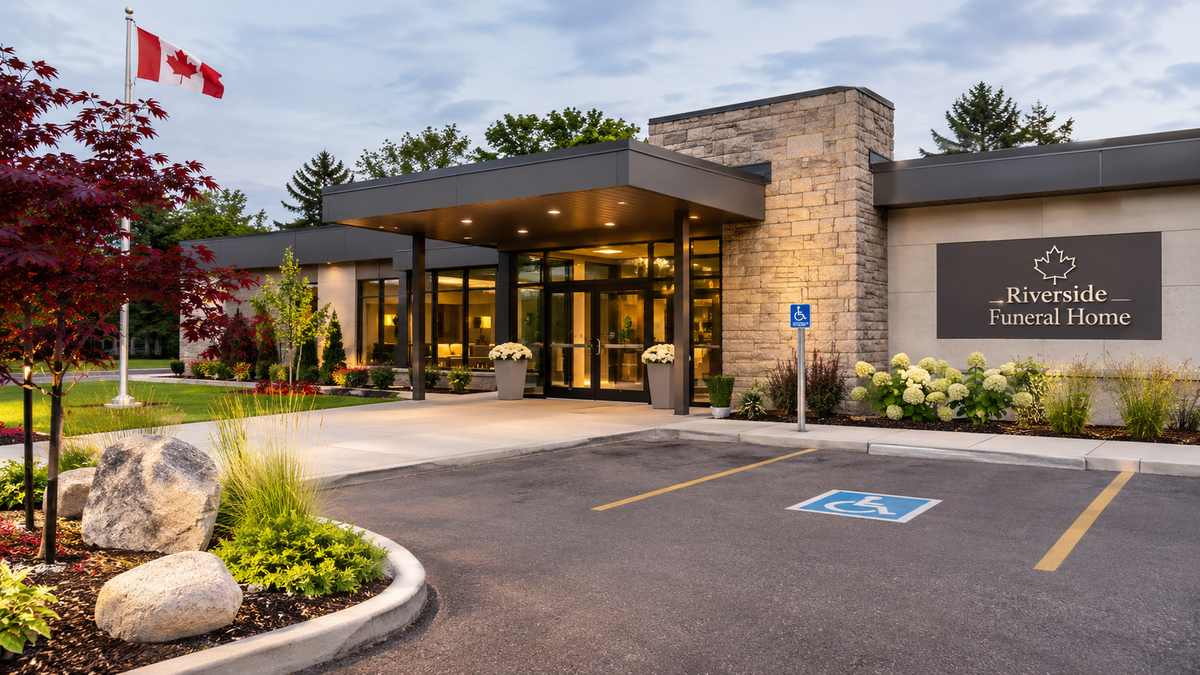
A funeral home usually needs more than a reception desk and office space. Depending on its services, the property may require private family-arrangement rooms, viewing areas, ceremony spaces, preparation facilities, refrigeration, staff areas and secure storage.
Privacy and accessibility are particularly important. Families need comfortable spaces where arrangements can be discussed without disruption. Separate entrances, convenient parking, accessible washrooms and suitable vehicle access can also influence the property's appeal to operators.
Preparation facilities introduce additional building requirements. Mechanical ventilation, washable surfaces, appropriate drainage and refrigeration infrastructure may be necessary depending on the services offered and provincial rules. These features can make an existing funeral home valuable to another operator, but they can also increase renovation expenses.
Which Funeral Property Types Can Investors Consider?
Traditional funeral homes are the most recognisable option. These buildings generally combine family-arrangement rooms, viewing spaces, reception areas and offices. They may suit independent operators or larger funeral-service groups.
A second category includes properties with cremation facilities. These require specialised equipment, mechanical systems and additional regulatory and environmental review. Investors should not assume that an ordinary funeral home can be converted into a crematorium without substantial approvals and investment.
Some properties combine funeral services with administrative offices, vehicle storage or related facilities. Such mixed-use layouts may offer flexibility, but every component should be assessed separately for permitted use, operating costs and tenant demand.
How Can Funeral Home Properties Generate Rental Income?
The simplest investment model involves purchasing an existing funeral home and leasing it to an established operator. A long-term commercial lease may provide predictable contractual rent, particularly when the tenant has a strong operating history and the property is already suitable for its services.
Some transactions may use net-lease arrangements, under which tenants assume agreed responsibilities for expenses such as property taxes, insurance and maintenance. However, the lease must clearly identify who pays for structural repairs, specialised equipment, refrigeration systems and major building replacements.
Investors can also consider properties occupied by multi-location funeral operators. A larger operator may have established systems and a wider business network, but the actual legal tenant, lease guarantee and financial position must still be examined. A recognised brand name alone does not eliminate tenant risk.
What Risks Should Investors Examine Before Buying?
Specialised infrastructure can become a disadvantage when a tenant leaves. A building designed around funeral services may require significant alterations before another commercial tenant can use it. This can increase vacancy periods and reduce the property's resale flexibility.
Regulatory compliance is another major consideration. British Columbia, for example, sets facility requirements that can include private entrances, separate arrangement rooms and acceptable refrigeration access. Ontario has its own licensing framework for funeral establishments. Requirements differ across provinces, so investors must confirm the rules applicable to the property's location.
Location also deserves careful attention. Funeral homes need suitable access, parking and a setting that supports private family visits. Zoning restrictions, nearby residential development, traffic conditions and community acceptance can influence whether an operator can continue or expand its activities.
What Should Investors Check Before Purchasing?
Start with the tenant. Review its operating history, financial statements, ownership structure, reputation and ability to meet long-term lease obligations. If the property is vacant, speak with potential operators before assuming that demand exists.
Next, arrange professional inspections of the building's structure, electrical systems, plumbing, ventilation, refrigeration and drainage. If cremation equipment is present, obtain specialist assessments of the equipment, emissions controls and applicable environmental approvals.
Finally, examine the lease and the property's alternative-use potential. Identify responsibility for specialised fit-outs, equipment replacement, major repairs and regulatory upgrades. A property that can accommodate another professional or community-service use may provide greater flexibility if the funeral operator eventually relocates.
TwikUp's Perspective
Funeral home real estate can be an interesting niche for investors who understand specialised commercial buildings. Its appeal comes from the need for suitable facilities and the difficulty of replacing a well-located property with compliant infrastructure.
However, the investment should never be judged only by the essential nature of funeral services. A strong purchase requires a financially capable tenant, a properly structured lease, manageable maintenance costs and a realistic exit strategy. For TwikUp, the better opportunity is not simply owning a funeral home building, but owning one that can remain commercially useful over the long term.
Disclaimer
This article is for general educational and informational purposes only. It does not constitute financial, investment, legal or tax advice. Funeral home properties involve risks relating to tenant default, specialised infrastructure, regulatory approvals, environmental compliance, vacancy and renovation costs. Readers should consult qualified real estate, legal, financial and building professionals before making investment decisions.