
Key Takeaways
- Ontario, British Columbia and Quebec account for most of Canada's greenhouse area, making regional research important when evaluating potential properties.
- Energy expenses, specialised equipment and water access can influence a greenhouse tenant's ability to maintain a long-term lease.
- Existing greenhouse facilities may offer leasing opportunities, but investors should verify permitted uses, infrastructure condition and alternative-use potential before purchasing.
Can Greenhouse Real Estate Investment in Canada Create Opportunities in 2027?
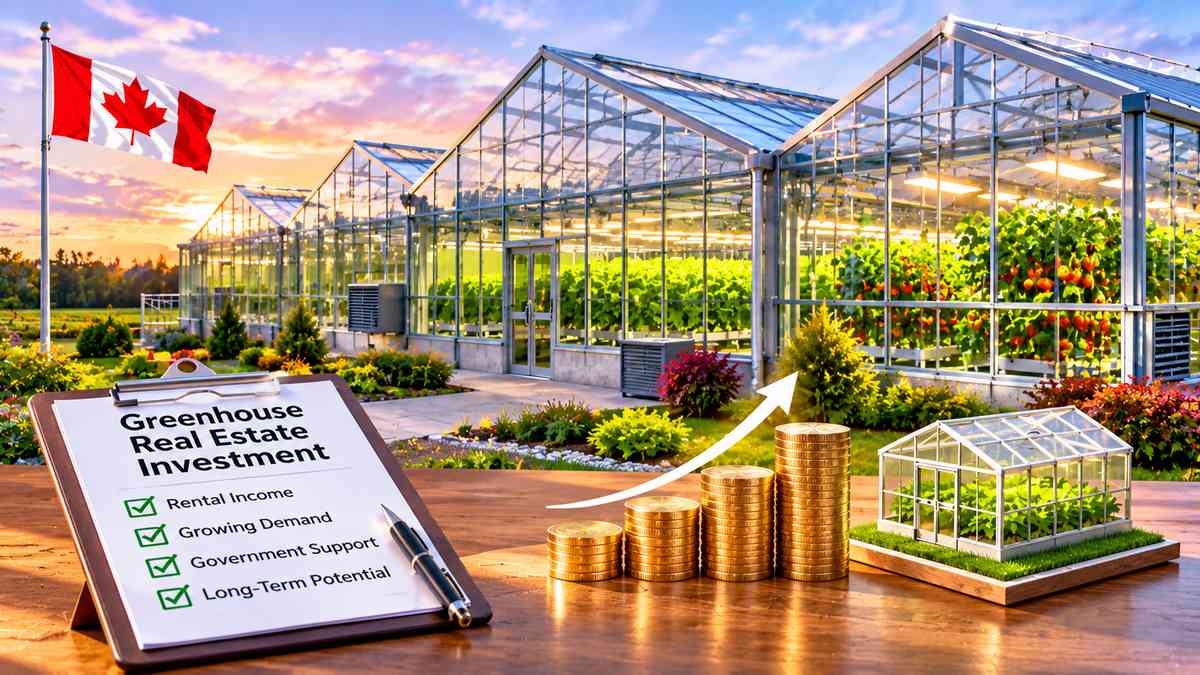
Greenhouses are becoming an increasingly important part of Canada's agricultural infrastructure. They allow growers to produce vegetables, fruits and plants in controlled conditions rather than relying entirely on outdoor growing seasons. For commercial property investors, this creates an opportunity to examine buildings designed specifically for year-round agricultural production.
However, greenhouse real estate investment in Canada is not simply about purchasing agricultural land and collecting rent. The building's technology, energy supply, water access and tenant's financial health can determine whether the investment makes commercial sense.
Why Is Canada's Greenhouse Industry Attracting Attention?
Statistics Canada's 2025 industry data reported approximately $5.5 billion in greenhouse sales, including $3.06 billion from fruits and vegetables. Total greenhouse area reached 35.9 million square metres, representing a 1.4% increase from 2024.
Ontario accounted for 64.9% of Canada's greenhouse area, followed by British Columbia at 17.4% and Quebec at 10.4%. These provinces therefore deserve attention when investors begin researching established greenhouse markets.
Agriculture and Agri-Food Canada's 2024 industry overview also recorded 974 commercial greenhouse vegetable operations across Canada. The sector's scale suggests an established agricultural property market, although industry growth alone cannot establish the rental demand or value of an individual building.
What Makes a Commercial Greenhouse Property Valuable?
A commercial greenhouse requires more than a large structure with transparent roofing. Depending on its design, the property may include automated irrigation, ventilation, heating, cooling, lighting, climate monitoring, drainage and specialised growing systems.
Reliable electricity and natural gas connections can be particularly important for larger operations. Water availability is equally significant because irrigation requirements can be substantial.
Location also influences property suitability. Access to transport routes, agricultural suppliers, distribution facilities and nearby labour can make a site more practical for a commercial grower.
Investors should inspect the greenhouse structure, roof materials, heating equipment, irrigation systems, electrical capacity and maintenance records before deciding what the property is worth.
How Can Greenhouse Properties Generate Rental Income?
One approach is to purchase an existing commercial greenhouse and lease it to an established agricultural operator. The lease may include base rent, annual increases and clearly defined responsibilities for equipment maintenance, utilities, insurance and structural repairs.
Consider a hypothetical property leased for $15,000 per month.
Annual gross rental income:
$15,000 × 12 = $180,000
This represents gross rent, not investment profit. Property taxes, insurance, repairs, financing, vacancy and major equipment replacements can reduce the amount remaining.
Lease agreements should also distinguish between the building and specialised farming equipment. Investors need to know who owns, services and replaces climate-control systems, irrigation equipment and other essential installations.
What Risks Should Greenhouse Property Investors Consider?
Energy expenses are a major concern. Statistics Canada reported that greenhouse operating expenses reached $4.2 billion in 2025. Electricity expenses increased 21.2% year over year, while natural gas expenses rose 4.7%.
These costs affect growers directly and can weaken their ability to pay rent during difficult operating periods. A landlord should therefore examine the tenant's financial position rather than assuming agricultural demand guarantees rental stability.
Water and environmental requirements also matter. In Ontario, certain greenhouse operations require permits for significant water withdrawals, wastewater approvals and compliance with pesticide rules. Municipal zoning and other provincial requirements must also be checked.
Additional risks include crop disease, equipment failure, labour shortages, market-price fluctuations and the difficulty of converting a specialised greenhouse into another commercial use.
What Should Investors Check Before Purchasing?
Begin with the property itself. Obtain an independent building and equipment inspection, verify utility capacity and review water access, drainage and applicable permits.
Next, evaluate the prospective tenant. Review its operating history, financial statements, insurance, lease obligations and ability to fund routine maintenance. A technically advanced greenhouse may still be a poor investment if its operator cannot sustain the business.
Investors should also investigate whether the land permits other agricultural or commercial uses. Alternative-use flexibility can become important if a greenhouse operator leaves or the existing structure becomes outdated.
TwikUp's Perspective
Greenhouse properties deserve consideration because they connect commercial real estate with Canada's expanding controlled-environment agriculture sector. However, investors should avoid confusing agricultural production growth with guaranteed rental income.
A useful comparison is Canada Food Processing Property Investment 2027, where specialised building requirements also influence tenant suitability. Similarly, Canada Cold Storage Investment 2027 explores another property category where infrastructure and operating costs matter.
TwikUp believes the strongest greenhouse investment is one where the purchase price, infrastructure condition, tenant finances and future property flexibility work together. The building should make commercial sense even when crop prices, energy expenses or farming conditions become less favourable.
Disclaimer
This article is for educational and informational purposes only. It does not constitute financial, legal, agricultural or investment advice. Greenhouse property investments involve risks, including tenant default, energy costs, equipment failure, environmental compliance, water restrictions and changes in agricultural markets. Consult qualified commercial real estate, legal, engineering and financial professionals before making investment decisions.