
Key Takeaways
- Hamilton is set to receive up to $572 million through the Development Charge Reduction Program to support housing-enabling infrastructure.
- Hamilton has committed to eliminating development charges on residential developments from March 30, 2026, to March 31, 2029, subject to approval by Hamilton City Council.
- The governments estimate that removing development charges could reduce the cost of building a new home by up to $100,442 per home.
Canada and Ontario Put $572 Million Into Hamilton Housing Push
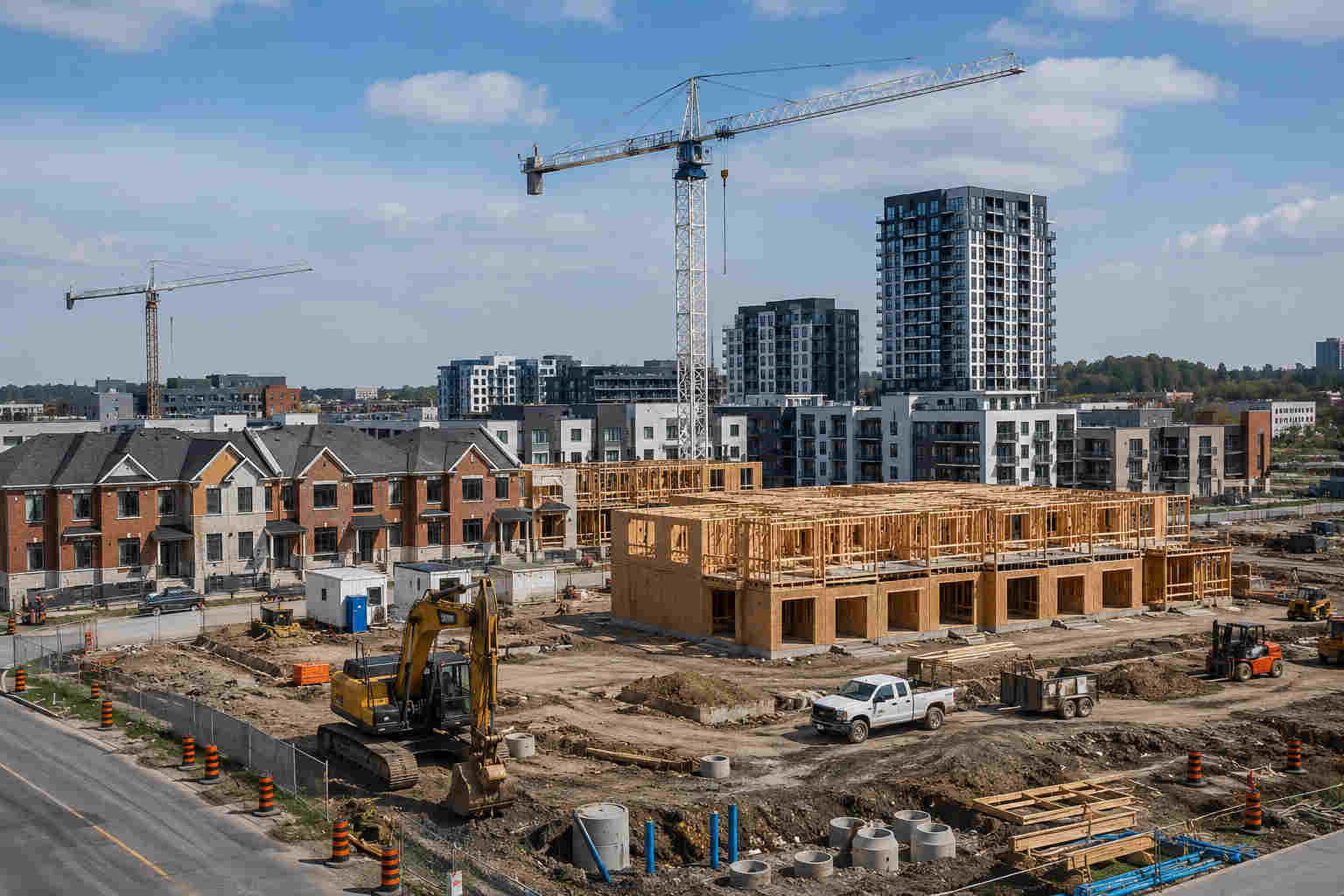
Canada and Ontario are putting up to $572 million toward housing-enabling infrastructure in Hamilton as part of a new effort to lower the cost of building homes and increase housing supply.
The governments announced the funding on August 26 through the Development Charge Reduction Program.
The program is tied to Hamilton's commitment to eliminate development charges on residential developments for three years, from March 30, 2026, to March 31, 2029.
The move is designed to reduce upfront costs for residential development while helping Hamilton build the roads, water systems, and other infrastructure needed to support new communities.
What Is the $572 Million For?
The $572 million is not a direct payment to homebuyers.
Instead, the funding is intended to support infrastructure projects that can help unlock new housing across Hamilton.
Projects identified under the program include road improvements, water and wastewater infrastructure and other community infrastructure needed to support residential development.
The proposed projects include widening and reconstructing Barton Street, reconstructing Lewis Road and widening sections of Rymal Road and Garner Road.
The funding would also support the expansion of the Woodward water and wastewater treatment plant and an upgrade to the Greenhill Water Pumping Station.
How Will Development Charges Change?
Hamilton has committed to eliminating development charges on all residential developments during the three-year period.
Development charges are fees municipalities collect from new development to help pay for infrastructure and services required to support growth.
Removing those charges is intended to lower the upfront cost of building new homes.
According to the federal government, the complete removal of development charges during the three-year period is estimated to reduce the cost of building a new home by up to $100,442.
However, the elimination still requires approval by Hamilton City Council and must remain in effect for three years.
Could New Homes Become Cheaper?
The government says the measures could significantly reduce some costs associated with new housing.
The estimated development-charge saving is up to $100,442 per home.
There is also a separate federal-provincial measure involving the removal of the full HST on eligible new homes from April 1, 2026, to March 31, 2027.
That HST measure could provide savings of up to $130,000 for eligible homebuyers.
Combined, the governments say the two measures could provide Hamilton families with savings of up to $230,000 on the cost of a new home.
These are maximum potential savings and should not be interpreted as a guaranteed $230,000 reduction for every homebuyer.
How Many Homes Could the Program Unlock?
The City of Hamilton estimates that construction-cost savings from the development-charge reduction, combined with investment in housing-enabling infrastructure, could unlock more than 31,000 new homes.
The goal is to increase housing supply and create more choice for buyers and renters.
Whether the projected number of homes is achieved will depend on development activity, approvals, market conditions and other factors.
Which Hamilton Infrastructure Projects Are Included?
The announced funding is expected to support several major infrastructure projects.
These include:
- Widening and reconstructing Barton Street between Fruitland Road and Fifty Road
- Reconstructing Lewis Road between Highway 8 and Barton Street
- Widening sections of Rymal Road south of Hamilton Mountain
- Widening and reconstructing Garner Road in Ancaster
- Expanding the Woodward water and wastewater treatment plant
- Increasing capacity at the Greenhill Water Pumping Station
The projects are intended to provide infrastructure capacity for new and growing residential communities.
Why Is Infrastructure Important for Housing?
Building more homes requires more than approving residential projects.
Growing neighbourhoods also need roads, water systems, wastewater capacity and other public infrastructure.
The government says the Hamilton funding will help address those infrastructure requirements while lowering some of the upfront costs faced by residential developers.
The idea is to make it easier for housing projects to move forward while ensuring communities have the infrastructure needed to support additional residents.
When Will the Development Charge Changes Take Effect?
Hamilton's commitment covers the period from March 30, 2026, through March 31, 2029.
However, the elimination of development charges is subject to approval by Hamilton City Council.
The $572 million in program funding is also subject to further conditions, including a Canada-Ontario Build Communities Strong Fund agreement, government due diligence, and a transfer-payment agreement between Ontario and Hamilton.
This means the full funding and project approvals are not simply an unconditional $572 million payment being handed to the city.
What Does This Mean for Hamilton Homebuyers?
For people looking to buy a newly built home in Hamilton, the policy could eventually help reduce some of the costs associated with new construction.
The potential benefit is different from a direct government rebate.
Development charges are paid as part of the cost of new development, so removing them is intended to reduce the cost of bringing new homes to market.
The governments also say consumer protections are included to help ensure the savings reach homebuyers.
However, the final price of a home can still be affected by land costs, construction costs, financing, market demand, builder pricing, and other expenses.
What Does This Mean for Renters?
The program could also affect renters if it results in more homes being built.
The City of Hamilton estimates that the measures could unlock more than 31,000 new homes.
An increase in housing supply could provide more options for both buyers and renters, although the actual effect on rents will depend on how quickly new homes are constructed and broader housing-market conditions.
How Does the Program Fit Into Canada's Housing Strategy?
The Hamilton announcement is part of a broader Canada-Ontario infrastructure partnership.
In March 2026, Canada and Ontario agreed to a cost-matched structure that could provide a combined $8.8 billion over 10 years for infrastructure investments in Ontario.
Federal funding under that arrangement flows through the Build Communities Strong Fund.
The Development Charge Reduction Program is intended to connect infrastructure investment with efforts to reduce development costs and increase housing construction.
What Happens Next?
Hamilton City Council must approve the elimination of residential development charges.
The funding also remains subject to federal and provincial review and the required agreements.
Once the conditions are met, the infrastructure investments can move forward alongside the development-charge reductions.
The success of the program will ultimately depend on whether lower development costs and new infrastructure translate into more housing construction.
TwikUp Insight
The headline figure is $572 million, but the more important part of the announcement is how that money is being used.
The funding is designed to build the infrastructure needed for new housing while Hamilton removes residential development charges for three years.
The government estimates that this could lower new-home construction costs by up to $100,442 per home and help unlock more than 31,000 homes.
But the $572 million is not a direct housing rebate, and the potential savings are not guaranteed for every buyer.
For Hamilton's housing market, the bigger test will be whether the combination of lower development costs and new infrastructure actually results in more homes being built and whether those savings reach consumers.