
Key Takeaways
- Gold reached its highest level in three months on August 25.
- Spot gold briefly approached $4,700 an ounce as investors watched inflation and bond-market developments.
- Falling oil prices helped ease some concerns about inflation expectations.
Gold Reaches Three-Month High as Investors Watch Markets
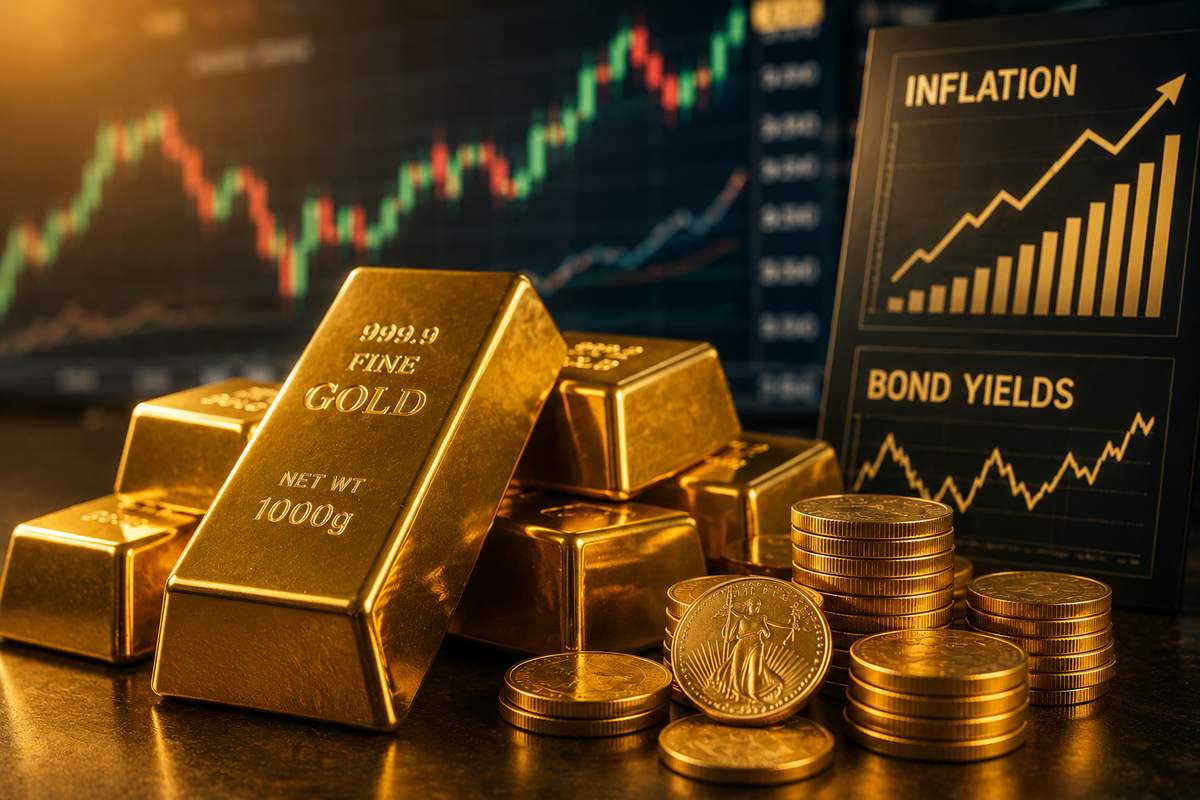
Gold climbed to its highest level in three months on August 25 as investors assessed inflation concerns and volatility in global bond markets.
Spot gold briefly approached $4,700 an ounce, reflecting continued investor interest in the precious metal as markets responded to changing economic expectations.
The move came as investors also monitored falling oil prices and their potential impact on inflation.
Gold Price Rises Amid Market Uncertainty
Gold is closely watched by investors during periods of economic and financial uncertainty.
The latest rise came as bond markets experienced volatility and investors considered the outlook for inflation and interest rates.
The three-month high indicates renewed strength in gold prices after recent market movements.
Why Are Investors Watching Inflation?
Inflation remains an important factor for financial markets because it can influence interest-rate expectations and the value of different asset classes.
When inflation expectations change, investors often reassess their positions across stocks, bonds, currencies, and commodities.
Gold is particularly sensitive to these shifts because it is widely traded as a financial asset and is often considered a store of value.
Gold Approaches $4,700 an Ounce
Spot gold briefly approached the $4,700-per-ounce level on August 25.
The move came as investors evaluated developments in the bond market and changing expectations around inflation.
The exact price of gold can move throughout the trading session, meaning the market level may change after the initial move.
What Role Are Bond Markets Playing?
Bond-market volatility has become another important factor for investors watching gold.
Changes in bond yields can influence the attractiveness of assets that do not generate regular interest payments, including gold.
Investors therefore continue to monitor government bond yields alongside inflation data and central-bank policy expectations.
Falling Oil Prices Could Ease Inflation Pressure
Oil prices also moved lower during the session.
Lower energy prices can reduce some inflation pressure because fuel and energy costs affect businesses and consumers across the economy.
The decline in oil prices therefore provided some relief for inflation expectations while investors continued to assess the broader economic outlook.
Why Does Gold Matter to Investors?
Gold is one of the world's most actively traded commodities and is followed closely by investors, central banks and financial institutions.
Its price can respond to several factors, including interest rates, inflation expectations, currency movements, geopolitical risks, and investor demand.
The latest rise shows how quickly gold can respond when financial-market expectations change.
What Could Move Gold Prices Next?
Future movements in gold prices will depend on several economic and financial factors.
Investors will continue watching inflation data, bond yields, interest-rate expectations, and currency movements.
Developments in global markets and geopolitical conditions can also influence demand for gold.
Should Investors Buy Gold?
A rise in gold prices does not automatically mean that investors should buy the metal.
Gold prices can move sharply in either direction, and investors should consider their individual financial circumstances, risk tolerance, and investment objectives before making decisions.
This article reports market developments and is not investment advice.
What Happens Next?
Markets will continue to assess inflation expectations and bond-market conditions as new economic data becomes available.
Gold's ability to remain above recent trading levels will likely depend on how investors interpret changes in interest rates, inflation, and broader financial conditions.
TwikUp Insight
Gold's move to a three-month high highlights the sensitivity of precious metals to changing financial-market expectations.
With spot gold briefly approaching $4,700 an ounce, investors are closely watching inflation, bond yields and oil prices.
The next major price moves will likely depend on whether inflation pressures continue to ease and how bond markets respond to incoming economic data.