
Key Takeaways
- Veterinary buildings can support specialised tenants who need expensive clinical infrastructure and purpose-designed layouts.
- Corporate veterinary groups and established independent practices may offer different leasing and credit profiles.
- Investors should examine alternative-use potential before committing capital to a highly specialised animal hospital property.
Could Veterinary Hospitals Become an Interesting Real Estate Investment?
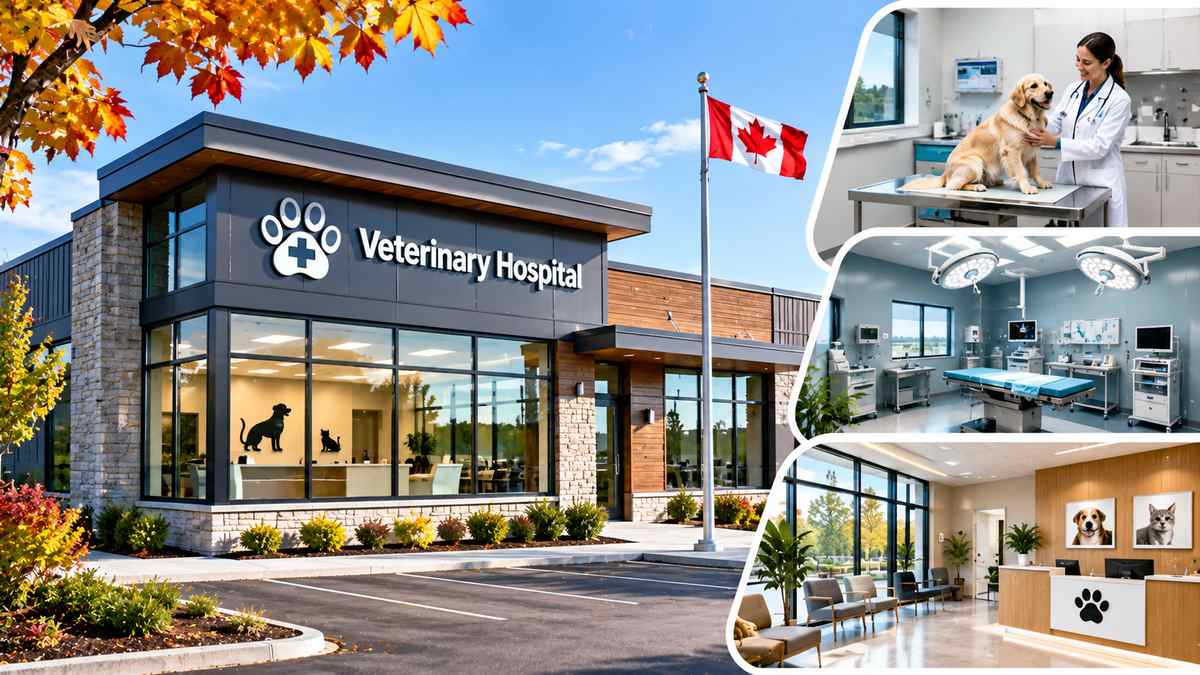
A veterinary hospital is not an ordinary retail unit with a few examination rooms. It is a specialised commercial property designed around animal healthcare, clinical procedures, diagnostic equipment and patient recovery. For property investors, this creates a distinct opportunity: owning a building that veterinary operators need to deliver essential services.
Canada's veterinary industry provides a substantial business base. The Canadian Veterinary Medical Association reported 4,328 accredited veterinary practice facilities during 2023–24. Its 2024 economic impact update also estimated that the sector generated approximately $16.9 billion in total economic output. These figures demonstrate the industry's economic footprint, although they do not directly measure demand for leased properties.
Why Do Veterinary Clinics Need Specialised Commercial Buildings?
Veterinary practices require more than attractive storefronts and convenient parking. Depending on their services, facilities may need examination rooms, treatment areas, surgical suites, diagnostic imaging rooms, laboratories, recovery spaces and secure pharmaceutical storage.
The building's mechanical and plumbing systems also matter. Reliable ventilation, washable surfaces, suitable drainage, appropriate electrical capacity and separate areas for animals can influence whether a property is practical for clinical operations. Emergency hospitals may require additional space and infrastructure for round-the-clock treatment.
These requirements can create a leasing advantage when a property already has the right layout. However, they can also make the building expensive to renovate or difficult to lease to an unrelated business.
What Does Canada's Veterinary Industry Tell Property Investors?
The Canadian Veterinary Medical Association's 2025 statistics page estimates approximately 4,694 veterinary practices and 16,359 veterinarians across Canada. Ontario has the largest provincial concentration in its published veterinarian figures, followed by Quebec and Alberta.
Another useful reference comes from Innovation, Science and Economic Development Canada's 2024 veterinary-services financial data. Its selected dataset covers 5,155 businesses and reports average annual revenue of approximately $894,400. This is business revenue, not rent-paying capacity for every clinic. Individual practices differ significantly in size, profitability and operating costs.
Investors should therefore look beyond national industry totals. The more useful question is whether a specific neighbourhood has enough veterinary operators, pet-owning households and suitable clinical businesses to support the building.
Which Veterinary Property Types Can Investors Consider?
Small companion-animal clinics are one possible category. These properties generally require reception areas, consultation rooms, treatment facilities and storage. They may suit independent veterinarians or smaller practice groups.
Larger animal hospitals can accommodate surgery, diagnostic imaging, overnight care and emergency services. Their infrastructure requirements are usually more demanding, but established operators may need substantial premises to deliver their services.
Specialised facilities also exist for equine care, animal rehabilitation and diagnostic testing. These should be assessed separately because their location, access, floor area and equipment requirements can differ considerably from those of neighbourhood pet clinics.
How Can Veterinary Properties Generate Rental Income?
The most straightforward strategy is to purchase a suitable property and lease it to a veterinary operator. A conventional commercial lease may include base rent, annual increases and agreed responsibility for operating expenses, repairs and property taxes.
Some investors may consider net-lease structures. Under a triple-net arrangement, the tenant typically assumes responsibility for property taxes, building insurance and maintenance, subject to the precise lease wording. Investors must still examine exclusions, capital repairs, structural obligations and the tenant's financial strength.
A real-world example appears in a Colliers listing for a VCA animal hospital building in Calgary. The advertised asking price was $4.5 million, with a reported 6.54% capitalisation rate and a five-year lease renewal in February 2026. This illustrates one specialised property transaction opportunity, not a national market yield or guaranteed return.
What Risks Should Veterinary Property Investors Examine?
Tenant concentration is a major consideration. If one veterinary group occupies the entire property, the landlord's income depends heavily on that operator's ability and willingness to continue the lease. A practice closure or relocation could leave the building vacant.
Specialised fit-outs create another challenge. Surgical rooms, imaging equipment, plumbing, ventilation and animal recovery areas may require costly alterations. A future tenant might not need the same configuration, meaning the owner could face additional conversion expenses.
Regulatory requirements also deserve attention. For example, British Columbia requires private-practice veterinary services to operate through an accredited practice or facility. Its facility standards vary according to the declared scope of practice. Property owners should confirm applicable provincial requirements with the relevant regulator and tenant before approving alterations.
What Should Investors Check Before Purchasing?
Start by investigating the tenant's operating history, financial statements, ownership structure and lease obligations. A recognised veterinary brand can be attractive, but the actual lease guarantee and legal tenant entity matter more than the name displayed outside the building.
Next, commission building inspections covering structure, electrical systems, plumbing, ventilation, drainage and environmental conditions. Confirm zoning, permitted use, parking, accessibility and local approval requirements. Review who owns and maintains specialised equipment and who pays for major repairs.
Finally, assess the building's alternative-use potential. A property that can be converted into another medical, professional or commercial use may offer more flexibility than a highly specialised facility with limited alternatives.
TwikUp's Perspective
Veterinary real estate deserves attention because it combines a specialised tenant base with buildings that can be difficult to replicate. Yet the strongest investment is not necessarily the most advanced animal hospital. It is the property whose purchase price, lease structure, location and long-term adaptability make financial sense together.
For investors, the real advantage lies in understanding the relationship between the veterinary operator and the building. A profitable clinic may become a reliable tenant, but only a carefully evaluated property can turn that relationship into sustainable rental income.
Disclaimer
This article is for general educational and informational purposes only. It does not constitute financial, legal, tax or investment advice. Commercial real estate investments involve risks, including tenant default, vacancy, specialised renovation expenses, regulatory approvals and changing market conditions. Consult qualified real estate, legal, financial and building professionals before making investment decisions.