
Key Takeaways
- Food-processing buildings require specialised infrastructure that ordinary industrial warehouses may not provide.
- Canada's large food manufacturing sector creates a potential tenant base, but industry growth does not guarantee property rental demand.
- Investors should examine building compliance, conversion expenses, tenant stability and lease responsibilities before purchasing.
Can Food Processing Properties Become an Investment Opportunity in Canada?
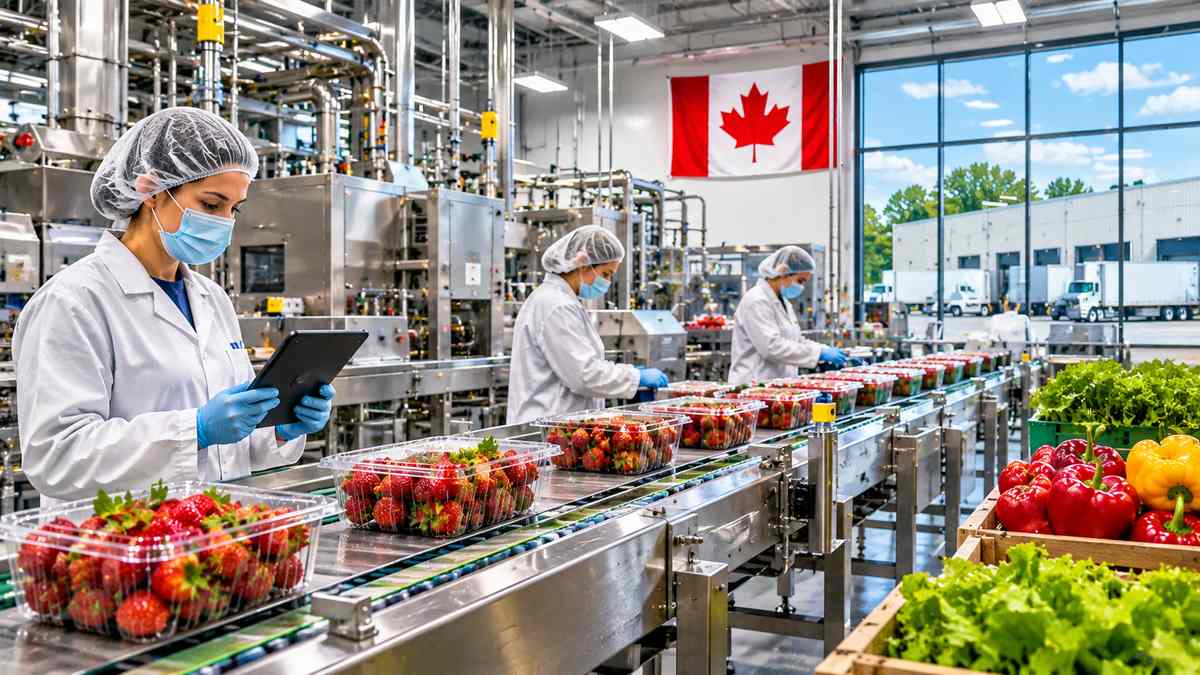
A food manufacturing plant is not simply a warehouse with production equipment inside. It needs suitable drainage, washable surfaces, ventilation, water supply, waste management, loading facilities and layouts that support safe food production. These requirements create a specialised category within Canada's industrial property market.
Food processing real estate in Canada could attract investor interest in 2027 because the country's food and beverage manufacturing industry is substantial. Agriculture and Agri-Food Canada reported sector sales of $177.3 billion in 2025. However, strong industry sales do not automatically translate into higher rents or guaranteed occupancy. The investment case depends on whether a building meets manufacturers' needs and whether qualified businesses can afford to lease it.
Why Do Food Manufacturers Need Specialised Industrial Buildings?
Food processors handle raw ingredients, prepared products, packaging and finished goods. Depending on the operation, a facility may need separate areas for receiving, washing, cutting, cooking, mixing, processing, packaging and dispatch. Some businesses also require chilled rooms, freezer areas or controlled production environments.
The building itself can be difficult and expensive to adapt. Food-grade drainage, floor finishes, washable walls, pest-control measures, ventilation, reliable water systems and waste-handling infrastructure can all influence whether a manufacturer considers a property suitable. Meat, dairy, seafood, bakery and beverage operations may have very different requirements.
This creates an opportunity for landlords who own facilities that already match a tenant's production needs. A suitable existing plant can reduce the time and capital a manufacturer might otherwise spend converting an ordinary industrial building.
What Does Canada's Food Manufacturing Industry Tell Investors?
Canada's food and beverage processing sector is the country's largest manufacturing sector by GDP and employment. Agriculture and Agri-Food Canada reported $177.3 billion in processing sales for 2025, while the sector accounted for 17.5% of manufacturing GDP and 18.8% of manufacturing jobs.
The industry includes meat processing, dairy production, grain and oilseed milling, bakeries, beverage manufacturing and other prepared-food businesses. These different segments create varied property requirements. A bakery may need production lines and ingredient storage, while a meat processor may require specialised drainage, refrigeration and waste systems.
There is also an important caution. Farm Credit Canada reported that first-half 2026 manufacturing sales rose 4% year over year to $88.1 billion, but estimated production volume was flat. Investors should therefore examine actual facility expansion plans and leasing demand rather than assume that rising sales values mean manufacturers need more floor space.
Which Canadian Markets Deserve Attention?
Southern Ontario and Quebec deserve attention because they contain Canada's largest concentrations of food and beverage processing facilities. Their established manufacturing networks, population centres, agricultural supply chains and distribution connections can support a range of processing businesses.
Ontario offers access to large consumer markets and major transportation routes. Quebec has significant food manufacturing activity, including dairy, meat, bakery and beverage production. Both provinces also have established industrial property markets, meaning investors must compare local vacancy, rents and competing facilities carefully.
Other regions may offer opportunities linked to particular industries and agricultural supply chains. Alberta, British Columbia and the Prairie provinces have food-processing activity of their own. The best location depends on the tenant's access to ingredients, labour, utilities, customers and transportation, not simply the province's overall industrial property demand.
How Can Investors Generate Rental Income From Food Processing Facilities?
Investors can purchase existing food plants, develop purpose-built facilities or acquire suitable industrial buildings for conversion. They may then lease the property to manufacturers that need production space but prefer not to purchase land and buildings themselves.
A long-term lease can provide predictable contractual rental income when the tenant is financially sound and the building suits its operations. Some tenants may also invest in specialised equipment and improvements, making relocation more complicated. However, investors should not assume that a customised facility will automatically retain its value if the tenant leaves.
Consider an illustrative property generating $600,000 in annual net operating income and purchased for $10 million. Its capitalisation rate would be 6%. This is a hypothetical calculation, not a market average or expected return. Financing, taxes, major repairs, vacancy and future capital expenditure must be assessed separately.
What Risks Should Property Investors Evaluate?
The first risk is specialised conversion cost. An ordinary industrial building may need extensive upgrades before a food manufacturer can use it. Water capacity, drainage, floor loading, electrical supply, ventilation, fire protection and waste systems should be reviewed by qualified professionals before purchase.
Regulatory suitability also matters. A building's design does not automatically make its tenant compliant with federal or provincial food-safety rules. Depending on the business and products involved, operators may need licences, preventive controls, traceability systems and inspections. Investors should establish which compliance responsibilities belong to the landlord and which belong to the tenant.
Tenant concentration can create another problem. If one manufacturer accounts for nearly all rental income, a closure or relocation could leave the property vacant. The replacement tenant may operate a different food category and require expensive modifications. Investors should examine the tenant's financial statements, lease obligations, renewal options and business outlook.
What Should Investors Check Before Buying?
Start with a technical inspection of the building. Review drainage, water supply, electrical capacity, refrigeration infrastructure, ventilation, loading access, roof condition, flooring and waste-management arrangements. Ask whether previous food-processing operations have left behind environmental, maintenance or compliance issues.
Next, examine the tenant market. Identify manufacturers operating in the surrounding region and determine whether they need additional capacity, are relocating or have announced expansion plans. A large food industry does not prove that a particular property has suitable replacement tenants.
Finally, review the lease and calculate the property's expected net operating income after realistic ownership expenses. Clarify who pays for equipment maintenance, building repairs, compliance-related upgrades and restoration at lease expiry. Investors comparing specialised industrial properties may also find our guide to Canada Cold Storage Investment 2027 useful, although refrigerated storage and food production facilities serve different purposes.
TwikUp's Perspective
Food processing properties can offer a distinct opportunity within Canada's industrial real estate market, particularly where a building already has the infrastructure that manufacturers need. Their appeal is not simply the size of Canada's food industry. It comes from the cost and complexity of creating a suitable production facility, which may make a well-maintained, properly located building valuable to the right tenant.
TwikUp believes investors should prioritise tenant demand and building functionality over optimistic industry forecasts. A long lease is useful only when the manufacturer is financially capable, the property supports its operations and the landlord understands future maintenance obligations. Before committing capital, investors should compare the cost of acquiring and upgrading a facility with the realistic rental income it can generate.
Disclaimer
This article is for educational and informational purposes only and does not constitute financial, investment, legal, tax or engineering advice. Food-processing properties involve specialised infrastructure, regulatory and tenant risks. Investors should obtain independent professional assessments and conduct due diligence before making investment decisions.