
Key Takeaways
- 193 countries; one vote each in the Assembly.
- The Security Council can bind all members.
- Five countries hold a veto.
One organization, six organs
The United Nations, founded in 1945, has grown from 51 founding members to 193 Member States (the most recent, South Sudan, joined in 2011). Canada is a founding member.
Its Charter creates six main organs: the General Assembly, the Security Council, the Economic and Social Council, the Trusteeship Council, the International Court of Justice, and the Secretariat. Two of them do most of what the headlines describe.
The General Assembly: everyone speaks
The Assembly is the UN's main deliberative body — the only one where all 193 members sit, each with one vote, large or small. Decisions on important questions (peace and security, admitting new members, the budget) need a two-thirds majority; other questions pass by simple majority. It meets annually from September and elects a president for a one-year term.
Its resolutions carry real moral and political weight — but they are non-binding. The Assembly speaks; it cannot compel.
The Security Council: the binding one
The Security Council holds primary responsibility for international peace and security. It has 15 members: five permanent — China, France, Russia, the United Kingdom and the United States — and ten elected by the Assembly for two-year terms. Unlike the Assembly, its decisions bind all member states: it can demand peaceful settlement, impose sanctions, or authorize the use of force.
And each permanent member holds the veto: one "no" from any of the five blocks a substantive resolution, however large the majority behind it. (The word "veto" never appears in the Charter; the power flows from its voting rules.) Since a recent reform, a veto triggers a General Assembly debate on the situation.
The Secretariat and the Secretary-General
The Secretary-General heads the Secretariat — the UN's international civil service, tens of thousands of staff who do the day-to-day work. The SG is appointed by the General Assembly on the Security Council's recommendation, for a five-year renewable term. The current and ninth Secretary-General is António Guterres of Portugal, in office since 2017. The Council also recommends new member admissions and, with the Assembly, elects the judges of the International Court of Justice.
The Twikup Take
The UN's design is its founders' bargain: every nation gets a voice in the Assembly, but real power was locked into a council the five victors of 1945 would never leave. Eighty years on, that bargain explains both what the UN can do — legitimize, sanction, keep peace where the great powers allow — and why it so often can't.
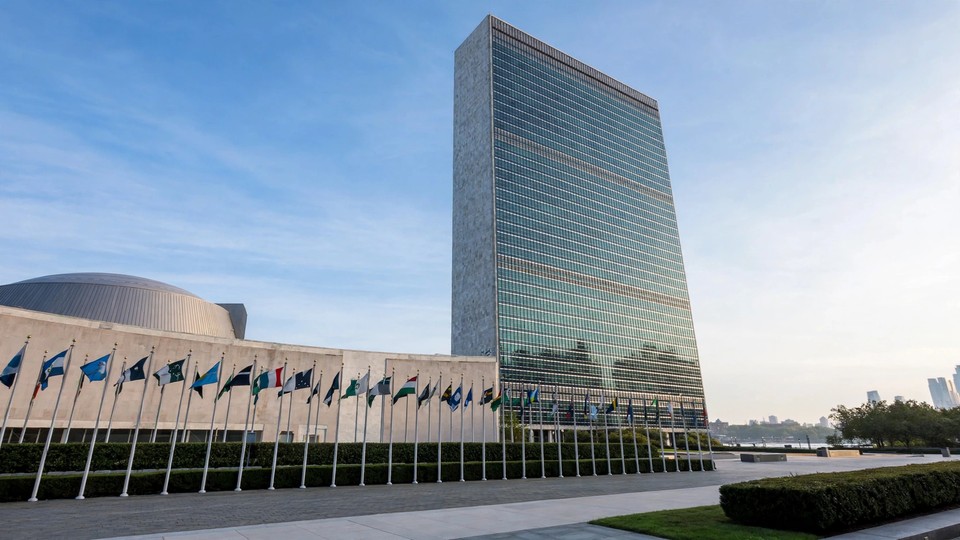
Image: Illustrative image.