
Key Takeaways
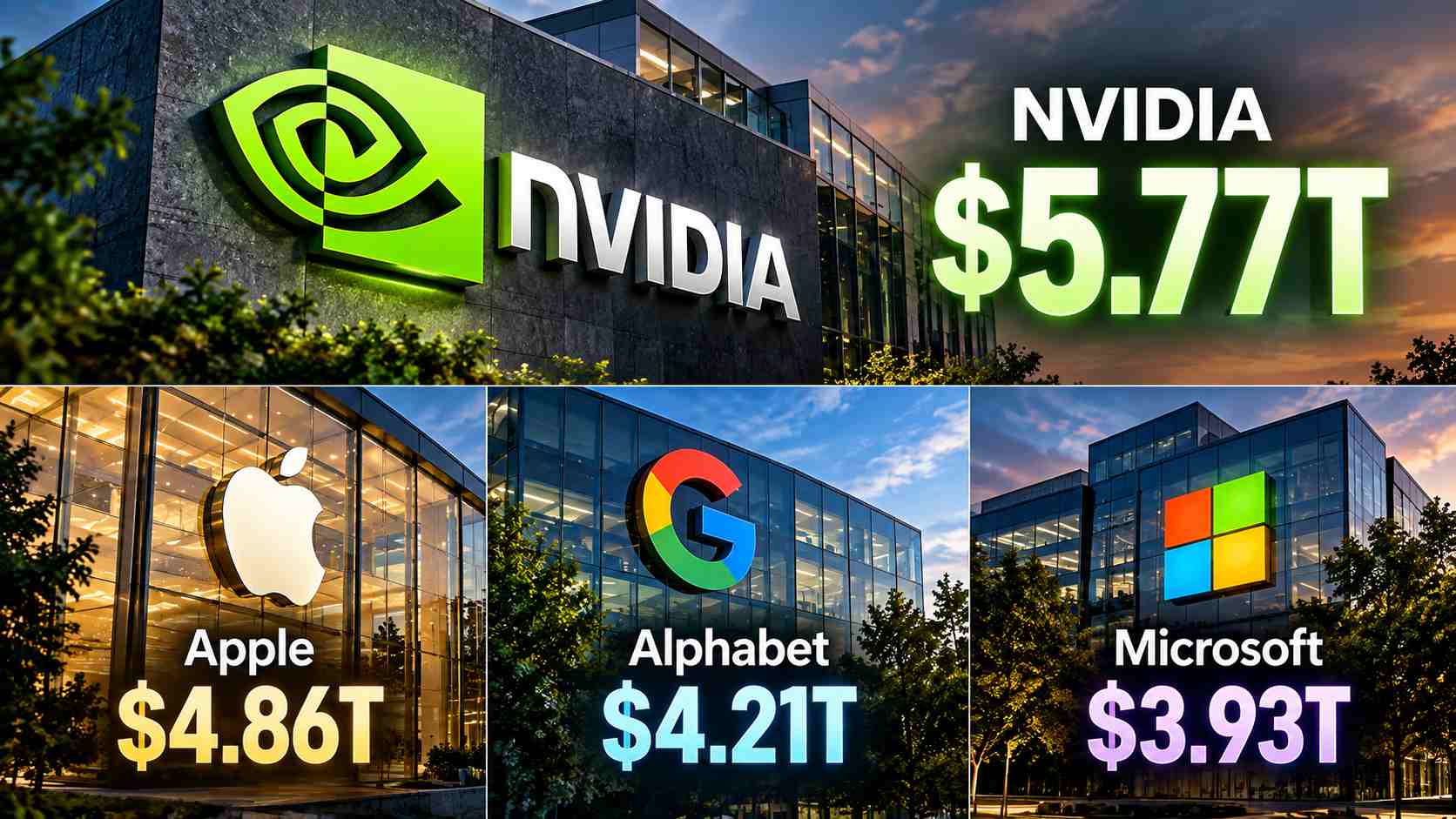
- Nvidia passed roughly $3 trillion in market value and moved ahead of Apple for the first time on June 5, 2024.
- AI demand drove major growth: quarterly revenue reached $26 billion in the quarter ending April 2024.
- Nvidia’s GPU technology, developer tools and CUDA ecosystem had been built over decades before the AI boom.
NVIDIA Wasn’t Even Close — Until Suddenly It Was
For years, the race to become the world’s most valuable company seemed to belong to a familiar group.
Apple had the iPhone. Microsoft had Windows, Office and a booming cloud business. Google dominated search and digital advertising.
Nvidia?
For most people, it was still the company that made powerful graphics cards for gamers.
Then artificial intelligence changed everything.
And within just a few years, Nvidia went from being worth a fraction of Apple to racing past it.
On June 5, 2024, Nvidia’s market value crossed roughly $3 trillion and moved ahead of Apple for the first time.
The company that had spent decades largely behind the scenes was suddenly sitting beside the biggest corporate giants on Earth.
The Secret Weapon Was Already There
Nvidia didn’t suddenly invent something new in 2023.
Its advantage had been developing for years.
Graphics processing units, or GPUs, were originally designed to handle enormous numbers of calculations simultaneously — perfect for generating complex graphics in video games.
But that same ability turned out to be incredibly useful for artificial intelligence.
Training modern AI models requires an extraordinary amount of computing power.
And Nvidia had spent years building not only powerful chips, but also software and tools that developers could use to make those chips work efficiently.
When the generative-AI boom exploded, Nvidia was sitting in exactly the right place.
Then the Numbers Went Crazy
Nvidia’s growth quickly stopped looking like normal big-company growth.
For its fiscal year ending January 2024, Nvidia generated approximately $60.9 billion in revenue, more than double the previous year.
Its data-centre business produced about $47.5 billion, growing 217%.
Then came another shock.
In the quarter ending April 2024, Nvidia reported $26 billion in revenue, up 262% from the same period a year earlier.
Data-centre revenue alone reached $22.6 billion, up 427%. (nvidianews.nvidia.com, investor.nvidia.com)
Wall Street wasn’t simply excited about AI anymore.
It could see billions of dollars flowing directly into the company selling much of the computing infrastructure behind it.
$1 Trillion. $2 Trillion. Then Apple.
At the end of 2022, Nvidia’s market value was around $364 billion.
By the end of 2023, it had climbed above $1.2 trillion.
Then the acceleration became extraordinary.
Nvidia pushed through $2 trillion and, by June 2024, crossed the $3 trillion mark.
On June 5, 2024, Nvidia moved above Apple, becoming the world’s second-most valuable publicly traded company at the time. (ca.investing.com, companiesmarketcap.com)
Less than two weeks later, Nvidia briefly climbed above Microsoft too.
The gaming-chip company had reached the top of the corporate world.
But Nvidia Didn’t Really Come Out of Nowhere
That’s the most interesting part of the story.
From the outside, Nvidia’s rise looked almost instantaneous.
It wasn’t.
The company had spent decades building GPU technology, developer tools and its CUDA computing ecosystem.
AI simply created the moment when years of preparation suddenly became enormously valuable.
By fiscal 2025, Nvidia’s annual revenue had surged to about $130.5 billion, with data-centre revenue reaching approximately $115.2 billion.
TwikUp Takeaway
Nvidia’s rise is a perfect example of why the world’s biggest companies don’t stay on top forever.
Apple dominated the smartphone revolution.
Microsoft became a cloud powerhouse.
Then AI created an entirely new race.
And Nvidia had been building the engine for it long before most people realized the race had even started.