
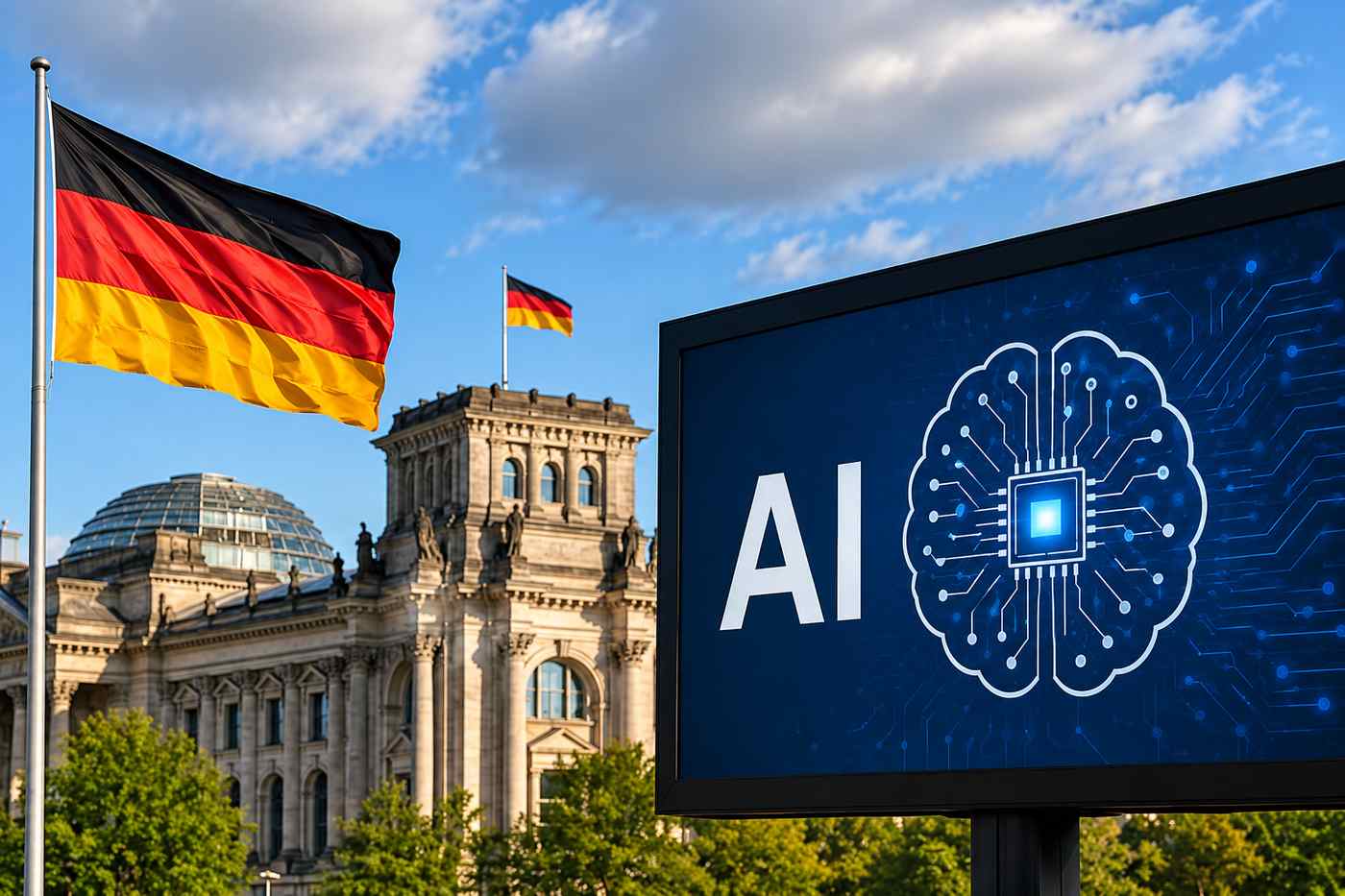
Germany Wants More Control Over Critical Technology
The German government considers technological dependence a strategic risk.
The Federal Ministry for Digital and State Modernisation says Germany wants to reduce dependence on technology providers from third countries while supporting the development of key technologies such as artificial intelligence, semiconductors, cloud infrastructure and cybersecurity.
The objective is not to isolate Germany from international technology markets. Instead, Berlin wants Germany and Europe to have stronger alternatives and greater control over critical digital infrastructure.
AI Is Central to Germany’s Digital Strategy
Artificial intelligence has become one of the most important parts of Germany's digital strategy.
The government views AI as an important driver of economic growth, innovation and competitiveness. Building domestic AI capabilities is therefore seen as necessary if Germany wants to remain competitive in a rapidly changing global technology market.
Germany is also pushing for closer cooperation with European partners so that AI development does not depend entirely on technology created outside Europe.
Germany and France Expand AI Cooperation
Germany and France have already taken steps to deepen their cooperation on artificial intelligence.
In July 2026, the two countries agreed to expand cooperation on AI and AI security. The agreement includes closer collaboration between France's AI safety institute and Germany's newly established AI safety institute.
The partnership focuses particularly on the evaluation of frontier AI models and strengthening AI security.
This reflects a broader European effort to develop AI while also creating safeguards around increasingly capable systems.
Digital Sovereignty Does Not Mean Isolation
Germany's approach to digital sovereignty is not based on shutting itself off from international markets.
The German government describes digital sovereignty as the ability to make technological and economic decisions independently while maintaining cooperation with international partners.
Berlin wants to create stronger European technology companies, support innovation and develop alternatives in strategically important areas.
That could give European governments and businesses more choices when selecting technology providers and infrastructure.
Europe Wants to Reduce Technology Dependencies
Germany and France have also called for stronger European digital sovereignty.
The two countries have identified dependencies across areas including infrastructure, semiconductors, software, data and artificial intelligence as challenges that Europe needs to address.
Their approach is based on developing European capabilities while continuing cooperation with international partners.
For Germany, this means investing in technology rather than slowing down technological development.
Computing Capacity Is Becoming More Important
AI development requires enormous computing resources.
Germany is therefore also working to expand its digital infrastructure and computing capacity. Data centres, cloud infrastructure and high-performance computing are becoming increasingly important as companies and governments develop more advanced AI systems.
Expanding this infrastructure could help Germany support domestic AI development while strengthening Europe's wider technology ecosystem.
AI Security Remains Part of the Strategy
Germany's push for AI development does not mean ignoring the risks associated with increasingly powerful systems.
AI security is becoming an important part of Berlin's technology policy. Cooperation with France on frontier AI evaluation is one example of efforts to combine innovation with stronger safety measures.
The German government is therefore pursuing two objectives at the same time: encouraging AI development and ensuring that increasingly powerful systems are evaluated responsibly.
What This Means for Europe's AI Race
Germany's position highlights a broader European challenge.
The United States and China have built major AI ecosystems with powerful technology companies, large computing infrastructure and significant investment.
European governments increasingly want to strengthen their own capabilities rather than remain dependent on technologies developed elsewhere.
Germany's digital sovereignty strategy is part of that wider effort.
What Happens Next?
Germany is likely to continue investing in AI infrastructure, research, digital technologies and European partnerships.
The government will also need to balance innovation with security, data protection and regulatory requirements.
The success of the strategy will ultimately depend on whether Germany and its European partners can turn policy ambitions into competitive companies, advanced infrastructure and globally relevant AI technologies.
TwikUp Insight
Germany is not choosing between AI innovation and digital security. Its strategy is increasingly focused on pursuing both.
Berlin wants to strengthen European control over critical technologies while continuing to develop artificial intelligence and other emerging technologies.
For Europe, the bigger question is whether these efforts can produce an AI ecosystem capable of competing globally while maintaining the security and values the region considers important.