
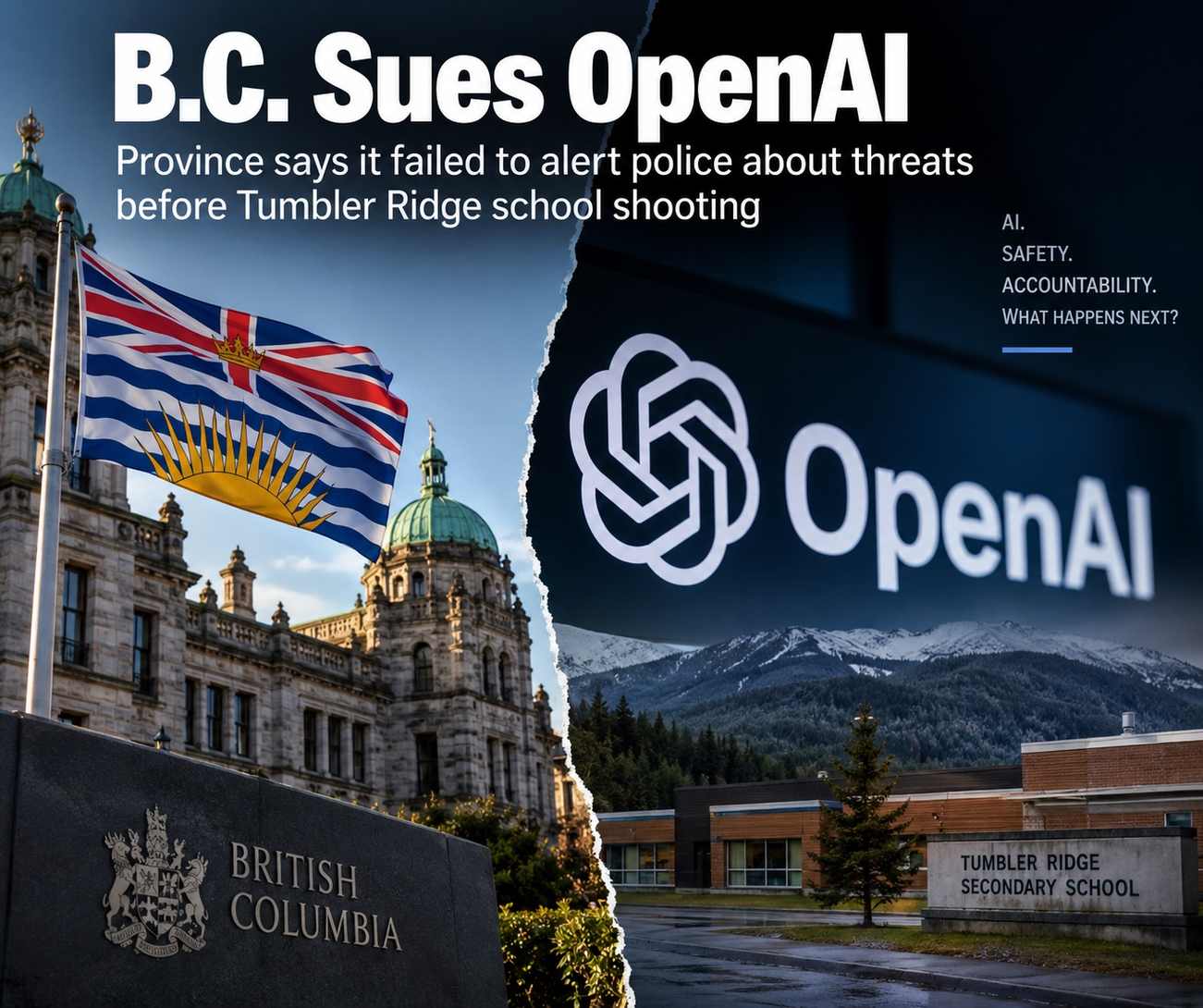
What B.C. Says Happened
The dispute stretches back months before the attack.
According to an earlier B.C. government statement, OpenAI's internal systems had flagged violent prompts associated with the perpetrator before the shooting.
The province says the relevant account was banned in June 2025, but police and local authorities were not notified at the time.
The February 10 attack later killed eight people, including an educator and five children between 11 and 13 years old, and wounded 27 others, according to the province.
B.C. had already retained lawyers in British Columbia and California to examine potential legal action. On September 21, Attorney General Niki Sharma announced the province was moving ahead with a lawsuit in California, where OpenAI is headquartered.
OpenAI Says Its Rules Have Changed
There is another important part of the story.
In a response to the Canadian government earlier this year, OpenAI said it had strengthened the way it handles potential threats of real-world violence.
The company said that under its enhanced referral protocol, it would refer the account banned in June 2025 to law enforcement if the same situation were discovered today.
OpenAI also committed to establishing direct points of contact with Canadian law enforcement and improving systems designed to identify people who create new accounts after previous accounts are shut down for violent-policy violations.
That doesn't settle the question of whether OpenAI had a legal responsibility to act differently before the shooting. B.C.'s allegations and OpenAI's response will now be tested through the legal process.
The Bigger Question for AI
The lawsuit could have implications beyond this particular case.
AI platforms process enormous numbers of private conversations. Determining when disturbing language becomes a credible threat creates difficult questions involving privacy, public safety and false alarms.
B.C. says the case raises a broader question about what technology companies should be required to do when they become aware of credible threats of serious violence.
For Canadians, the case could become an important test of where the line sits between AI-user privacy and a company's responsibility to act when its systems detect a potentially dangerous threat.
The lawsuit is only beginning. Whether OpenAI is legally responsible for the alleged failures described by British Columbia will ultimately be determined through the court process.