
Key Takeaways
- The CRS-35 Dragon splashed down November 21 at 2:03 p.m. PST in the Pacific near Los Angeles
- Returned cargo includes a 3D-bioprinted blood vessel construct, frozen tumor organoids and microbial samples
- A failed Canadarm2 wrist joint was also returned to Earth for analysis
A blood vessel made in space just returned to Earth — alongside a piece of Canada's famous robot
A blood vessel grown in orbit. Frozen tumour samples. Antibiotic-resistant bacteria. And a broken joint from Canada's most famous space robot. All of them just returned to Earth inside one spacecraft.
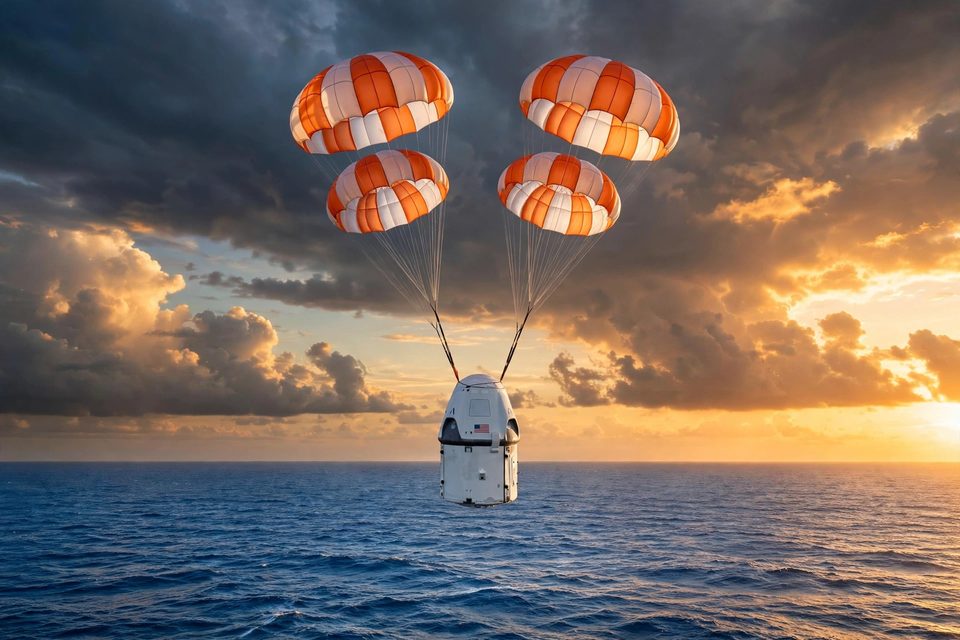
At 2:03 p.m. PST on Saturday, November 21, NASA's CRS-35 SpaceX cargo Dragon splashed down in the Pacific Ocean near Los Angeles, bringing an extraordinary collection of space experiments home. The spacecraft had arrived at the International Space Station on October 15 and undocked on November 20.
Scientists made a blood vessel in space
Among the returning experiments was a 3D-bioprinted blood vessel construct. It was grown in orbit as part of research into vascular aging and cardiovascular disease. Now that it is back on Earth, scientists can examine it in laboratories using methods unavailable aboard the space station.
And that blood vessel was far from the only unusual passenger.
Frozen tumours and antibiotic-resistant bacteria came home too
NASA's returning cargo also included frozen tumour organoids and frozen microbial samples, including antibiotic-resistant bacteria. Another passenger was a lighting system that had spent more than three years aboard the International Space Station. Together, these materials represent experiments that can continue being studied long after their time in orbit has ended.
Canada's Canadarm2 sent a broken piece back to Earth
There was also a distinctly Canadian item aboard. On November 18, NASA reported that a failed wrist joint from Canadarm2 — the Canadian-built robotic arm that services the International Space Station — had been packed inside Dragon. Its destination? Earth, where engineers can examine the failed component.
Why this splashdown matters beyond the spectacle
Watching a spacecraft fall back to Earth is exciting enough. But Cargo Dragon has a particularly important job: it is the station's only ride home for finished experiments. That means researchers can bring delicate biological samples and scientific equipment back to laboratories on Earth. The 3D-bioprinted blood vessel, frozen tumour organoids, microbial samples, and Canadarm2 joint can now undergo further analysis.
The spacecraft's journey is finished. The scientific work is not.
The Twikup Take
A blood vessel grown in orbit, frozen tumour samples, antibiotic-resistant bacteria, and a broken piece of Canadian space technology all travelled home together. The splashdown lasted a moment. The research that follows could take much longer. Space may be where these experiments happened, but Earth is where scientists get to investigate what they brought home.
Image: Illustrative image.