
Key Takeaways
- Joshua Kutryk and Anil Menon ended their spacewalk at 3:35 p.m. EST on Nov. 5, 2026, after six hours and 59 minutes outside
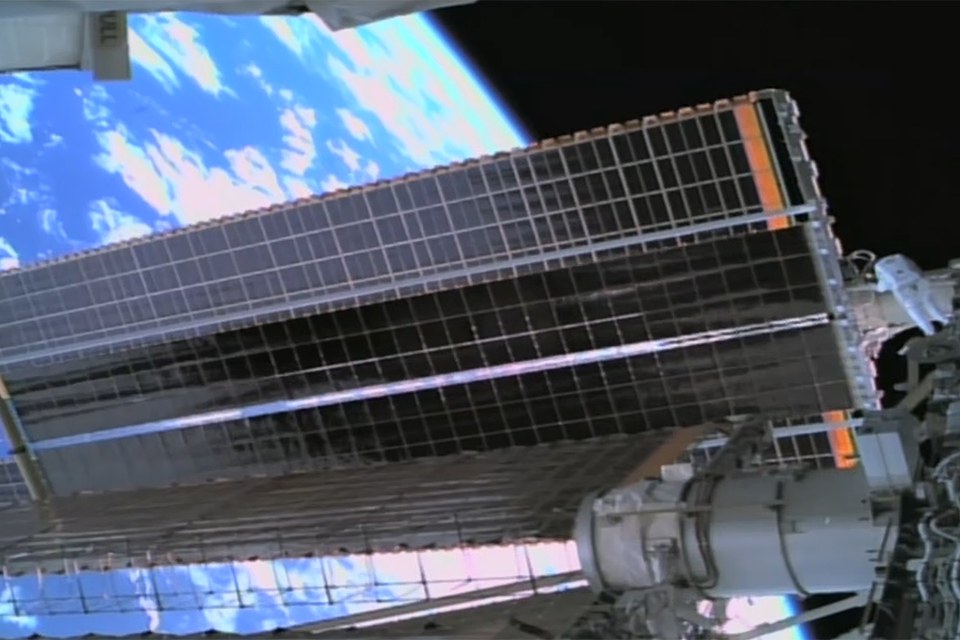
- They installed and deployed the eighth and final iROSA roll-out solar array, on the station's 3B power channel
- The completed upgrade lifts the station's power generation from 160 kilowatts to about 215 kilowatts
Done. The Last Array Is Up.
This morning, Canadian astronaut Joshua Kutryk floated out of the space station to install its final new solar array. This afternoon, he came back inside — job finished.
Kutryk and NASA astronaut Anil Menon concluded U.S. spacewalk 101 at 3:35 p.m. EST, after six hours and 59 minutes outside the International Space Station. They installed and deployed the eighth and final International Space Station Roll-Out Solar Array (iROSA), on the station's 3B power channel.
With that, the station's power augmentation upgrades are complete.
A Five-Year Job, Finished
The work to boost the station's power generation began back in February 2021. Since then, astronauts have completed 18 spacewalks to prepare the power channel equipment and install the eight roll-out arrays.
Together, the new arrays lift the station's power generation capacity from 160 kilowatts to about 215 kilowatts.
Today's outing was Kutryk's second spacewalk — his first came just last week, on October 29, when the same pair installed the seventh array — and Menon's fifth. It was also the 286th spacewalk in support of space station assembly, maintenance and upgrades.
Canada's fingerprints were all over the finale: Canadarm2 was used to position the array for installation, and fellow CSA astronaut Jenni Gibbons was the voice from Mission Control guiding the pair as CAPCOM.
The Twikup Take
Two spacewalks in a week, and the second one closes out a five-year, 18-spacewalk upgrade of the station's entire power system.
The last array is up — and a Canadian helped put it there.
Image: NASA, via its Space Station blog.